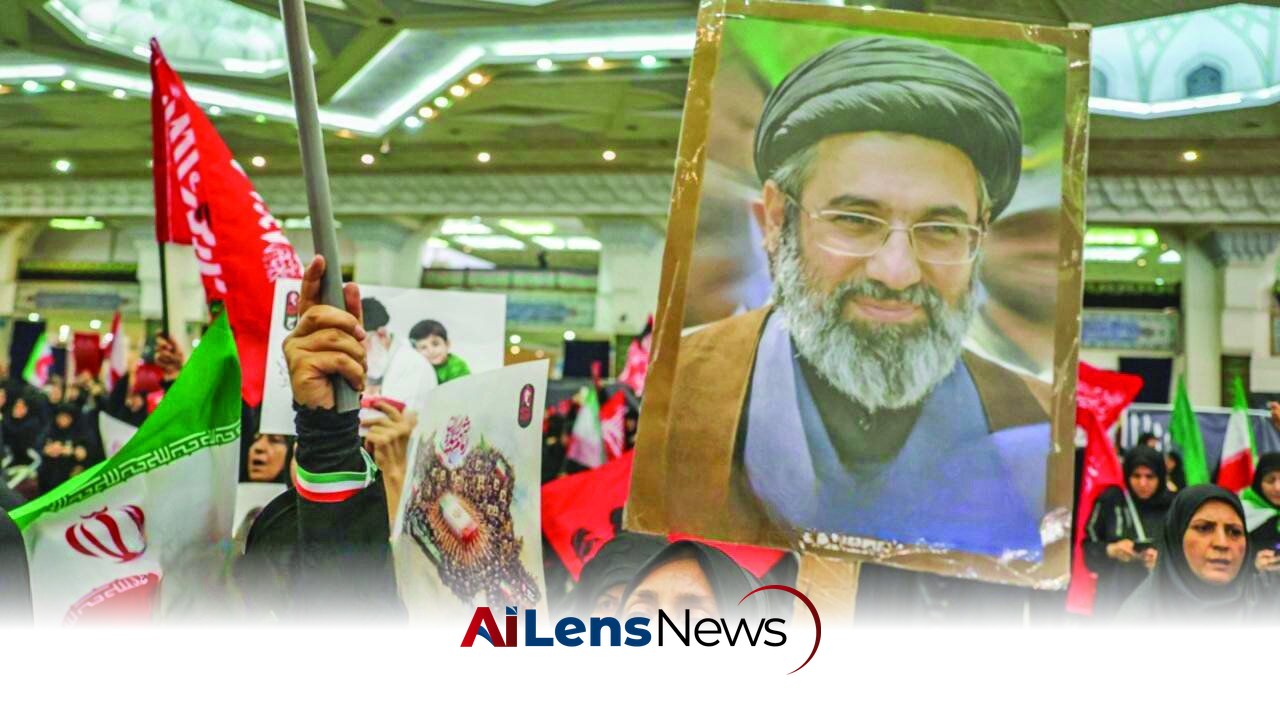


A significant memorial ceremony for Ayatollah Seyyed Ali Khamenei took place in Tehran, showcasing immense public participation and mourning across Iran.
Tehran, Iran Jul 14, 2026 ALN: TEHRAN — A major memorial ceremony for the martyred Leader of the Islamic Revolution, Ayatollah Seyyed Ali Khamenei, was held on Tuesday at the Grand Mosalla of Imam Khomeini in Tehran. The massive gathering in the capital drew an immense crowd from all walks of life, highlighting the continuation of solemn mourning ceremonies across Iran and several other countries. This event not only showcased the deep reverence held for the late Leader but also illustrated the socio-political dynamics within Iran, where the legacy of leadership is often intertwined with national identity and collective memory.
The spiritual event began with the recitation of verses from the Holy Qur'an, followed by the playing of the national anthem of the Islamic Republic of Iran. From its very first hours, the sprawling Mosalla was packed with citizens, families of martyrs, veterans, youth, and a prominent assembly of high-ranking national and military officials who gathered to honor the late Leader's legacy. Such gatherings are customary in Iran, particularly during periods of mourning, and they serve as a poignant reminder of the nation’s historical struggles and the sacrifices made by its leaders and citizens alike.
In attendance at the solemn ceremony in Tehran were the sons of the martyred Leader, alongside key heads of state and top officials. Among those present were President Masoud Pezeshkian, First Vice President Mohammad Reza Aref, head of the Judiciary Gholam-Hossein Mohseni-Eje'i, Parliament Speaker Mohammad Baqer Qalibaf, and senior military and political officials. The presence of these high-ranking officials underscores the political significance of the event, as it reflects the unity of the state apparatus in honoring a figure who played a pivotal role in shaping contemporary Iranian politics.
Leader of the Islamic Revolution Ayatollah Seyyed Mojtaba Khamenei expressed gratitude to the Iranian and Iraqi people for their massive participation in the funeral and memorial ceremonies of the martyred Leader, Ayatollah Seyyed Ali Khamenei. This acknowledgment of solidarity between the two nations is particularly meaningful, considering the historical and religious ties that bind Iran and Iraq, especially in the context of shared experiences during conflicts and uprisings. The message of gratitude was delivered by Hojjatoleslam Seyyed Mostafa Khamenei, the martyred Leader’s eldest son. He emphasized that patience “is in no way incompatible with revenge and confronting the world’s evildoers who were involved in these great crimes.” This statement reflects a broader sentiment within Iranian society regarding justice and retribution, particularly in the wake of perceived external aggressions and internal challenges.
This significant gathering in the capital runs parallel to the deeply emotional commemorations held Monday across other key cities. In Isfahan, a major ceremony drew vast crowds to the Golestan-e Shohada Husseinieh, attended by local citizens and provincial officials. Simultaneously, a highly spiritual commemoration took place on Monday night at the holy Imam Reza Shrine in Mashhad—the final resting place of the late Leader—where his sons stood alongside prominent religious scholars to receive condolences from a sea of grieving pilgrims in the illuminated Great Prophet Courtyard. These events not only served as platforms for mourning but also reinforced the cultural and religious practices that are integral to Iranian society, particularly in times of loss.
These concurrent national gatherings reflect the broader, historic funeral and burial ceremonies that have gripped the nation over the past two weeks. Following his tragic assassination on February 28 at the start of the joint US-Israeli war, millions of mourners initially poured into the streets of Tehran in early July for the primary funeral processions. The public outpouring of grief and support during these initial processions is indicative of the deep emotional connection many Iranians feel towards their leaders, particularly those who have faced adversity and conflict on behalf of the nation. The ceremonies then extended across borders, with massive processions passing through the holy Iraqi cities of Najaf and Karbala, where millions of pilgrims lined the streets to offer prayers. These locations are not only significant religious sites but also serve as symbols of resistance and resilience in the face of oppression, further highlighting the interconnectedness of Iranian and Iraqi narratives.
The late Leader was ultimately laid to rest in an emotional burial ceremony at the holy Imam Reza Shrine last Thursday, marking the conclusion of the official state mourning period. The choice of burial site underscores the importance of religious symbolism in Iranian culture, as the Imam Reza Shrine is one of the most revered sites in Shia Islam. The culmination of mourning activities at such a significant location serves to reinforce the spiritual and political dimensions of the Leader's legacy, as well as the ongoing commitment of his followers to uphold the principles he represented.
In the wake of these events, the implications for Iranian society and politics are profound. The massive turnout at the memorials not only reflects a collective grief but also a reaffirmation of loyalty to the ideals and policies championed by the late Leader. This could potentially influence the political landscape in Iran, as leaders and factions within the government may seek to align themselves with his legacy to gain favor among the populace. Furthermore, the expressions of solidarity from the Iraqi people may lead to strengthened ties between the two nations, particularly in areas of mutual interest such as security and economic cooperation.
As Iran navigates the complexities of regional politics, the memory of Ayatollah Seyyed Ali Khamenei will likely serve as a rallying point for those advocating for a continuation of his policies and approaches. The mourning period may also catalyze discussions around national identity and the role of leadership in shaping the future trajectory of the Islamic Republic. Ultimately, the ceremonies surrounding the late Leader's death are not just about remembrance but also about the ongoing struggle for unity and resilience in a rapidly changing geopolitical landscape.
To learn more about the latest developments in Political History & Legacy, stay updated with our exclusive reports and analyses on AiLensNews.

