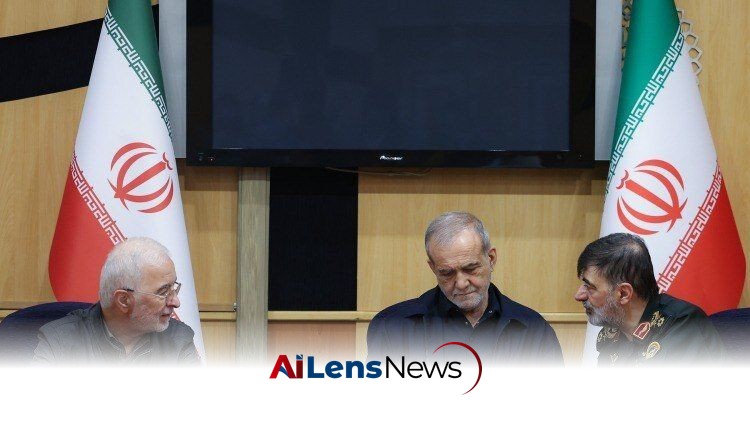


President Masoud Pezeshkian emphasizes Iran's commitment to securing national rights through dignified diplomacy, following military victories against adversaries.
Tehran, Iran Jul 22, 2026 ALN: President Masoud Pezeshkian has declared that Iran aims to consolidate the victories achieved by its Armed Forces on the battlefield through dignified and powerful diplomacy, emphasizing that any negotiations are about securing national rights, not surrender.
Speaking on Monday during a meeting with top police commanders, Pezeshkian reflected on the country’s recent confrontation with the United States and Israel. He stated that the Iranian nation and military, through steadfastness and power, prevented the enemy from achieving its objectives and forced it to accept a ceasefire, halting 'the third imposed war.'
The context of Pezeshkian's statements lies in a long history of tensions between Iran and Western powers, particularly the United States and Israel. This relationship has been marked by a series of conflicts and confrontations, often rooted in ideological differences, territorial disputes, and regional power dynamics. The term "imposed war" is often used in Iran to describe conflicts that the nation perceives as being forced upon it, particularly the Iran-Iraq War in the 1980s, which had profound effects on the national psyche and military strategy.
Pezeshkian outlined several possible paths forward for Iran: entering dignified negotiations to secure national interests, remaining in a situation of neither war nor peace, or continuing military confrontation. He stressed that the "rational and logical option" consistent with Iran’s national interests is to complete the military victory in the diplomatic arena from a position of dignity and strength. This reflects a broader strategy that Iran has often employed, where military successes are leveraged to gain political and diplomatic advantages.
The president noted that while Iran harbors distrust towards its adversaries, it considers negotiations possible based on dignity, wisdom, and expediency. This statement underscores a complex duality in Iran's foreign policy; while it seeks to assert its sovereignty and rights, it also recognizes the potential benefits of diplomatic engagement, particularly when it can do so from a position of strength. He added that Iran would remain committed to its obligations should an agreement be reached that takes into account the concerns of the Leader of the Islamic Revolution, Ayatollah Seyyed Mojtaba Khamenei, and the interests of the Iranian people.
"If there is any talk of dialogue or negotiation, it does not mean surrender or backing down," Pezeshkian said in separate remarks on Sunday during a meeting of the task force for reconstruction of war damages. "Rather, the goal is to secure the rights of the Iranian nation and powerfully defend national interests." This statement reflects a broader narrative within Iranian politics that frames negotiations as a means of asserting national pride and sovereignty rather than as a concession or defeat.
Referring to the ongoing situation following US President Donald Trump's April 8 ceasefire announcement—which ended 40 days of aggression but was followed by an illegal blockade of Iranian vessels—Pezeshkian also called for social solidarity and a realistic understanding of the country's challenges. The blockade, part of a broader strategy of economic sanctions imposed by the United States, has significantly impacted Iran's economy, leading to widespread hardship and discontent among the populace. The president's acknowledgment of these issues indicates a recognition of the internal pressures facing the Iranian government.
"Staying, standing firm, and enduring hardships are sometimes more difficult than martyrdom," the president added. "People who remain on the ground with patience and endurance are carrying out the 'greater jihad.'" This invocation of the concept of "greater jihad" reflects a common theme in Iranian rhetoric, emphasizing the moral and spiritual dimensions of enduring hardship for the sake of the nation. It also serves to rally public support and foster a sense of unity in the face of external pressures.
The implications of Pezeshkian's statements extend beyond immediate diplomatic concerns; they reflect a broader strategy of resilience and national unity in the face of adversity. The notion of dignified diplomacy is particularly significant in the context of Iran's historical experiences with foreign powers, which have often been characterized by perceived humiliation and loss of sovereignty. By framing negotiations as a means to secure national rights, the Iranian leadership aims to bolster public support and maintain a strong national identity.
Moreover, the emphasis on social solidarity and national unity is crucial for the Iranian government, particularly as it navigates economic challenges exacerbated by sanctions and internal dissent. The call for enduring hardships and maintaining unity resonates with a populace that has faced significant economic difficulties, including inflation, unemployment, and shortages of essential goods. By appealing to a sense of collective struggle, Pezeshkian seeks to foster resilience among the Iranian people.
In conclusion, President Masoud Pezeshkian's advocacy for dignified diplomacy following military successes reflects a complex interplay of national pride, historical grievances, and the need for strategic engagement in the international arena. As Iran continues to navigate its relationships with the United States, Israel, and other regional powers, the balance between military strength and diplomatic negotiations will remain a central theme in its foreign policy. The challenges ahead will require not only strategic acumen but also a united front at home, as the Iranian leadership seeks to secure its national interests while addressing the pressing needs of its people.
This approach to diplomacy, characterized by a commitment to dignity, also serves as a counter-narrative to the often adversarial portrayals of Iran in Western media. By asserting its right to negotiate from a position of strength, Iran aims to reshape the discourse surrounding its foreign relations, challenging the dominant narrative that often depicts the nation as solely a rogue state or aggressor. This diplomatic stance may also resonate with other nations that feel marginalized or threatened by Western policies, potentially fostering alliances based on shared experiences of resistance.
Furthermore, Pezeshkian's remarks highlight the importance of internal cohesion in Iran's strategy. The call for national unity is not merely a rhetorical flourish; it is a practical necessity as the Iranian government seeks to maintain legitimacy in the face of external pressures and economic challenges. By invoking concepts such as "greater jihad," the leadership aims to galvanize public support and encourage a collective response to both domestic and international challenges. This is particularly relevant in light of the ongoing protests and dissent that have occasionally erupted in various parts of the country, often fueled by economic grievances and calls for political reform.
As Iran continues to navigate its complex geopolitical landscape, the interplay between military success and diplomatic engagement will be critical in shaping its future. The Iranian leadership's ability to effectively communicate its goals and strategies to both domestic and international audiences will play a significant role in determining the success of its diplomatic initiatives. Ultimately, Pezeshkian's vision of dignified diplomacy may serve as a guiding principle as Iran seeks to assert its place in a rapidly changing world, balancing the need for security with the desire for recognition and respect on the global stage.
To learn more about the latest developments in Elections, stay updated with our exclusive reports and analyses on AiLensNews.

