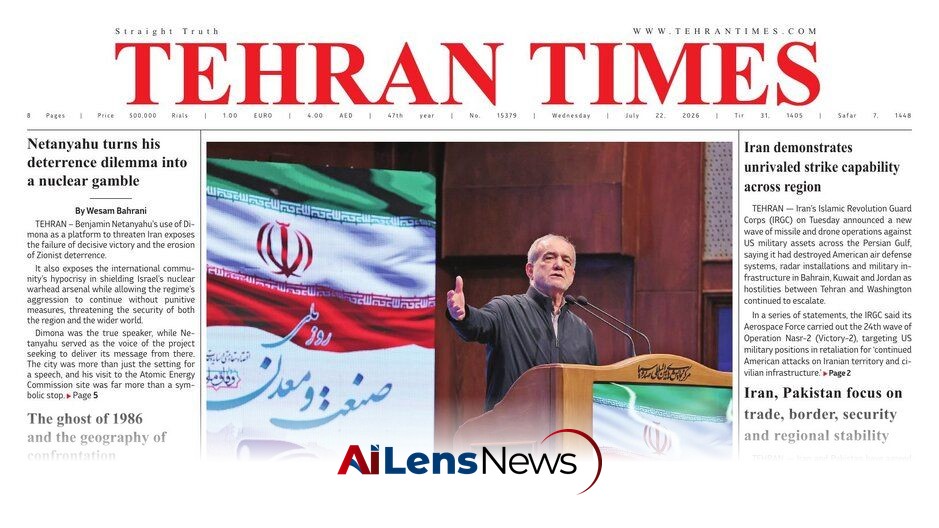


Iran's leadership emphasizes unwavering dedication to national rights in the face of international pressures and challenges.
Tehran, Iran Jul 22, 2026 ALN: In a recent address, Iranian officials underscored the nation's steadfast commitment to its diplomatic principles, particularly regarding the protection of national rights. This declaration comes amid a backdrop of heightened international scrutiny and geopolitical tensions, which have been exacerbated by various factors including ongoing conflicts in the Middle East, economic sanctions, and the complex dynamics of international relations.
Diplomatic Resilience
Iran's diplomatic apparatus has been vocal about its strategy to navigate the complex landscape of global politics. The officials highlighted that the nation will not compromise on its rights, asserting that past negotiations have shown Iran's ability to achieve favorable outcomes even under pressure. This assertion reflects a long-standing belief within Iranian leadership that their nation can withstand external pressures, particularly from Western powers that have historically sought to influence Iran's domestic and foreign policy.
This resilience is often framed in the context of Iran's historical experiences, particularly during the 20th century when the nation faced foreign interventions and sanctions. The 1953 coup, orchestrated by the United States and the United Kingdom, is frequently cited as a pivotal moment that shaped Iran's contemporary approach to diplomacy. The memory of such events informs current policies and reinforces the narrative of self-reliance and independence from foreign influence.
Global Context
The remarks were made in light of ongoing discussions regarding Iran's nuclear program and its implications for regional stability. The government remains firm in its stance, advocating for a balanced approach that prioritizes national interests while engaging with international partners. The nuclear program, which Iran insists is for peaceful purposes, has been a focal point of contention with Western nations, particularly the United States, which has accused Iran of seeking to develop nuclear weapons capabilities.
In recent years, the Joint Comprehensive Plan of Action (JCPOA), an agreement reached in 2015 aimed at curbing Iran's nuclear program in exchange for sanctions relief, has been a significant aspect of this discourse. However, the U.S. withdrawal from the agreement in 2018 and the subsequent re-imposition of sanctions have complicated Iran's diplomatic efforts. Iranian officials have repeatedly emphasized their willingness to return to negotiations but insist that their rights must be recognized and respected in any future agreements.
Historical Perspective
Reflecting on historical events, Iranian leaders pointed to the lessons learned from previous diplomatic engagements. They emphasized the importance of maintaining a strong national identity and the necessity of resilience in the face of external challenges. The narrative of victimization, stemming from foreign interventions and sanctions, has become a cornerstone of Iran's diplomatic rhetoric, shaping both public sentiment and governmental policy.
Additionally, the historical context of the Iran-Iraq War (1980-1988) plays a significant role in shaping the current diplomatic stance. The war, which resulted in significant loss of life and economic hardship, is often cited as a defining moment for Iran, reinforcing the importance of national sovereignty and the need for a robust defense posture. This historical backdrop influences Iran's current foreign policy decisions, particularly in its relationships with neighboring countries and broader international alliances.
Future Directions
Looking ahead, Iran aims to enhance its diplomatic efforts by fostering stronger ties with neighboring countries and global powers. The government is committed to pursuing policies that not only protect its sovereignty but also contribute to regional peace and security. In recent years, Iran has sought to strengthen its relationships with countries such as Russia and China, viewing these partnerships as essential to counterbalancing Western influence in the region.
Moreover, Iran's involvement in regional conflicts, such as in Syria and Yemen, illustrates its strategy of projecting power and influence while simultaneously supporting allied groups and governments. This approach has drawn criticism from various international actors, who argue that Iran's actions contribute to instability in the region. However, Iranian officials argue that their involvement is a necessary response to perceived threats from adversaries.
In addition to military and political alliances, Iran is also focusing on economic cooperation with its neighbors. The government has expressed interest in enhancing trade relations with countries in the region, viewing economic partnerships as a means to bolster its own economy amidst ongoing sanctions. Initiatives such as the Iran-China Comprehensive Cooperation Agreement, signed in 2021, highlight Iran's efforts to secure long-term economic partnerships that can provide an alternative to Western markets.
Conclusion
As Iran navigates its diplomatic landscape, the emphasis on national rights remains a cornerstone of its foreign policy. The leadership's resolve to uphold these principles will continue to shape its interactions on the global stage. The ongoing geopolitical challenges, coupled with the complex web of international relations, will likely test Iran's diplomatic strategies in the coming years.
In conclusion, Iran's commitment to its national rights is not merely a rhetorical stance but a deeply ingrained principle that informs its foreign policy decisions. As the nation faces both internal and external pressures, the ability to maintain a coherent and effective diplomatic strategy will be crucial for its future stability and influence in the region. The interplay of historical experiences, current geopolitical dynamics, and future aspirations will define Iran's role on the global stage as it seeks to assert its rights and interests in an increasingly complex world.
To learn more about the latest developments in Elections, stay updated with our exclusive reports and analyses on AiLensNews.

