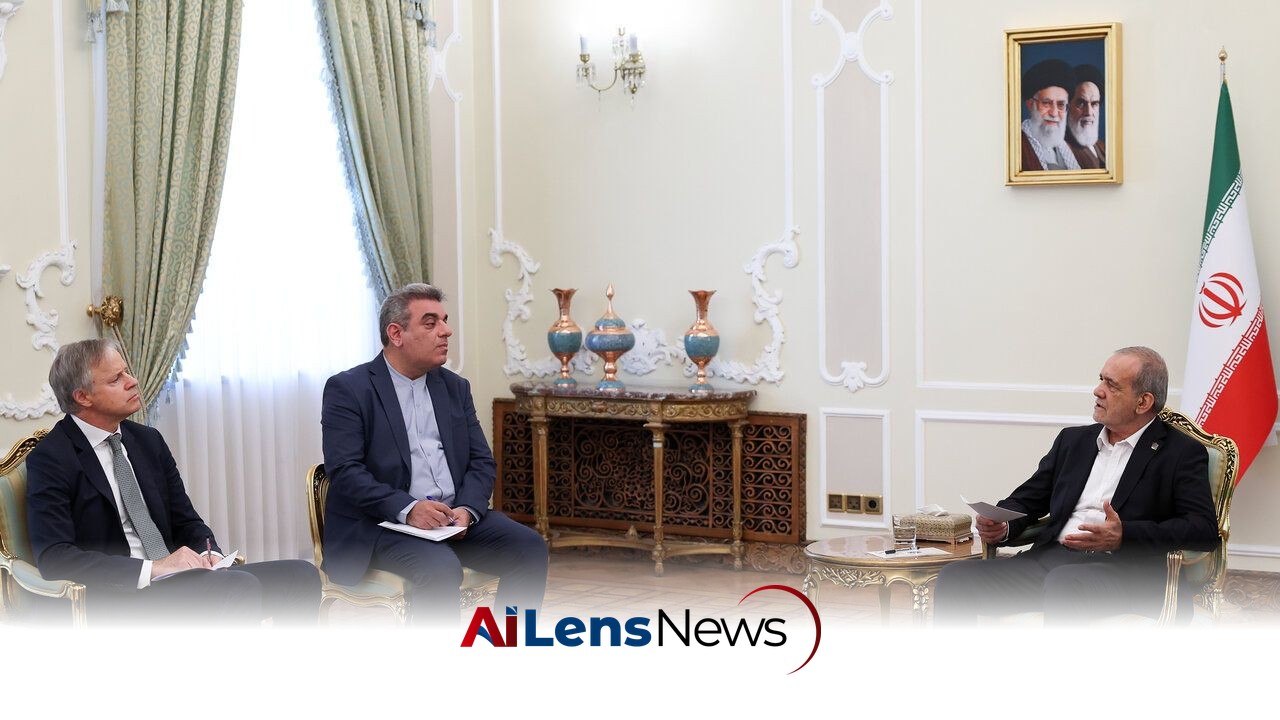


Iranian President Masoud Pezeshkian emphasizes rebuilding relations with Germany, enhancing cooperation with Ireland, and deepening ties with Sri Lanka during ambassador meetings.
Tehran, Iran Jul 24, 2026 ALN: Iranian President Masoud Pezeshkian has called for rebuilding relations with Germany, expanding cooperation with Ireland, and deepening strategic ties with Sri Lanka, as he received the credentials of the three countries' newly appointed ambassadors in Tehran in a series of separate meetings on Wednesday. These meetings are part of a broader diplomatic strategy by Iran to strengthen bilateral partnerships while reaffirming its commitment to dialogue, mutual respect, and constructive international engagement.
The historical context of Iran's diplomatic relations with these countries is crucial to understanding the nuances of President Pezeshkian's statements. Iran and Germany have a relationship that spans over a century, characterized by significant economic, cultural, and political exchanges. However, in recent years, this relationship has faced numerous challenges, particularly following the imposition of sanctions and tensions surrounding Iran's nuclear program. Pezeshkian's acknowledgment of the deterioration of ties reflects a broader sentiment within Iran's leadership that seeks to re-engage with Europe amidst ongoing geopolitical tensions.
Receiving Germany's new ambassador, Axel Dittmann, President Pezeshkian emphasized the need for a fundamental shift in Germany's approach to Iran. This call for a change is indicative of Iran's desire for a more balanced and respectful dialogue, which it believes has been lacking in recent years. Pezeshkian pointed to several specific measures that have strained relations, including the closure of the Islamic Center of Hamburg and restrictions on Iranian consular services, which have been perceived as unilateral actions undermining diplomatic relations.
Moreover, the sanctions targeting Iranian banks have had a profound impact on Iran's economy, contributing to a sense of isolation and frustration within the country. Pezeshkian's criticism of Berlin's position regarding military actions against Iran highlights the broader narrative of Iranian officials who view these actions as violations of international law. The president's remarks about the international community's silence over attacks on civilian infrastructure underscore a recurring theme in Iranian rhetoric, which seeks to position Iran as a victim of external aggression rather than an aggressor.
Despite these challenges, President Pezeshkian reaffirmed Iran's commitment to diplomacy and constructive dialogue, emphasizing Tehran's readiness to resolve disputes through political and legal channels. This statement reflects a strategic pivot towards engagement, especially as Iran seeks to navigate a complex international landscape where relationships with Western nations remain fraught with tension.
In his meeting with Ambassador Dittmann, the German envoy acknowledged the historical significance of the relationship and pledged to promote honest and responsible dialogue. Dittmann's commitment to confidence-building measures and practical solutions is indicative of a potential thaw in relations, although the path forward remains uncertain given the geopolitical complexities involved.
In a separate meeting, President Pezeshkian received Ireland's new ambassador, Aidan Cronin, highlighting common positions between Tehran and Dublin on major international issues as a solid foundation for expanding bilateral cooperation. The significance of Ireland in this diplomatic context cannot be understated, as it represents a European nation that has historically maintained a relatively neutral stance in international conflicts, often advocating for dialogue and diplomacy over military intervention.
Pezeshkian's remarks about shared opposition to occupation and double standards in international affairs resonate with Ireland's own foreign policy principles. This shared perspective provides an opportunity for deeper political engagement, particularly as both nations navigate the complexities of international relations where issues of human rights and humanitarian crises are increasingly at the forefront.
Addressing regional developments, Pezeshkian criticized actions taken by the United States and Israel against Iran, framing them as clear violations of international law and humanitarian norms. This rhetoric is consistent with Iran's long-standing narrative that positions it as a defender of sovereignty and human rights, particularly in light of ongoing conflicts in the Middle East. The Iranian president's emphasis on double standards regarding human rights reflects a broader critique of Western policies that are perceived as selective and inconsistent.
Ambassador Cronin's acknowledgment of the positive history of relations between Ireland and Iran, along with his reaffirmation of opposition to military actions against Iran, highlights a potential avenue for collaboration. Ireland's unique position within the European Union may allow it to act as a facilitator for dialogue between Iran and Europe, especially as tensions continue to escalate in various global contexts.
Meeting with Sri Lanka's new ambassador, Fazeeha Azmi, President Pezeshkian emphasized the longstanding friendship between Tehran and Colombo, indicating a desire to broaden cooperation across multiple sectors. The historical ties between Iran and Sri Lanka date back to ancient trade routes, and this relationship has evolved over the years, particularly in areas such as trade, investment, and cultural exchange.
Pezeshkian identified trade, investment, energy, agriculture, technology, and economic cooperation as priority areas for future collaboration. The activation of the Joint Economic Commission between the two countries is seen as a crucial step toward developing a practical roadmap for cooperation, ensuring that existing agreements are implemented effectively. This focus on economic partnership underscores Iran's broader strategy to diversify its international relationships in response to ongoing sanctions and economic pressures.
Furthermore, President Pezeshkian's gratitude towards the Sri Lankan government for its humanitarian assistance in repatriating the remains of Iranian martyrs serves to reinforce the narrative of solidarity and friendship between the two nations. This gesture is emblematic of the close ties that have developed over the years and reflects a mutual respect that both countries seek to maintain on the international stage.
Ambassador Azmi conveyed greetings from Sri Lanka's leadership and noted that the two countries will mark the 66th anniversary of diplomatic relations in 2027. This milestone presents an opportunity for both nations to reflect on their historical ties and consider future avenues for collaboration. Azmi's expression of appreciation for Iran's support in international organizations, particularly regarding issues of national sovereignty, highlights the shared values that underpin the relationship.
In conclusion, President Pezeshkian's meetings with the ambassadors of Germany, Ireland, and Sri Lanka underscore Iran's strategic efforts to rebuild and strengthen diplomatic ties with key nations. As Iran navigates a complex international landscape characterized by sanctions and geopolitical tensions, these diplomatic engagements reflect a broader commitment to dialogue, mutual respect, and constructive international relations. The implications of these discussions may extend beyond bilateral relations, potentially influencing Iran's interactions with other countries and regional dynamics as it seeks to assert its role on the global stage.
To learn more about the latest developments in Political History & Legacy, stay updated with our exclusive reports and analyses on AiLensNews.

