

Iran has vowed to seek justice for its late Leader, Ayatollah Seyed Ali Khamenei, while balancing defense strategies and diplomatic efforts in the region.
Tehran, Iran Jul 13, 2026 ALN: In a significant statement, Iran has declared its commitment to pursue retribution for the martyrdom of its late Leader, Ayatollah Seyed Ali Khamenei, alongside other victims of US-Israeli aggression. This pledge will be enacted through all available legal, diplomatic, and judicial mechanisms, while simultaneously reaffirming Iran's readiness to defend its sovereignty and maintain diplomatic channels.
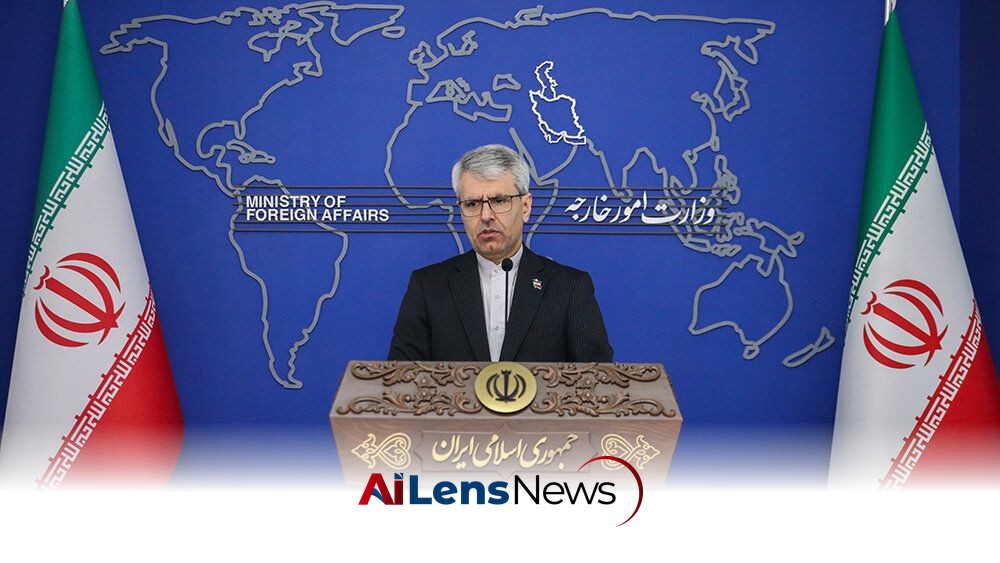
During a weekly press briefing on Monday, Foreign Ministry Spokesman Esmaeil Baqaei outlined the Islamic Republic's dual-track approach to the evolving regional crisis. He framed the pursuit of justice as both a national imperative and a legal obligation under international law. This approach not only highlights Iran's internal political landscape but also reflects its broader strategy in the international arena, where it seeks to assert its sovereignty and address grievances stemming from foreign interventions.
'No statute of limitations' for war crimes
Baqaei emphasized that the atrocities committed during the 40-day US-Israeli war of aggression against Iran represent crimes that are not subject to any statute of limitations. This assertion aligns with a growing discourse in international law regarding the accountability of state actors for war crimes, particularly in the context of conflicts involving significant civilian casualties and violations of human rights. He stressed that combating impunity for war criminals is a well-established principle of international jurisprudence, and that holding perpetrators accountable is a political, moral, and legal duty.
"The pursuit of justice and revenge for the martyred Leader and every single martyr who fell during the US and Israeli attacks is a serious national demand," Baqaei told reporters. This statement resonates deeply within the Iranian populace, many of whom view the martyrdom of their leaders and citizens as a rallying point against perceived external aggression.
The spokesman confirmed that the Foreign Ministry is actively engaged in a broader national effort to bring those responsible to justice and will deploy all available international legal and diplomatic means to achieve that end. Domestically, he added, significant judicial measures are being pursued, including the filing of lawsuits on behalf of the families of those martyred or injured during the attacks. This legal approach underscores Iran's intent to utilize international platforms, such as the International Criminal Court, to seek justice, although it remains to be seen how effective such efforts will be given the geopolitical complexities involved.
Baqaei's remarks came just days after the funeral and burial ceremonies of Ayatollah Seyed Ali Khamenei, following which his successor, Leader of the Islamic Revolution Ayatollah Seyyed Mojtaba Khamenei, declared that avenging the blood of the martyred leader and all those martyred in the recent conflicts had become an irreversible national commitment. This statement signals a potential shift in Iran's internal politics, as the new leadership seeks to rally the nation around a common cause while navigating the treacherous waters of regional diplomacy.
Defense without aggression
On the security front, Baqaei reiterated that Iran has never attacked any country in the region and has no intention of doing so. He clarified that Iranian military operations have been strictly limited to US military facilities used to launch attacks against the Islamic Republic. "We have not attacked, and will not attack, any country in the region," Baqaei stated, urging observers to "use words precisely." This assertion is part of Iran's broader narrative, which seeks to portray itself as a victim of aggression rather than an aggressor, a narrative that is crucial for maintaining domestic support and justifying its military capabilities.
The spokesman said Tehran has repeatedly called on neighboring states not to permit the United States or the Israeli regime to use their territory for military operations against Iran, describing such restraint as an obligation under international law. He warned that any part of the region used as a platform for aggression against Iran "will be subject to Iran's defensive measures." This statement reflects Iran's longstanding policy of deterrence, emphasizing that it will respond to perceived threats with appropriate measures, thereby maintaining a delicate balance between defense and aggression.
Regional security without foreign interference
Addressing US claims regarding the escort of commercial vessels through the Strait of Hormuz, Baqaei asserted that lasting security in the strategic waterway can only be achieved through regional cooperation—without the presence of foreign powers. The Strait of Hormuz is a critical chokepoint for global oil supplies, and Iran's control over it has been a contentious issue in international relations. By advocating for regional security mechanisms, Iran seeks to diminish US influence in the area and promote a multipolar balance of power.
"Our principled policy is that the region will not become secure unless the regional countries establish their own security mechanisms without foreign interference," he said, arguing that recent instability in West Asia has been fueled by the continued US military presence. This perspective is not unique to Iran; it reflects a broader sentiment among many countries in the region that foreign military interventions have exacerbated conflicts rather than resolved them.
He reiterated that Iran will not allow the Strait of Hormuz to become a base for threats against its national interests, and denounced Washington for obstructing Tehran's sincere efforts to ensure safe maritime navigation. This statement serves to reinforce Iran's resolve in protecting its territorial waters and asserting its rights under international maritime law.
The art of strategic choice
On the prospects for diplomacy, Baqaei emphasized that the rapidly evolving regional situation demands flexibility in selecting the most effective means of safeguarding Iran's interests. "The art is to choose the best method to help secure our national interests," he said. "Where circumstances require, we use war, and where circumstances require, we use diplomacy." This dual approach reflects a pragmatic understanding of international relations, where military might and diplomatic engagement are not mutually exclusive but rather complementary tools in a state's arsenal.
With both a firm commitment to justice and a pragmatic openness to dialogue, Iran appears to be charting a calculated course through one of the most volatile periods in recent regional history—one that balances the imperative of national honor against the exigencies of realpolitik. The implications of this strategy are significant not just for Iran but for the entire region, as it seeks to navigate complex alliances, rivalries, and the ever-present threat of conflict. As Iran continues to assert its narrative of victimhood while preparing for potential military responses, the international community watches closely, aware that the outcomes of these developments could shape the future of West Asia for years to come.
To learn more about the latest developments in Political Controversies, stay updated with our exclusive reports and analyses on AiLensNews.

