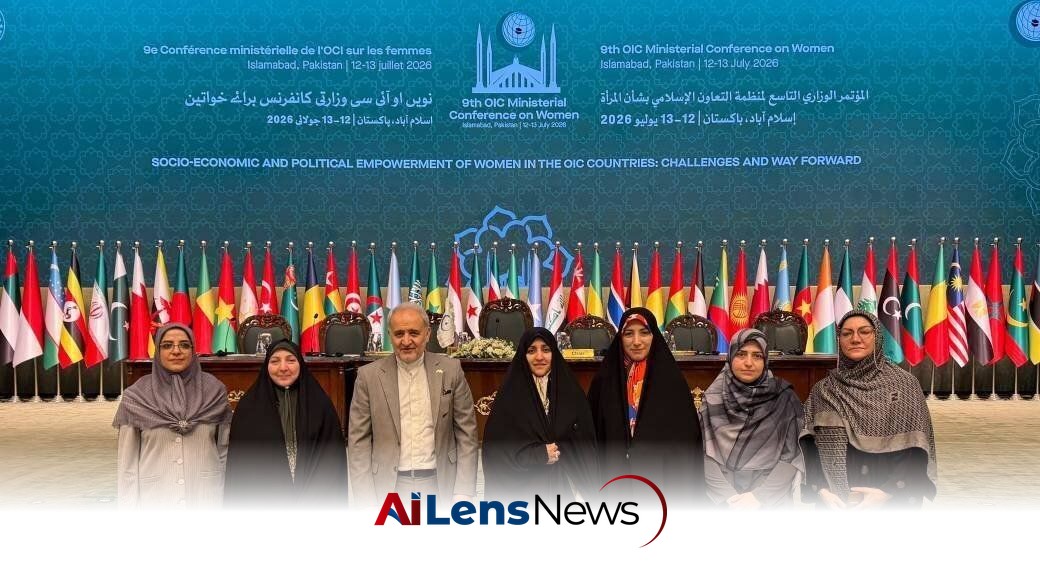


Narjes Abolqasemi has been elected to the OIC Women’s Advisory Council, emphasizing Iran's role in promoting women's empowerment within the Islamic world.
Tehran, Iran Jul 17, 2026 ALN: Narjes Abolqasemi, an official with the Vice-Presidency for Women and Family Affairs, has been elected as a new member of the Organization of Islamic Cooperation (OIC) Women’s Advisory Council. This election, which also included representatives from Turkey and Malaysia, was held during the 9th session of the OIC Conference of Ministers of Women’s Affairs in Islamabad, Pakistan, on July 12 and 13.
This development underscores Iran's active and constructive role in international mechanisms addressing women’s issues in the Islamic world. The OIC Women’s Advisory Council is tasked with guiding future policies, promoting women’s empowerment, and advocating for their rights, serving as an advisory body to the OIC Ministerial Conference. The council plays a crucial role in shaping policies that affect women across member states, ensuring that their voices are represented in discussions that shape their lives.
The ninth Ministerial Conference on Women of the OIC, titled “Socio-Economic and Political Empowerment of Women in the Organization of Islamic Cooperation Countries: Challenges and Way Forward,” gathered around 190 delegates from the 57 OIC member states. The conference aimed to enhance cooperation among member states regarding women’s empowerment, focusing on increasing socio-economic and political participation across OIC countries. This emphasis on collaboration reflects a growing recognition within the OIC of the importance of empowering women as a means to achieve broader social and economic development goals.
Building on outcomes from previous OIC ministerial meetings on women, particularly the one held in Cairo in 2021, the conference addressed issues related to women’s empowerment, protection frameworks, and enhancing their socio-economic participation. The discussions at the conference highlighted the need for a multi-faceted approach to women's empowerment, recognizing the diverse challenges women face in different contexts within the OIC member states. The recognition of these varying contexts is essential, as the socio-economic conditions, cultural norms, and legal frameworks surrounding women differ significantly across member states.
During the conference, Zahra Behrouz-Azar, the Vice-President for Women and Family Affairs, proposed two initiatives aimed at fostering collaboration among OIC member states to empower women. She highlighted the significant contributions of Iranian women in scientific, social, and crisis management fields, noting that they comprise over 56 percent of academic communities, around 46 percent of PhD graduates, and more than 68 percent of specialists in basic sciences. These statistics underscore the critical role that women play in various sectors, demonstrating their potential to contribute to socio-economic progress and development. However, despite these contributions, women often encounter systemic barriers that hinder their full participation in society, including discriminatory laws and societal expectations.
Behrouz-Azar emphasized that women and children disproportionately suffer during crises, yet their voices often go unheard. She pointed out that the contributions of women in the Iranian Red Crescent Society (IRCS) relief services demonstrate that a ‘women-for-women’ approach can effectively support those affected by crises. This approach not only addresses immediate needs but also empowers women by recognizing their capabilities and contributions in times of crisis. The acknowledgment of women as key players in humanitarian efforts is crucial, as their unique experiences and insights can lead to more effective and sustainable solutions in crisis situations.
Accordingly, Iran’s first proposal is to establish a ‘network of female relief workers of the Islamic World’ to connect female physicians, nurses, psychologists, social workers, and relief workers from Islamic countries. This network aims to leverage their capabilities to provide more effective support for women and children during crises and strengthen preparedness and cooperation among member states. By creating a platform for collaboration, the network can facilitate the sharing of best practices, resources, and knowledge, enhancing the overall response to humanitarian challenges. Such a network could also serve as a model for other regions facing similar challenges, showcasing the potential for women’s leadership in humanitarian responses.
The second proposal seeks to develop a single brand for products made by Muslim women, facilitating access to markets in Islamic countries, enhancing consumer confidence, expanding digital markets, and promoting collaborative exhibitions and training in exports and branding. This initiative recognizes the importance of economic empowerment as a means to uplift women and promote their participation in the marketplace. By providing women with the tools and resources they need to succeed in business, this proposal aims to create sustainable economic opportunities that can benefit entire communities. Economic empowerment is a critical component of gender equality, as it enables women to gain financial independence and make decisions that affect their lives and families.
These initiatives are grounded in shared values within the Islamic world, including human dignity, justice, cooperation, family, and social responsibility, paving the way for enhanced synergy among Islamic nations in supporting women. The commitment to these values is essential in fostering an environment where women can thrive and contribute to their societies. As the OIC continues to address women's issues, the emphasis on collaboration and shared responsibility will be crucial in overcoming the challenges that women face across member states. The OIC’s recognition of women’s rights as an integral part of human rights reflects a broader global trend towards gender equality, highlighting the importance of international cooperation in addressing these issues.
The election of Narjes Abolqasemi to the OIC Women’s Advisory Council not only reflects Iran's commitment to advocating for women's rights but also highlights the increasing recognition of women's roles in leadership positions within the Islamic world. As more women take on leadership roles in various sectors, their perspectives and experiences can help shape policies that are more inclusive and responsive to the needs of women and girls. This shift towards gender-inclusive leadership is critical, as it can lead to more equitable decision-making processes and policies that better address the unique challenges faced by women.
In conclusion, the developments at the OIC Conference of Ministers of Women’s Affairs signal a positive step towards greater collaboration among member states in addressing the challenges faced by women. The initiatives proposed by Iran, along with the active participation of women in leadership roles, are indicative of a growing movement towards empowering women in the Islamic world. As these efforts continue to evolve, the hope is that they will lead to meaningful change and progress for women across OIC member states, ultimately contributing to the broader goals of social and economic development. The ongoing commitment to women's empowerment within the OIC is not only vital for the advancement of women but also essential for the overall development and prosperity of member states.
To learn more about the latest developments in Elections, stay updated with our exclusive reports and analyses on AiLensNews.

