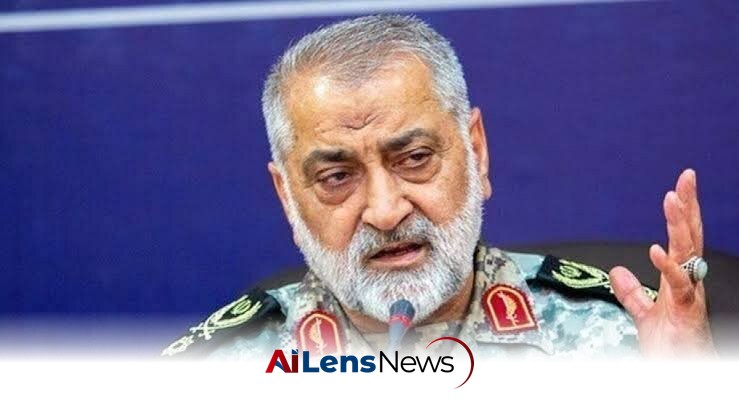


Iran's armed forces spokesperson claims U.S. presence is the main cause of regional instability, urging regional cooperation to ensure security.
Tehran, Iran Jul 17, 2026 ALN: The presence of American forces is the main cause of instability in the entire West Asia region, the spokesman for Iran's armed forces told IRIB news. This statement reflects a long-standing narrative within Iranian political and military discourse, where the United States is often characterized as an external aggressor whose military footprint exacerbates regional tensions.
Brigadier General Abolfazl Shekarchi asserted, "The reason for insecurity in the Strait of Hormuz is the presence of Americans. If the countries of the region join hands with Iran, we will not allow any insecurity in the region." This assertion is significant as it calls for regional cooperation against what Iran perceives as foreign interference in its affairs, suggesting a potential for unity among Middle Eastern nations against external powers.
The Strait of Hormuz is a strategically critical waterway, through which a significant portion of the world's oil supply is transported. It connects the Persian Gulf to the Gulf of Oman and the Arabian Sea, making it a vital artery for global trade. Citing international law, Shekarchi stated that territorial waters extend up to 12 nautical miles from coastlines, and only Iran and Oman have coastlines along the strait. Therefore, he argues, management of the waterway must be carried out by these two countries, reinforcing Iran's claim to sovereignty over the strait.
Shekarchi's comments highlight a broader theme in Iranian policy, which emphasizes the concept of maritime sovereignty and the right of coastal states to control their adjacent waters. He further stated, "America has come from thousands of kilometers away and has no legal right to interfere in the Strait of Hormuz," a point that underscores Iran's longstanding position that foreign military presence in the region is unjustified and serves only to increase tensions.
In his remarks, Shekarchi emphasized that Iran's presence in the Strait of Hormuz is solely aimed at ensuring the security of commercial shipping, oil tankers, and vessels. This assertion seeks to position Iran as a stabilizing force in the region, contrasting its military activities with what it perceives as the destabilizing actions of the United States. He noted, "The United States is trying to create insecurity by interfering in maritime routes and imposing its will on international vessels, while the Islamic Republic has acted to establish security," which reflects Iran's strategy of framing its military posture as defensive rather than aggressive.
Shekarchi pointed out that since the Americans declared a ceasefire, their drone flights over the Persian Gulf and the Strait of Hormuz have not stopped for a single day, demonstrating their continued hostile approach. This observation is indicative of the ongoing surveillance and military operations conducted by U.S. forces in the region, which Iran views as provocative and a direct threat to its sovereignty.
"The main factor of insecurity in the Persian Gulf and the Strait of Hormuz is America, not the Islamic Republic of Iran," the spokesman of the Iranian armed forces stated, reiterating a common narrative in Iranian rhetoric that frames the U.S. as the primary source of instability in the region. This perspective is often used to justify Iran's own military actions and to rally support among its allies and the Iranian populace.
Shekarchi urged regional countries not to allow their territory to be used for American military aggression against the Islamic Republic of Iran. This call for solidarity among regional nations suggests a desire for a collective security framework that excludes foreign military presence, particularly that of the U.S. He stated, "If the Muslim countries of the region do not place their skies, coasts, and logistical facilities at the disposal of the aggressor U.S. army, many security problems will disappear," indicating that Iran believes regional cooperation is essential for achieving lasting stability.
Furthermore, Shekarchi made it clear that Iran will never retreat on the issue of managing the strategic waterway and that the situation will not return to what it was before the war launched by the U.S. and Israel on February 28. This reference to a specific date suggests a significant event in Iranian history, likely tied to military or political actions that have shaped Iran's current stance towards both the U.S. and Israel.
His assertion that Iranian armed forces are at full readiness for any possible scenario and capable of continuing the fight for months or even years if necessary underscores Iran's commitment to maintaining a robust military posture in the face of perceived threats. This declaration serves to reassure both domestic and regional audiences of Iran's military capabilities and resolve.
Shekarchi stressed that if the U.S. targets Iran's infrastructure, all regional infrastructure will become legitimate targets for the Islamic Republic. This statement not only reflects Iran's willingness to retaliate against perceived aggressions but also raises concerns about the potential for a broader conflict that could involve multiple nations in the region.
The implications of these statements are significant. The Strait of Hormuz is a critical chokepoint for global oil supplies, and any escalation of tensions in this area could have far-reaching consequences for international energy markets and global economic stability. Additionally, the rhetoric from Iranian officials highlights the ongoing geopolitical struggle between Iran and the United States, which has been characterized by a series of confrontations, sanctions, and military posturing.
As tensions continue to simmer, the international community remains watchful of developments in the region. The potential for miscalculations or misunderstandings in such a volatile environment could lead to unintended escalations, making diplomatic engagement and dialogue increasingly important. The statements made by Iranian officials serve as a reminder of the complexities of regional security dynamics and the challenges of achieving lasting peace in a region marked by historical grievances and competing interests.
In conclusion, the remarks from Brigadier General Abolfazl Shekarchi encapsulate Iran's perspective on the role of U.S. military presence in the Strait of Hormuz and the broader West Asia region. They reflect a narrative that seeks to position Iran as a defender of regional security while simultaneously framing the U.S. as a destabilizing force. As the geopolitical landscape continues to evolve, the interplay between these narratives will undoubtedly shape future interactions and policies among nations in the region and beyond.
To learn more about the latest developments in Political Controversies, stay updated with our exclusive reports and analyses on AiLensNews.

