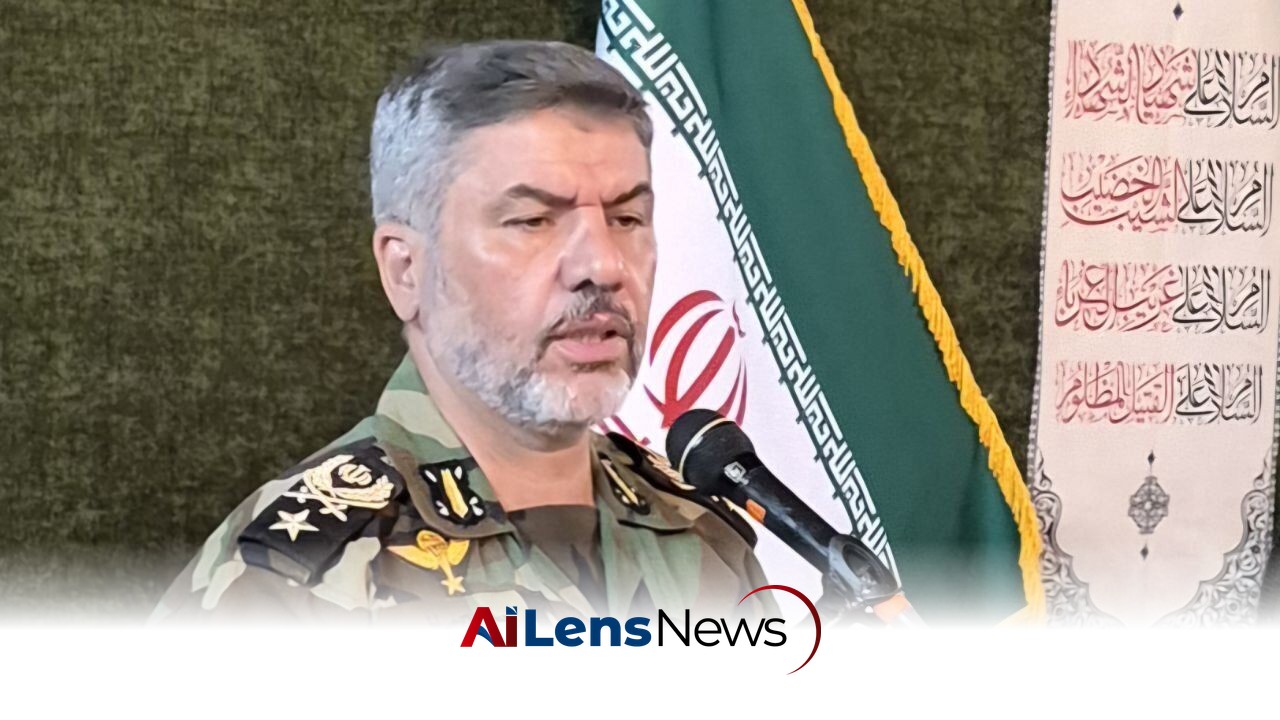


Iran vows to maintain its defensive operations against US aggression until it achieves absolute deterrence, preventing future violations against the nation.
Tehran, Iran Jul 20, 2026 ALN: Iran has vowed to sustain its defensive operations against US aggression until the Islamic Republic establishes absolute deterrence, ensuring the permanent prevention of any future violations against the country.
In a statement made on Monday, Brigadier General Mohammad Akrami-Nia, the spokesman for Iran's Army, articulated the government's position regarding its military strategy in the face of perceived external threats. He stated, "Rationality dictates that the war must continue until it achieves total deterrence for the Iranian nation." This assertion reflects Iran's longstanding view that military preparedness and operational readiness are essential components of its national security strategy, particularly in relation to the United States and its allies.
General Akrami-Nia elaborated, saying, "Otherwise, the enemy will miscalculate and invade Iran's sacred soil once again. Therefore, pursuing the war until absolute deterrence is established is not an emotional or warmongering stance—it is a strategic decision grounded in hard experience and logic." This perspective is rooted in Iran's historical experiences, particularly the Iran-Iraq War (1980-1988), which left a lasting impact on the nation's military doctrine and its approach to foreign policy.
The Iran-Iraq War was a protracted conflict that resulted in significant losses for both countries, but it also reinforced Iran's belief in the necessity of a robust defense posture. The war fostered a sense of national unity and resilience among the Iranian populace, leading to an enduring commitment to military self-sufficiency and deterrence. The lessons learned from that conflict continue to influence Iran's military strategies and its interactions with foreign powers.
Turning his attention to regional geopolitics, General Akrami-Nia strongly condemned the collaboration of certain neighboring states with Washington's hostile campaigns against the Islamic Republic. His remarks highlight the complex dynamics of the Middle East, where alliances and enmities are often fluid and influenced by broader geopolitical considerations.
"Several southern Persian Gulf nations, which have benefited from the capacity of the Strait of Hormuz for years to export billions of dollars in oil and bring in imports, are today collaborating with the criminal United States in strikes against Iran," General Akrami-Nia noted. This statement underscores the perceived betrayal felt by Iran towards its neighbors, particularly those who have aligned themselves with the United States in opposition to Iranian interests.
The Strait of Hormuz is a critical maritime chokepoint through which a significant portion of the world's oil supply is transported. Iran has historically viewed its control over this strait as a vital element of its national security strategy. The Iranian leadership often emphasizes its readiness to defend its territorial waters against any perceived threats, and this latest statement from the military reinforces that commitment.
General Akrami-Nia's comments also reflect the broader tensions in the region, particularly in light of recent military engagements and the ongoing U.S. presence in the Middle East. The Iranian government has consistently portrayed the U.S. military as an occupying force that destabilizes the region and threatens Iran's sovereignty. This narrative resonates with segments of the Iranian population who view the U.S. as an adversary rather than a partner.
In his remarks, he firmly reasserted Iran’s sovereign authority and strategic control over the critical maritime chokepoint, issuing a stern warning to complicit regional regimes. "Countries that have aided the US terrorist military in its illegal acts of aggression will undoubtedly face severe consequences when navigating the Strait of Hormuz," he warned. This statement serves as a reminder of the potential for escalation in the region, particularly if Iran perceives that its interests are being undermined by external forces.
The implications of these statements extend beyond Iran's borders, as they signal a potential shift in the balance of power in the Persian Gulf. The region has long been a flashpoint for tensions between Iran and its Gulf neighbors, especially Saudi Arabia and the United Arab Emirates, which have aligned themselves with U.S. foreign policy objectives. The Iranian leadership's insistence on maintaining an aggressive posture could provoke further military buildups and retaliatory measures from these states, potentially leading to a cycle of escalation.
Moreover, this rhetoric from Iranian military officials may also affect the broader geopolitical landscape, including negotiations surrounding Iran's nuclear program. The U.S. and its allies have expressed concerns over Iran's military capabilities and its influence in the region, and statements like those from General Akrami-Nia could complicate diplomatic efforts aimed at curbing Iran's nuclear ambitions. The Iranian government has often used its military strength as leverage in negotiations, and a commitment to continued military operations could be interpreted as a signal of defiance against international pressure.
As Iran continues to assert its position in the region, the potential for confrontation remains high. The international community, particularly Western nations, will likely be closely monitoring developments in Iranian military policy and its implications for regional stability. The ongoing tensions between Iran and the U.S., coupled with the complex alliances among Gulf states, create a precarious environment where miscalculations could lead to significant military confrontations.
In conclusion, Iran's commitment to maintaining a strong military posture in the face of perceived threats reflects a broader strategy aimed at deterring aggression and asserting its sovereignty. The statements made by Brigadier General Mohammad Akrami-Nia highlight the complexities of regional geopolitics and the potential for escalation in the Persian Gulf. As Iran continues to navigate these challenges, its military strategy will remain a crucial component of its national security framework, influencing both domestic and international perceptions of its role in the region.
To learn more about the latest developments in Elections, stay updated with our exclusive reports and analyses on AiLensNews.

