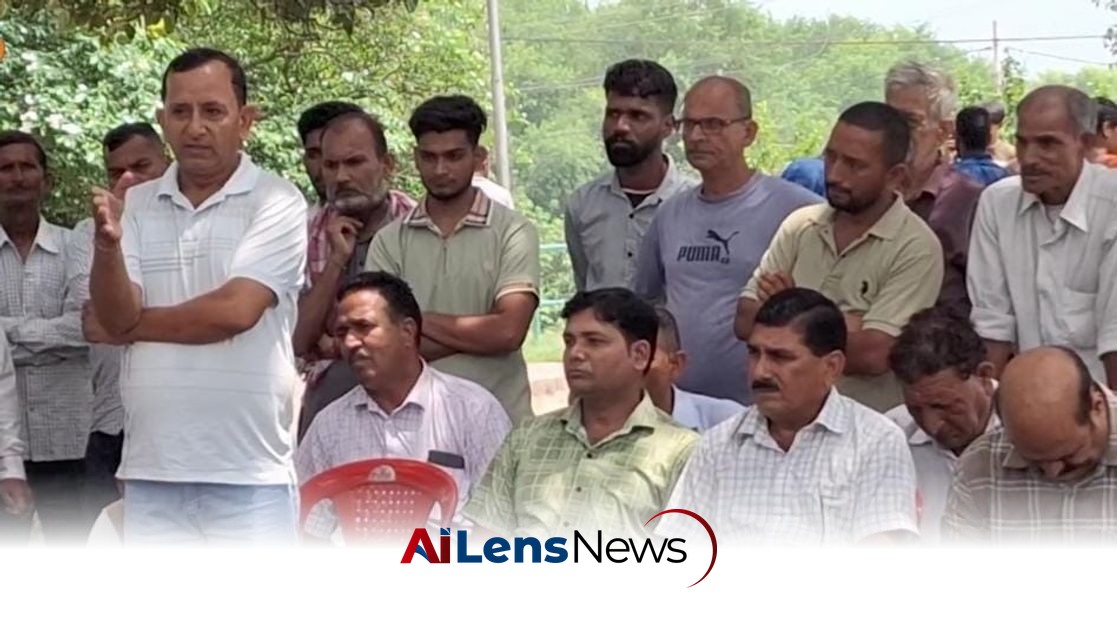


Members of the West Pakistani Refugees community in Kathua are urging the government to expedite land ownership rights and release promised settlement benefits.
New Delhi, India Jul 15, 2026 ALN: Members of the erstwhile West Pakistani Refugees (WPRs) community on Wednesday demanded early grant of land ownership rights and release of one-time settlement benefits. This demand highlights the long-standing issues faced by this community, which has been advocating for their rights for decades.
The members claimed that hundreds of eligible families have yet to receive the relief promised by the government. The issue of land ownership rights is particularly crucial for these refugees, who have faced numerous challenges since their migration to India in the wake of the 1947 Partition. The lack of legal ownership over land has hindered their ability to secure their livelihoods and has contributed to a sense of insecurity within the community.
The demands were raised during a gathering here under the leadership of the West Pakistani Refugees chairperson Labha Ram Gandhi. Gandhi has been a prominent voice for the WPR community, consistently advocating for their rights and raising awareness about their plight. His leadership has been instrumental in organizing the community and bringing their concerns to the forefront of public discourse.
"Around 902 registered refugee families in Kathua have not been granted ownership rights over the land allotted to them. We urge the administration to expedite the process of issuing legal ownership documents for allotted land and custodian properties," he told reporters here. The urgency of the situation is underscored by the fact that many families have been living on these lands for generations, yet remain without formal recognition of their rights.
Gandhi also expressed concern over the possible demographic implications for Jammu and Kashmir in view of recent developments in Pakistan-occupied Kashmir (PoK). The geopolitical situation in the region has been fluid, and any changes could impact the status of refugee families. He urged the government to protect the interests of refugee families, emphasizing that their rights and livelihoods must be safeguarded amidst changing political landscapes.
In August 2024, the Jammu and Kashmir Administrative Council, chaired by Lieutenant Governor Manoj Sinha, approved a proposal to confer ownership rights on government land to families displaced from West Pakistan. This decision was seen as a significant step towards addressing the long-standing grievances of the WPR community. However, the implementation of this proposal remains critical, as many families continue to wait for the legal recognition of their land rights.
The West Pakistani Refugees are families who migrated from areas that became part of Pakistan after the 1947 Partition and settled mainly in Jammu, Kathua, and Rajouri districts. The migration was a result of the communal violence and upheaval that characterized the Partition, which led to mass displacements across the subcontinent. The WPR community has since faced numerous challenges, including social marginalization and economic hardships.
According to community representatives, around 5,764 refugee families migrated to the region following the 1947 conflict. Over the years, these families have struggled to integrate into the local socio-economic fabric, often facing discrimination and exclusion from various government benefits. The demand for land ownership rights is not just about legal recognition; it is also about dignity, security, and the ability to build a stable future for their children.
The issue of land rights for WPRs has been a contentious topic in Jammu and Kashmir, with various political parties and organizations weighing in on the matter. Some argue that granting land rights to refugees could alter the demographic balance in the region, while others contend that it is a matter of justice and equity for those who have been displaced due to circumstances beyond their control.
In recent years, there has been a growing recognition of the need to address the grievances of the WPR community. Various civil society organizations and human rights advocates have also joined the call for justice, emphasizing the importance of granting land ownership rights as a means of restoring dignity and providing a sense of belonging to the WPRs.
The implications of this demand extend beyond the immediate concerns of land ownership. The resolution of the WPRs' issues could serve as a precedent for addressing the rights of other marginalized communities in Jammu and Kashmir. It could also pave the way for a more inclusive narrative regarding the region's complex history and the experiences of those who have been affected by conflict and displacement.
As the WPR community continues to advocate for their rights, the response of the government and local authorities will be critical in determining the future of these families. The ongoing dialogue between community leaders and government officials will be essential in finding a resolution that acknowledges the historical injustices faced by the WPRs while also considering the broader socio-political context of Jammu and Kashmir.
In conclusion, the demands of the West Pakistani Refugees for land ownership rights and one-time settlement benefits reflect a deep-seated desire for recognition and justice. As they continue to navigate the challenges of displacement and marginalization, the outcome of their advocacy efforts will have lasting implications for their community and the region as a whole.
The plight of the WPRs is not merely a legal issue; it is deeply intertwined with the social fabric of Jammu and Kashmir. The historical context of their migration, the socio-economic challenges they face, and their ongoing struggle for recognition are all critical factors that must be understood in order to appreciate the significance of their current demands. The WPR community's fight for land ownership rights is emblematic of broader issues of displacement, identity, and belonging that resonate with many communities across the region.
The historical backdrop of the WPRs’ situation is rooted in the tumultuous events of the 1947 Partition, which saw the division of British India into two independent dominions, India and Pakistan. This division was marked by widespread communal violence and a massive population exchange, resulting in the displacement of millions. The WPRs, primarily Hindu and Sikh families, fled from what is now Pakistan, seeking refuge in India. Despite their significant contribution to the region's development, they have remained marginalized and disenfranchised.
In the decades following their migration, the WPRs have faced numerous obstacles in their quest for stability and security. The lack of recognized land ownership has not only limited their economic opportunities but has also affected their social standing within the local communities. Many WPR families have lived in a state of uncertainty, with their livelihoods dependent on land that they do not legally own. This precarious situation has been a source of stress and anxiety for generations, as families worry about their future and the well-being of their children.
The demand for land ownership rights is thus not merely a bureaucratic formality; it represents a fundamental need for security, dignity, and the ability to build a future. For many families, land is more than just a resource; it is a symbol of stability and belonging. The struggle for these rights is emblematic of a larger narrative around justice and recognition for those who have been historically marginalized.
Furthermore, the geopolitical landscape of Jammu and Kashmir complicates the situation for the WPR community. The region has been a focal point of conflict between India and Pakistan, with ongoing tensions affecting the lives of its residents. The WPRs find themselves at the intersection of these larger political dynamics, which can influence government policies and public perceptions of their plight. As such, the resolution of their demands for land rights could have broader implications for peace and stability in the region.
The recent approval by the Jammu and Kashmir Administrative Council to confer ownership rights is a hopeful sign for the WPR community, but the real challenge lies in the effective implementation of this decision. Ensuring that these rights are granted in a timely manner will be crucial in rebuilding trust between the government and the WPRs. The community's continued advocacy and engagement with local authorities will be essential in ensuring that their voices are heard and their rights are recognized.
In summary, the West Pakistani Refugees' demand for land ownership rights and one-time settlement benefits is a reflection of their long-standing struggle for dignity, security, and recognition. As they continue to advocate for their rights, the implications of their demands extend beyond their community, touching upon broader themes of justice, belonging, and the need for inclusive policies in Jammu and Kashmir. The outcome of their advocacy efforts will not only shape their future but could also set a precedent for addressing the rights of other marginalized communities in the region, fostering a more equitable and just society for all.
To learn more about the latest developments in Political Controversies, stay updated with our exclusive reports and analyses on AiLensNews.

