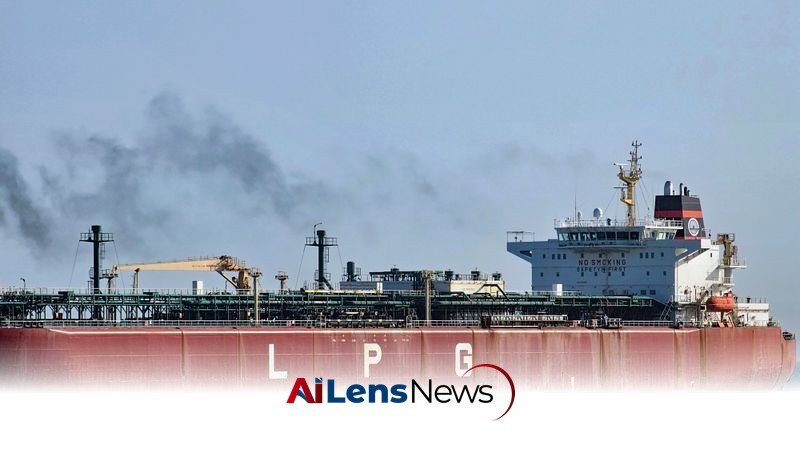


In a bold statement, President Trump declared the US will act as the 'guardian' of the Strait of Hormuz, imposing a 20% toll on vessels for safe passage, amid rising oil prices.
New Delhi, India Jul 14, 2026 ALN: In a significant announcement, President Donald Trump stated that the United States will take on the role of 'guardian' of the Strait of Hormuz, a critical waterway for global oil transportation. This declaration comes at a time when tensions in the region are escalating, particularly between the US and Iran. The Strait of Hormuz, located between Oman and Iran, is a strategic maritime chokepoint that facilitates the transit of a substantial portion of the world's oil supply. Approximately 20% of the global oil trade passes through this narrow passage, making it one of the most vital waterways for international commerce.
Trump revealed that the US will impose a 20% toll on vessels passing through the strait, which is responsible for a substantial portion of the world's oil supply. This move is aimed at ensuring the safe transit of ships through the strategically vital waterway, which has been a flashpoint for geopolitical tensions. The toll is intended to fund increased military presence and security measures in the region, as the US seeks to deter potential threats to maritime navigation.
The announcement has already had a noticeable impact on the oil market, with prices soaring by 5% following the news. Analysts suggest that the toll could lead to increased shipping costs, which may ultimately be passed on to consumers. Higher oil prices could affect various sectors of the economy, from transportation to manufacturing, leading to broader inflationary pressures. The cost of oil is a critical factor influencing global economic stability, and any significant fluctuations can have cascading effects on markets worldwide.
Historically, fluctuations in oil prices have often been linked to geopolitical events, and this announcement is no exception. The toll could potentially lead to a cycle of rising prices that could impact everything from consumer goods to energy costs. Additionally, countries that rely heavily on oil imports may find themselves grappling with increased expenses, which could strain their economies.
The Strait of Hormuz is not only a vital artery for oil transportation but also a focal point of geopolitical tension. The region has been fraught with tensions, particularly after the US withdrew from the Iran nuclear deal and reimposed sanctions on the country. Iran has repeatedly threatened to block the strait in response to perceived provocations, which raises concerns about potential military confrontations in the area. Trump's announcement comes amid ongoing discussions about a potential peace pact between the US and Iran, which could reshape the dynamics in the region. The prospect of a toll on shipping could further complicate these negotiations, as Iran has historically viewed any US military presence in the region as a threat.
The US has been involved in various military operations in the Persian Gulf, and the presence of American naval forces has often been a source of friction with Iran. The Iranian government has consistently stated that any foreign military presence in the region is unwelcome and has vowed to protect its territorial waters. Trump's announcement of a toll may be perceived by Iran as an escalation of US military involvement, potentially leading to increased hostility.
Industry experts have expressed mixed reactions to Trump's announcement. Some believe that the toll could deter piracy and ensure safer passage for vessels, while others warn that it could escalate tensions further and lead to retaliatory measures from Iran. The shipping industry operates on thin margins, and any additional costs could be detrimental to smaller operators, potentially leading to shifts in shipping routes and practices.
The international community has been closely monitoring the situation in the Strait of Hormuz. Allies of the US, particularly those in Europe and Asia, may find themselves caught in a difficult position. On one hand, they rely on oil from the Gulf; on the other, they may be concerned about the potential for escalating conflict as a result of US actions. Countries like Japan and South Korea, which are heavily dependent on oil imports, may seek to negotiate with both the US and Iran to ensure the continued flow of oil while avoiding confrontation.
Moreover, the imposition of a toll could lead to a realignment of shipping routes as companies seek to minimize costs. Alternatives to the Strait of Hormuz, such as overland pipelines or routes around Africa, may become more attractive despite their longer transit times and potential logistical challenges. This shift could not only affect the economics of oil transportation but could also lead to changes in global trade patterns.
As the situation develops, the international community will be watching closely to see how Trump's announcement affects both regional stability and global oil markets. The implications of the US acting as the 'guardian' of the Strait of Hormuz could have significant consequences for international trade and geopolitical relations. If tensions continue to escalate, we may witness a shift in how countries engage with one another in the region, potentially leading to new alliances or conflicts. The toll on shipping could also lead to broader economic impacts that extend beyond the immediate region, influencing global markets and economic policies.
In summary, the announcement of a toll on vessels passing through the Strait of Hormuz represents a pivotal moment in US-Iran relations and the broader geopolitical landscape. The ramifications of this decision will likely unfold over time, as stakeholders across the globe react to the evolving situation. The potential for increased military presence, coupled with the economic implications of higher oil prices, could reshape not only the dynamics of the region but also the global economy at large.
To learn more about the latest developments in Political Controversies, stay updated with our exclusive reports and analyses on AiLensNews.

