

Trump reacts to bill threatening 100% tariffs on India
The US president, speaking to reporters in the Oval Office, said lawmakers should revise the Russia sanctions bill to give him broad authority to impose tariffs on Iran.
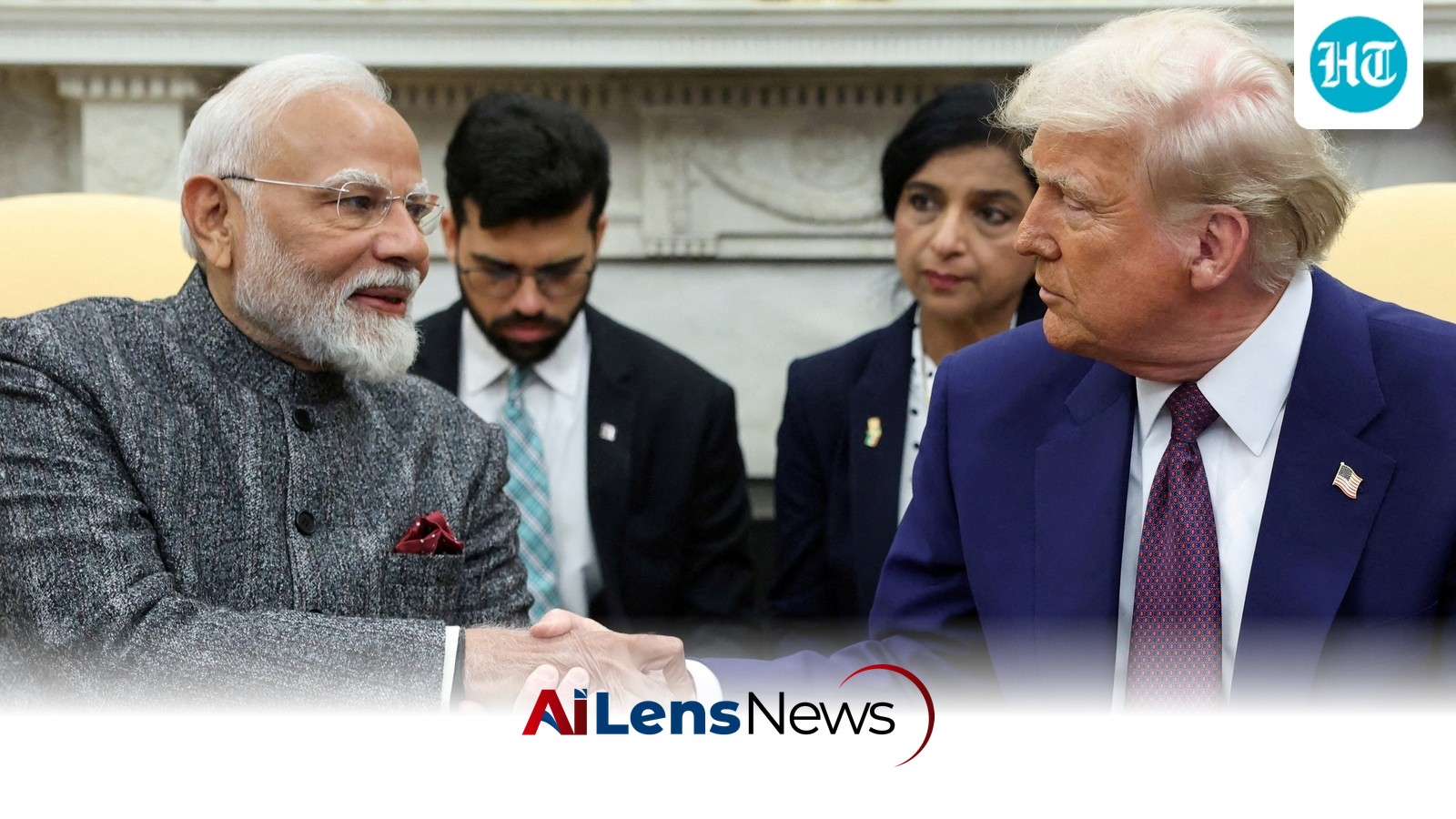


US President Donald Trump suggests lawmakers revise a sanctions bill to give him authority to impose tariffs on Iran, potentially affecting India.
New Delhi, India Jul 30, 2026 ALN: US President Donald Trump on Wednesday reacted to the Russia sanctions bill that has cleared the US Senate and could put India and four other countries at risk of facing tariffs up to 100%, suggesting a modification to give him broad powers to impose tariffs on Iran.
The sanctions bill, authored by the late Senator Lindsey Graham, advanced on Tuesday and is aimed at increasing economic pressure on Moscow over its invasion of Ukraine. Notably, India is the second-largest importer of Russian crude oil after China.
| India, China ‘main culprits’, key targets of Russia sanctions bill: US senator
The US president, speaking to reporters in the Oval Office, said lawmakers should revise the Russia sanctions bill to give him broad authority to impose tariffs on Iran.
His proposal could slow the legislation as it heads to the House of Representatives.
"It shouldn't be necessary, to be honest. But if it's necessary I'd like them to add Iran as tariffs, not just as sanctions, I think that's important, that's what Lindsey wanted," he said.
The sanctions bill, which has garnered bipartisan support, is part of a broader strategy by the US government to respond to Russia’s aggressive actions in Ukraine. The invasion, which began in February 2022, has prompted a series of sanctions aimed at crippling the Russian economy and limiting its ability to finance military operations. The imposition of tariffs on countries that continue to engage in trade with Russia is seen as a way to deter nations from supporting Moscow.
India's position in this geopolitical landscape is particularly complex. Despite being a long-time ally of the United States, India has maintained a strong relationship with Russia, particularly in defense and energy sectors. The country has been purchasing significant quantities of Russian oil, which has become a critical component of its energy strategy amidst global market fluctuations and rising prices. This reliance on Russian crude has drawn criticism from various quarters, including US lawmakers who argue that India is undermining the sanctions regime designed to penalize Russia for its actions.
Senator Graham's bill reflects a growing sentiment among US legislators that countries like India and China, which have not fully aligned themselves with the West in condemning Russia, need to face consequences for their economic ties to Moscow. The proposed sanctions are viewed as a necessary step to ensure that nations do not benefit from their dealings with Russia while the country is engaged in military aggression.
The potential for 100% tariffs on imports from India is a significant threat that could impact a wide range of goods, from textiles to technology. Such tariffs would not only affect Indian exporters but could also lead to increased prices for American consumers, as the costs would likely be passed down through the supply chain. The economic ramifications could be substantial, potentially straining US-India relations, which have been on an upward trajectory in recent years.
Trump's call for the inclusion of Iran in the sanctions bill adds another layer of complexity to the situation. Iran has long been at odds with the US and is subject to its own set of sanctions due to its nuclear program and regional activities. By advocating for tariffs on Iran, Trump is signaling a desire to take a tougher stance on Tehran, which he believes could be detrimental to US interests in the Middle East and beyond.
Moreover, the push to revise the sanctions bill could lead to a prolonged debate in Congress. Lawmakers may be divided on the best approach to take regarding India and Iran, and whether broad tariff powers are necessary or effective. Some legislators may argue that imposing tariffs could exacerbate tensions and lead to retaliation from affected countries, while others may view it as a necessary tool to enforce compliance with US foreign policy objectives.
As the bill moves to the House of Representatives, it remains to be seen how lawmakers will respond to Trump's proposal. The House may choose to amend the bill further, which could delay its passage and complicate the legislative process. This uncertainty could have implications for US foreign policy, particularly as it relates to the ongoing conflict in Ukraine and the broader geopolitical dynamics involving Russia, India, and Iran.
In conclusion, President Trump's reaction to the Russia sanctions bill highlights the intricate balance of foreign relations and economic policy. The potential for 100% tariffs on India underscores the US's commitment to holding nations accountable for their dealings with Russia, while also revealing the complexities of international trade and diplomacy. As the situation evolves, the outcomes of this legislative process will be closely watched by both policymakers and analysts, given its potential to reshape US relations with key global players.
To further understand the implications of this bill, it is essential to consider the historical context of US-Russia relations, particularly in light of recent events. The invasion of Ukraine marked a significant turning point, leading to a reevaluation of diplomatic and economic ties not only with Russia but also with countries that maintain close relations with Moscow.
For India, the balancing act is particularly challenging. Historically, India has relied on Russia for military supplies and technology, dating back to the Cold War era when it sought to establish a counterbalance to Western influence in the region. This longstanding relationship has led to continued defense cooperation, including joint military exercises and arms purchases, which are crucial for India's national security strategy.
Furthermore, India's energy needs have become increasingly pressing due to its growing economy and population. Russian oil has provided a relatively affordable source of energy, especially in a time of global supply chain disruptions and fluctuating prices. However, this dependence raises questions about India's ability to navigate the geopolitical landscape without jeopardizing its economic interests.
The sanctions bill, therefore, represents not just a punitive measure against Russia, but also a broader strategy to reshape international alliances and economic dependencies. For the US, it is an opportunity to assert its influence and encourage countries like India to align more closely with Western policies. However, this approach risks alienating key partners and could lead to a realignment of international relations in ways that may be counterproductive to US interests.
In addition to the economic implications, the geopolitical ramifications of such tariffs could lead to a reevaluation of alliances. Countries like India may seek to diversify their partnerships, potentially looking towards other nations such as Russia or China for support in the face of US sanctions. This could result in a shift in the balance of power in the region and beyond, complicating the already intricate web of international relations.
As the debate surrounding the sanctions bill unfolds, it is crucial for lawmakers to consider the long-term consequences of their actions. The potential for retaliatory measures from India and other affected countries could escalate tensions and lead to a tit-for-tat scenario that undermines global trade. Such a situation could have far-reaching consequences, not only for the economies involved but also for the broader international order.
Ultimately, the outcome of this legislative process will be a pivotal moment in US foreign policy, shaping the relationship between the United States and key global players. It will also serve as a litmus test for how effectively the US can navigate the complex interplay of economic sanctions and diplomatic relations in an increasingly multipolar world.
In summary, President Trump's call for revisions to the Russia sanctions bill reflects the intricate dynamics of contemporary geopolitics, where economic measures are increasingly used as tools of foreign policy. The potential for 100% tariffs on India poses significant challenges for US-India relations, while also highlighting the broader implications for international trade and diplomacy in the context of the ongoing conflict in Ukraine and the evolving geopolitical landscape.
To learn more about the latest developments in Elections, stay updated with our exclusive reports and analyses on AiLensNews.