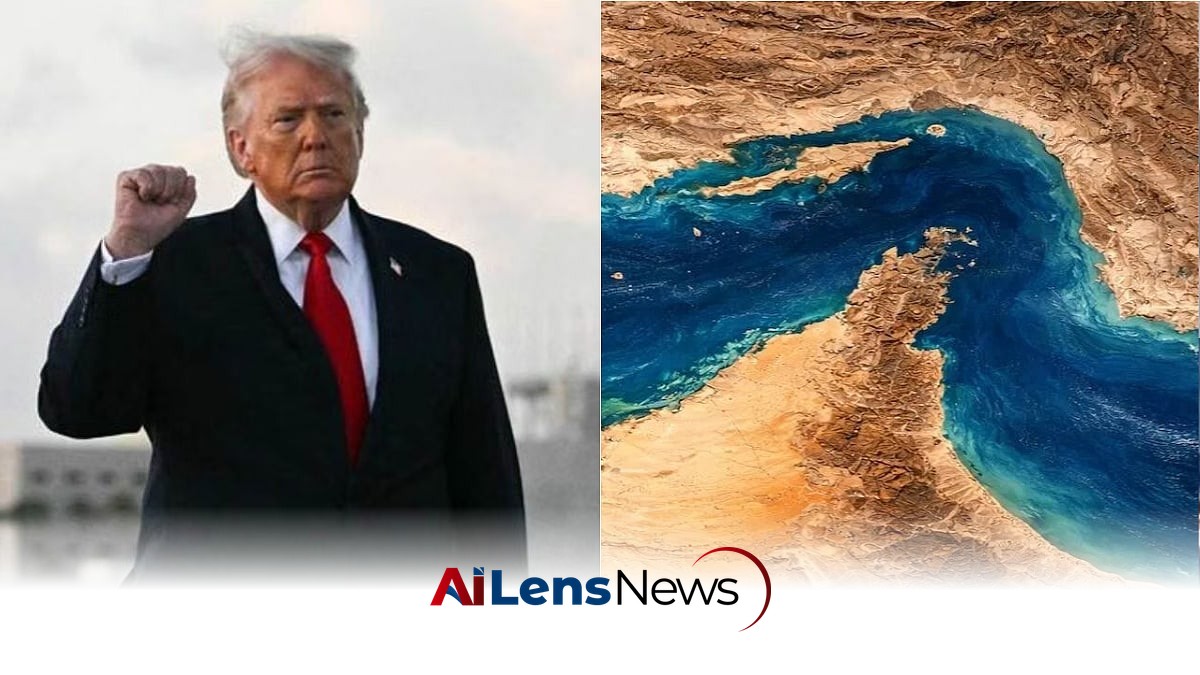


In a strategic shift, President Trump replaces a proposed 20% fee on ships using the Strait of Hormuz with investment deals from Gulf nations, emphasizing economic cooperation.
New Delhi, India Jul 15, 2026 ALN: US President Donald Trump has recently made a significant policy shift regarding the Strait of Hormuz, a critical maritime passage for global oil shipments. In a move that has garnered attention, Trump announced his decision to abandon a proposed 20% fee on ships utilizing the Strait of Hormuz. Instead, he plans to focus on fostering trade and investment deals with Gulf countries. This announcement was made via a post on Truth Social, where Trump highlighted the discussions he had with leaders from the Middle East.
Initially, the Trump administration's proposal for a United States Reimbursement Fee aimed to impose a financial charge on cargo ships transiting the Strait of Hormuz. This fee was intended to generate revenue while also holding countries accountable for their maritime activities in a region that has been fraught with geopolitical tensions. However, after what Trump described as "highly productive conversations with Middle East leadership," he opted to pivot from this approach. The emphasis now lies on securing substantial trade and investment commitments from Gulf states, which Trump asserts will benefit both the United States and the Gulf countries involved.
Massive Investments Ahead
In his announcement, Trump expressed optimism about the potential for these investments, deeming them to be "MASSIVE but, at the same time, extraordinarily good for them, and their future." This statement reflects a broader strategy of engaging Gulf nations economically, potentially fostering stronger alliances and promoting stability in a region that has historically experienced volatility. The Gulf states, which include nations such as Saudi Arabia, the United Arab Emirates, and Qatar, have significant financial resources and investment capabilities. By focusing on trade and investment, the Trump administration may be seeking to leverage these resources to bolster the US economy while also enhancing diplomatic ties.
The Gulf Cooperation Council (GCC), which includes these nations, has been a focal point for US foreign policy in the Middle East. The GCC countries have long been significant partners for the United States, particularly in terms of energy security and military cooperation. By shifting the focus from fees to investment, the Trump administration may hope to solidify these relationships further, especially in light of growing competition from other global powers.
Trump's remarks also included an observation about the current state of oil flow through the Strait of Hormuz. He claimed that oil was "flowing like never before," attributing this success to the presence and actions of the US military in the region. The Strait of Hormuz is a strategic chokepoint through which approximately 20% of the world's oil supply passes. The security of this waterway is paramount not only for the Gulf countries but also for global energy markets. Trump's emphasis on military support underscores the importance of US naval presence in ensuring safe passage for commercial vessels, particularly amidst ongoing tensions with Iran.
In his post, Trump stated that the Strait of Hormuz remains open to all ship traffic, with the exception of vessels linked to Iran. This assertion reflects the ongoing geopolitical dynamics in the region, characterized by a complex interplay of national interests, security concerns, and economic dependencies. The US has maintained a blockade on ships traveling to and from Iranian ports or carrying Iranian cargo, a measure that aligns with its broader strategy of exerting pressure on Iran, particularly regarding its nuclear program.
Military Support Highlighted
Trump took the opportunity to commend key figures in the US military, including Defense Secretary Pete Hegseth, Chairman of the Joint Chiefs of Staff Gen Dan Caine, and Commander of US Central Command Admiral Brad Cooper. By highlighting their roles, Trump aimed to reinforce the narrative that the US military's presence in the region is crucial for maintaining stability and ensuring the free flow of maritime trade. The Strait of Hormuz has been a focal point for military operations and strategic positioning, especially in response to perceived threats from Iran and its allies.
The decision to shift from a direct fee to investment deals represents a notable change in how the Trump administration approaches its relationships with Gulf countries. This pivot may be seen as an effort to strengthen economic ties while reducing the perception of the US as a transactional power imposing fees for access to international waterways. Instead, by promoting investment and trade, the administration may be aiming to foster a sense of partnership and mutual benefit.
Such a strategic pivot is not without its challenges. The Gulf states have their own national interests and may not always align perfectly with US objectives. The reliance on investment deals as a substitute for direct fees may complicate the US's ability to enforce maritime security measures, especially if Gulf states are not fully aligned with US interests. Furthermore, the ongoing tensions with Iran remain a significant factor in the region, and any perceived weakening of the US's stance could embolden Iranian actions in the Strait of Hormuz.
The implications of this decision are multifaceted. Economically, it could lead to increased foreign direct investment (FDI) in the United States from Gulf states, which could have positive ramifications for various sectors, including technology, infrastructure, and energy. Furthermore, by engaging Gulf countries in trade agreements, the US may be able to enhance its influence in the region, countering the growing presence of other powers such as China and Russia.
China, in particular, has been expanding its economic footprint in the Middle East, investing heavily in infrastructure projects and energy partnerships. The US's shift toward investment deals may be an attempt to counteract this influence by making the Gulf states more economically intertwined with the US. By positioning itself as a partner in development rather than merely a military ally, the Trump administration may hope to secure long-term strategic advantages.
However, this approach also carries risks. The Gulf states may be hesitant to commit to long-term investments if they perceive instability in US policy or if they are concerned about their own security needs. The delicate balance of power in the region, coupled with the unpredictability of Iranian actions, could create an environment where economic partnerships are difficult to maintain. Moreover, the US's withdrawal from imposing fees might lead to a perception that it is less committed to ensuring the security of maritime routes, potentially inviting challenges from adversaries.
In conclusion, Trump's decision to abandon the proposed fee for ships using the Strait of Hormuz in favor of trade and investment deals marks a strategic shift in US policy toward the Gulf region. By emphasizing economic partnerships and military support, the administration seeks to secure vital maritime routes while fostering stronger ties with Gulf countries. As the situation continues to evolve, the effectiveness of this approach will depend on the dynamics of regional politics, economic interests, and the broader geopolitical landscape. The success of this strategy will hinge on the ability of the US to navigate the complex relationships within the Gulf and to respond effectively to the ongoing challenges posed by Iran and other regional actors.
To learn more about the latest developments in Political Controversies, stay updated with our exclusive reports and analyses on AiLensNews.

