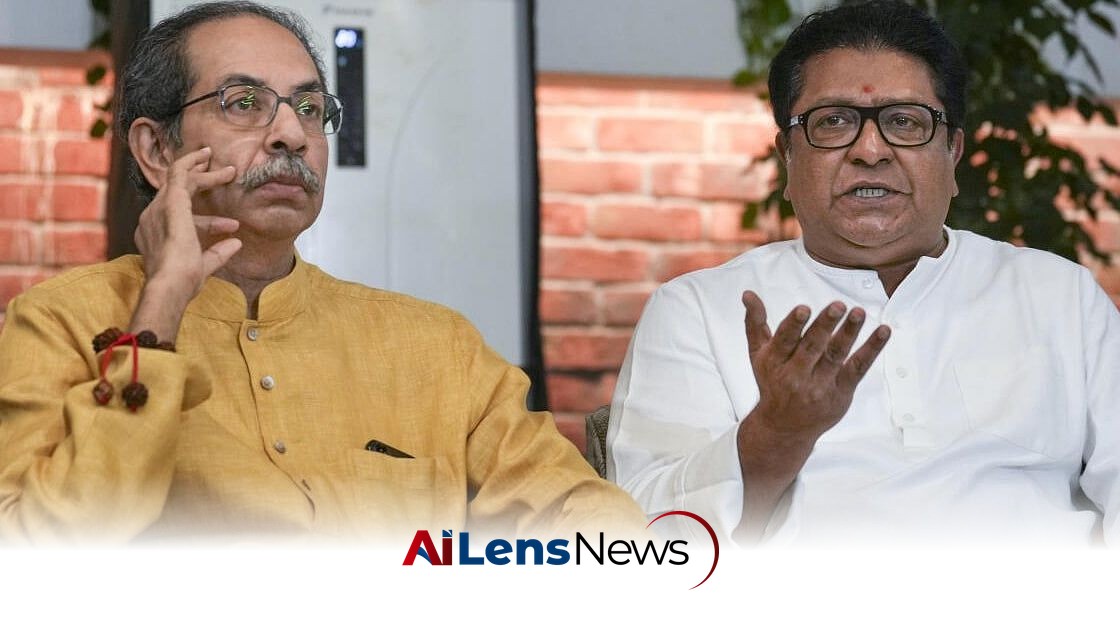


Uddhav and Raj Thackeray announce a joint protest in Mumbai on July 26, backing activist Abhijeet Dipke and demanding accountability for police actions during recent protests.
New Delhi, India Jul 25, 2026 ALN: Mumbai: In a significant political development, the Thackeray cousins, Uddhav Thackeray and Raj Thackeray, have united to lend their support to Abhijeet Dipke, the founder of the Cockroach Janata Party (CJP) and an activist known for his advocacy on educational issues. This collaboration comes in the wake of the recent NEET (National Eligibility cum Entrance Test) paper leak scandal, which has ignited widespread protests among students and parents across the country. The cousins have publicly condemned the handling of the protests by police officials, particularly during the recent events at Jantar Mantar, where demonstrators faced what they described as insensitive treatment.
The NEET paper leak has been a contentious issue, raising questions about the integrity of the examination process that determines medical college admissions in India. The leak has not only affected the credibility of the examination but has also led to significant emotional distress among students who invest considerable time and resources into preparing for these tests. The Thackeray cousins' decision to support Dipke signals a growing dissatisfaction with the government's handling of educational policies and its implications for the youth.
Despite the resignation of Union Education Minister Dharmendra Pradhan, which many saw as a pivotal moment in the ongoing struggle against the government’s educational policies, the Thackeray cousins have announced their intention to proceed with a protest meeting and march at Shivaji Park. Scheduled for Sunday, this event aims to rally students and parents to join in large numbers, amplifying the voices of those affected by the NEET paper leak.
Uddhav Thackeray, who leads the Shiv Sena (UBT) and previously served as the Chief Minister of Maharashtra, expressed his admiration for Dipke's efforts, stating, "It's Dipke who'll take the movement ahead. We'll back him. I congratulate Dipke, who defeated the arrogant government; youth have brought the country out of an atmosphere of fear.” This statement underscores the Thackeray cousins' recognition of the role that young activists have played in challenging governmental authority and advocating for change.
Raj Thackeray, the founder-president of the Maharashtra Navnirman Sena, echoed similar sentiments, asserting that the movement led by Dipke had significantly pressured the government. He emphasized the importance of supporting grassroots activism as a means of fostering accountability among political leaders. Raj's comments reflect a broader trend in Indian politics, where youth-led movements are increasingly shaping public discourse and influencing policy decisions.
Uddhav further articulated the broader implications of the protests, stating, “This wasn't just a matter of resignation. These young people have pulled the country out of the shadow of fear. For the past 12 years, the government has been continuously putting pressure on the people.” His remarks highlight a growing sentiment among opposition leaders that the current government’s policies have contributed to a climate of fear and repression, particularly among younger generations.
In addition to supporting Dipke, the Thackeray cousins also expressed gratitude towards Sonam Wangchuk, an activist and innovator who has been instrumental in leading the campaign against the NEET paper leak. Wangchuk's involvement has drawn attention to the educational system's flaws and has galvanized support from various sectors of society, including students, parents, and educational reform advocates.
On the day of the protest, Uddhav and Raj, accompanied by their sons Aaditya and Raj, will lead the march against the BJP-led government. Aaditya, who serves as a two-time MLA from Worli in Mumbai and is the president of Yuva Sena, the youth wing of Shiv Sena (UBT), articulated the collective spirit of the movement, stating, “We come together to celebrate this victory of the youth, and also to demand further answers on the brutal violence unleashed by the BJP regime on young protesters in New Delhi. Beyond political parties, beyond ideological divides, this is for the nation.”
The reference to violence against protesters indicates a growing concern regarding the treatment of demonstrators by law enforcement. Reports of excessive force and aggressive tactics employed by police during protests have raised alarm among civil rights advocates, who argue that such actions undermine democratic principles and the right to peaceful assembly.
Amit, the president of Maharashtra Navnirman Vidyarthi Sena, a student organization affiliated with Raj Thackeray's party, emphasized that the protest is just the beginning of a larger movement. He outlined key demands that include a comprehensive debate on NEET in Parliament, compensation for families of students who have tragically lost their lives to suicide as a result of academic pressure, and the withdrawal of all legal cases against protesters. Amit's statements reflect a commitment to not only address immediate concerns but also to engage in a broader dialogue about educational reform and student welfare.
The implications of this united front by the Thackeray cousins are significant. It signals a potential shift in the political landscape of Maharashtra, where opposition parties may find common ground in their critique of the ruling government’s policies. As the protest approaches, it remains to be seen how the government will respond to these mounting pressures and whether further concessions will be made in response to the demands of the youth and their advocates.
In conclusion, the Thackeray cousins' support for Abhijeet Dipke and their decision to mobilize for the upcoming protest reflect a critical moment in Indian politics, where youth activism is challenging established power structures and demanding accountability. As the situation develops, it will be crucial to monitor how these protests influence educational policies and the broader political discourse in the country.
To learn more about the latest developments in Political Controversies, stay updated with our exclusive reports and analyses on AiLensNews.

