

Urban governance group Janaagraha highlights shortcomings in Telangana's proposed CURE Bill, urging amendments for better accountability and decentralization.
Hyderabad, India Jul 21, 2026 ALN: Follow TNM's WhatsApp channel for news updates and story links.
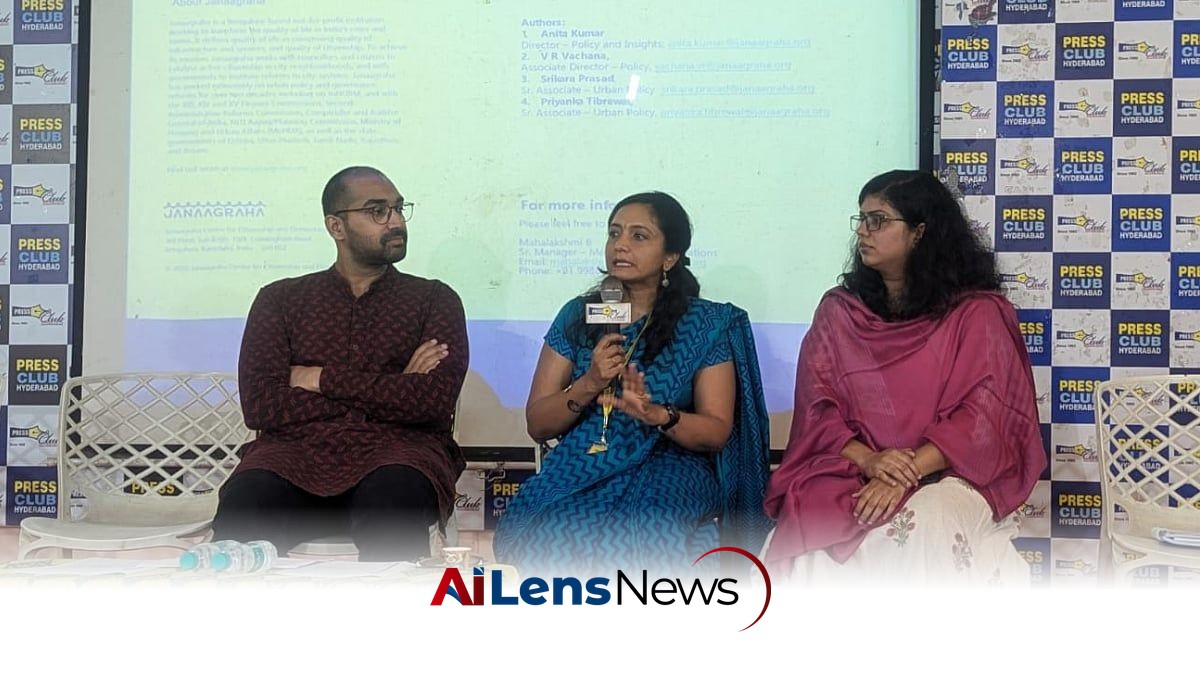
The Telangana government's proposed Core Urban Region (CURE) Bill has sparked significant debate regarding its potential impact on urban governance in Hyderabad. Critically, urban governance advocacy group Janaagraha has expressed concerns that the bill falls short when compared to similar legislation enacted in Bengaluru, specifically the Greater Bengaluru Governance (GBG) Act, 2024. This critique was articulated during a press conference held at Hyderabad's Somajiguda Press Club on Tuesday, July 21, where Janaagraha shared its thorough assessment of the draft legislation, which was made available for public consultation on July 5.
The CURE Bill, if enacted, is set to replace the Greater Hyderabad Municipal Corporation (GHMC) Act of 1955, which has been the governing framework for Hyderabad's civic administration for over seven decades. The GHMC Act has been criticized for its outdated provisions and inefficiencies, prompting the state government to propose a new legislative framework that aims to modernize urban governance in the rapidly growing metropolis.
During the press conference, Anita Kumar, Janaagraha's Director of Policy and Insights, highlighted that while the proposed CURE Bill represents an improvement over the existing GHMC Act, it still does not meet the standards set by the GBG Act. According to Janaagraha's assessment, the draft CURE Bill scored a mere 28% on key parameters of robust metropolitan governance, in stark contrast to the GBG Act's score of 38%. This scoring reflects a comprehensive evaluation of various governance metrics, including transparency, accountability, and citizen engagement.
Janaagraha welcomed certain provisions within the CURE Bill, particularly those aimed at enhancing transparency and improving property tax assessment mechanisms. However, the organization emphasized that the bill fails to establish the level of accountable metropolitan governance that is essential for a city of Hyderabad's stature. The concentration of power in the hands of the Commissioner is a major point of contention. Anita Kumar pointed out that the bill allows for significant authority to be wielded by the Commissioner, which undermines the role of elected representatives such as councillors and the mayor. This concern is particularly pertinent given that Hyderabad has experienced a high turnover of municipal commissioners, with four individuals holding the position between 2023 and 2025. The limited powers afforded to corporators and the mayor hinder their ability to effect meaningful change within their constituencies.
Furthermore, Kumar raised alarms about the bill's lack of adequate safeguards to ensure that provisions related to real-time governance and digital monitoring are effectively implemented. In an era where technology plays a crucial role in urban management, the absence of a robust framework to support these initiatives could lead to inefficiencies and a lack of accountability.
Another critical issue pointed out by Janaagraha is the absence of long-term financial planning within the bill. Effective urban governance requires a strategic approach to budgeting and resource allocation, yet the proposed legislation does not provide a clear framework for building the capacity of municipal staff to manage these complexities. Perhaps the most glaring omission, according to Kumar, is the lack of an ombudsman to investigate complaints of municipal maladministration. An independent ombudsman is vital for fostering trust in governance and ensuring that citizens have a mechanism to address grievances related to municipal services.
Janaagraha's CEO, Srikanth Viswanathan, echoed these sentiments, emphasizing the need for ward committees with dedicated powers and funds for neighborhood planning and development. He argued that the proposed governance framework disproportionately concentrates authority in the office of the Commissioner, thereby marginalizing the role of councillors who are elected to represent the interests of their communities. This concentration of power could lead to a disconnect between governance and the needs of local residents.
In light of these critiques, Janaagraha has put forth several recommendations aimed at strengthening the draft legislation. These include the establishment of a unified planning framework that integrates various aspects of urban governance, greater clarity regarding the roles of the 15 new authorities proposed under the bill, and stronger measures for capacity building among municipal staff. Additionally, the organization calls for enhanced powers for mayors and ward committees, as well as the introduction of clear enforcement mechanisms to ensure compliance with governance standards.
The implications of the CURE Bill are significant, given Hyderabad's status as one of India's major urban centers. As the city continues to grow and evolve, effective governance will be crucial for addressing the myriad challenges that accompany urbanization, including infrastructure development, public service delivery, and environmental sustainability. The CURE Bill aims to reshape governance in Hyderabad, but its ultimate effectiveness will depend on how well it addresses the concerns raised by advocacy groups like Janaagraha.
The ongoing discussions surrounding the CURE Bill highlight the importance of public engagement and stakeholder input in the legislative process. As the bill moves forward, it will be essential for the Telangana government to consider the feedback from urban governance experts, civil society organizations, and the citizens of Hyderabad. A collaborative approach to urban governance can lead to more inclusive and effective policies that truly reflect the needs and aspirations of the city's diverse population.
In conclusion, while the CURE Bill represents a step towards modernizing urban governance in Hyderabad, it also presents an opportunity for dialogue and reform. By addressing the shortcomings identified by Janaagraha and other stakeholders, the Telangana government can work towards creating a more accountable, transparent, and participatory governance framework that meets the challenges of the 21st century urban landscape.
To learn more about the latest developments in Policies & Reforms, stay updated with our exclusive reports and analyses on AiLensNews.

