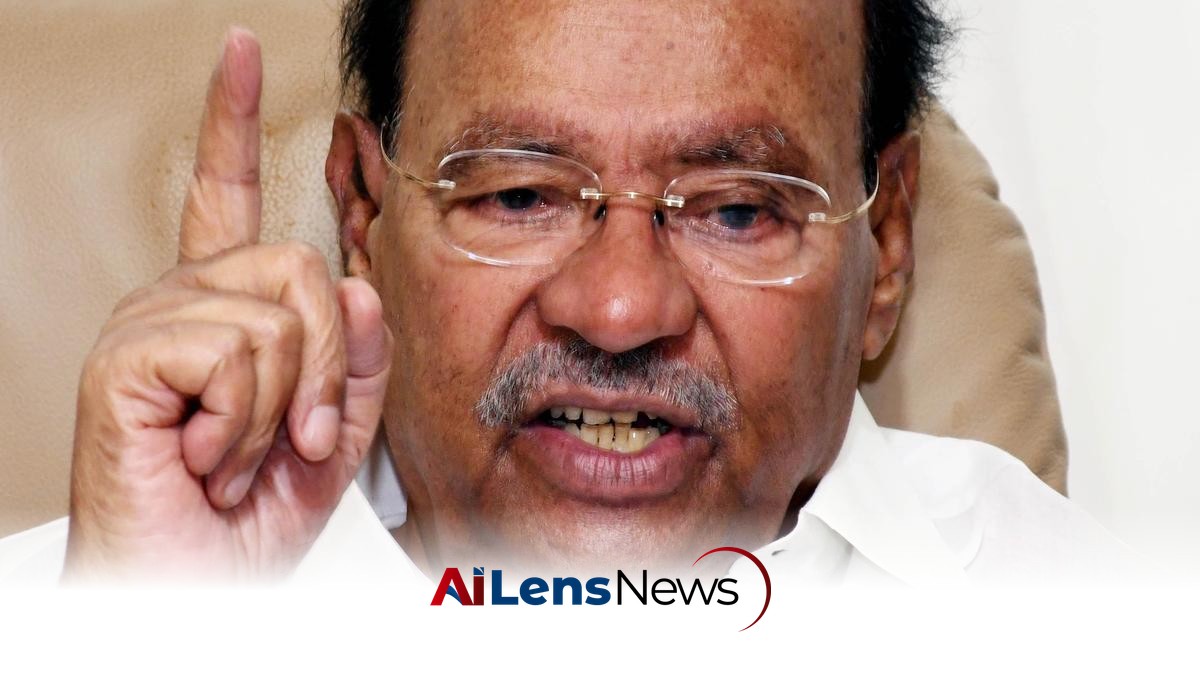


S. Ramadoss has withdrawn his civil suit declaring himself as the PMK president, following a settlement with his son Anbumani.
Chennai, India Jul 22, 2026 ALN: The Pattali Makkal Katchi (PMK), a prominent political party in , has recently witnessed a significant development in its leadership dynamics. S. Ramadoss, the founder of the PMK, has officially withdrawn a civil suit that he had previously filed in the Chennai City Civil Court. This lawsuit sought to declare him as the rightful president of the party amidst an ongoing leadership dispute with his son, Anbumani Ramadoss.
The conflict over the party’s leadership has been a point of contention within the PMK, leading to a division that saw the party functioning in two factions, particularly as the Assembly elections approached. Dr. S. Ramadoss initiated legal action to assert his position by requesting the court to declare him the president of the PMK and to issue an injunction preventing Anbumani from using the party's name, flag, and symbol. Furthermore, Dr. Ramadoss challenged the Election Commission's 2023 order, which recognized Anbumani as the president of the PMK, asserting that this recognition was invalid.
This internal strife within the PMK is not merely a familial dispute; it reflects deeper issues regarding party governance, leadership legitimacy, and the electoral strategies that could influence the party's performance in upcoming elections. The PMK, which has a significant following in , has historically played a crucial role in the state's political landscape, especially among the Vanniyar community, which constitutes a substantial portion of its support base.
The PMK was established in 1989 by S. Ramadoss, who has been a prominent figure in politics for decades. The party has often positioned itself as a champion of the rights of the Vanniyar community and has participated in various coalitions and alliances over the years. Anbumani Ramadoss, who has served as a Member of Parliament and held ministerial roles in the past, is seen as a natural successor to his father's political legacy. However, the transition of leadership has not been seamless, and the recent legal battle underscores the challenges that can arise within political dynasties.
The leadership tussle became particularly pronounced as the PMK prepared for state assembly elections, raising concerns about the party's unity and coherence. Political analysts noted that such disputes could weaken the party's electoral prospects, especially in a competitive political environment where alliances and voter sentiment can shift rapidly. The PMK's ability to present a united front was seen as crucial for maintaining its influence in politics.
In a notable turn of events, following a recent meeting between S. Ramadoss and Anbumani, both parties were able to reach an amicable settlement. This resolution indicates a willingness on both sides to prioritize the party's stability over personal ambitions, a critical factor in the context of impending elections. The nature of the discussions that led to this settlement remains undisclosed, but it suggests that both leaders recognized the importance of collaboration for the greater good of the PMK.
Subsequently, S. Ramadoss filed a memo with the court seeking permission to withdraw the pending suit. In this memo, he stated that the parties had resolved their differences and reached a settlement, expressing a mutual desire to avoid further legal entanglements. The court accepted this request, allowing the withdrawal of the suit and closing all associated proceedings.
The withdrawal of the lawsuit and the resolution of the leadership dispute could have significant implications for the PMK as it heads into the electoral fray. With the party now appearing more united, there is potential for revitalized campaigning efforts, which could enhance their appeal to voters. A united leadership can also foster a more cohesive party strategy, essential for addressing the concerns and aspirations of their constituents.
Moreover, this resolution may signal to party members and supporters that internal conflicts can be resolved amicably, promoting a culture of dialogue and reconciliation within the PMK. This could strengthen the party's internal structure and foster loyalty among its members, which is vital for maintaining electoral support.
As the PMK prepares for future electoral challenges, the leadership dynamics will likely continue to be scrutinized. Observers will be keen to see how S. Ramadoss and Anbumani navigate their roles moving forward, especially in light of the party's historical significance in politics. The ability of the PMK to adapt to changing political landscapes while maintaining its core values will be crucial in determining its future trajectory.
In conclusion, the withdrawal of the lawsuit by S. Ramadoss marks a pivotal moment for the PMK, potentially setting the stage for a more unified approach as they engage with the electorate. The implications of this settlement extend beyond the immediate leadership concerns, touching upon the broader themes of party unity, electoral strategy, and the legacy of political families in 's vibrant political arena.
The PMK's historical context also plays a significant role in understanding the implications of this leadership dispute. Since its establishment, the PMK has been instrumental in advocating for the rights and welfare of the Vanniyar community, which has been a cornerstone of its political identity. The party's influence has fluctuated over the years, often aligning itself with larger political coalitions to maximize its impact. This has included alliances with parties such as the AIADMK and the DMK, which have dominated 's political landscape.
The current political climate in is marked by intense competition among various parties, and the PMK's ability to maintain its relevance is crucial. The resolution of the leadership dispute may not only stabilize the party internally but also enhance its external appeal as it seeks to attract voters who are concerned about unity and effective governance.
Furthermore, the PMK's relationship with its traditional voter base will be essential in the upcoming elections. The Vanniyar community has historically supported the PMK, but changing demographics and political alignments necessitate a reevaluation of strategies to maintain this support. The party's leadership must now focus on addressing contemporary issues that resonate with their constituents while also honoring the legacy of their founder.
In light of these developments, the PMK's leadership will need to engage in proactive outreach to reassure their supporters of their commitment to the community's welfare. This could involve initiatives aimed at enhancing social welfare, economic development, and educational opportunities for the Vanniyar community, which are critical issues that voters prioritize.
Additionally, the PMK may need to invest in grassroots mobilization efforts to ensure that their message reaches the electorate effectively. A united leadership can facilitate this process, as both S. Ramadoss and Anbumani can leverage their respective networks and influence to galvanize support for the party.
As the political landscape continues to evolve, the PMK must remain adaptable and responsive to the changing needs and aspirations of its constituents. The recent resolution of the leadership dispute could serve as a turning point, allowing the party to refocus its efforts on achieving electoral success and fulfilling its commitment to the Vanniyar community.
In summary, the withdrawal of the lawsuit signifies a crucial juncture for the PMK, presenting an opportunity for the party to consolidate its leadership and present a united front to the electorate. The implications of this resolution will extend far beyond the immediate context, influencing the PMK's strategies, voter engagement efforts, and overall trajectory in 's dynamic political arena.
To learn more about the latest developments in Political Controversies, stay updated with our exclusive reports and analyses on AiLensNews.

