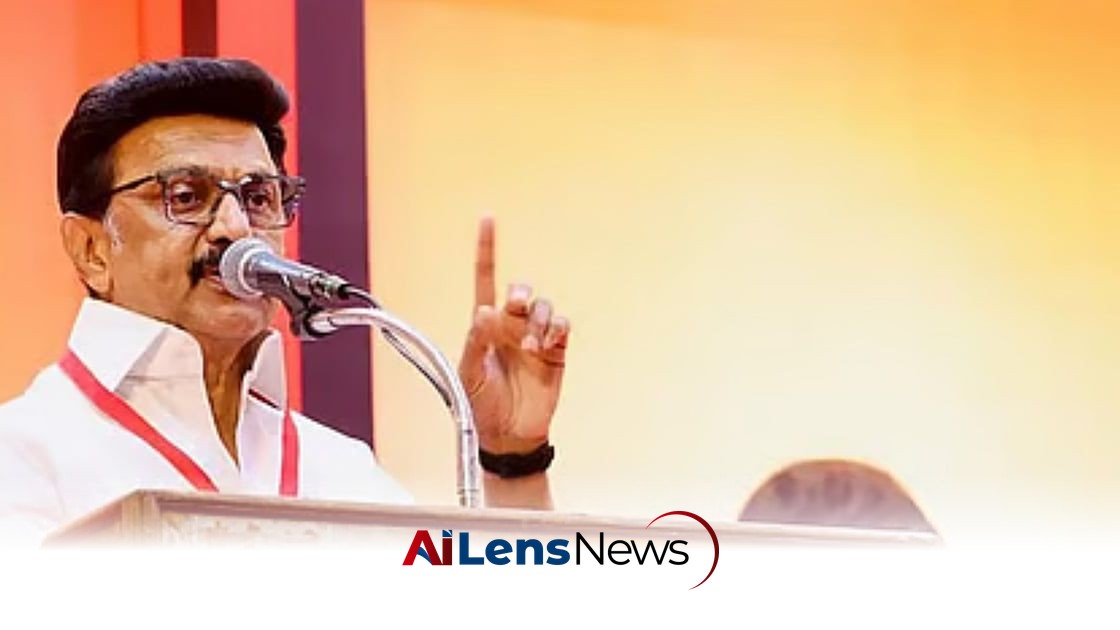


Former Tamil Nadu Chief Minister MK Stalin criticizes NEET, urging its abolition as student protests gain national attention.
Chennai, India Jul 23, 2026 ALN: Former Tamil Nadu Chief Minister and Dravida Munnetra Kazhagam (DMK) president MK Stalin on Thursday said that NEET had failed to fulfil its three principal promises of reducing students' burden, eliminating commercialisation, and improving standards, and called for its abolition.
In a post on X, Stalin stated that NEET had merely shifted the centre of learning from schools to coaching centres. This observation reflects a growing concern among educators and parents that the focus on entrance exams has led to an unhealthy emphasis on rote learning and high-stakes testing, often at the expense of a holistic educational experience. "The problem with NEET has always been structural, not merely procedural. Recent events have vindicated that concern," he said, highlighting the systemic issues that have arisen since the exam's inception.
The National Eligibility cum Entrance Test (NEET) was introduced in India as a standardized examination for admission to medical colleges. However, its implementation has been met with widespread criticism, particularly in states like Tamil Nadu, where the DMK has consistently opposed it. Critics argue that NEET has exacerbated inequalities in the education system, disproportionately affecting students from rural backgrounds and economically disadvantaged families who may not have access to expensive coaching classes.
Stalin's remarks come in the wake of ongoing student protests that have erupted in various parts of the country, particularly in New Delhi, where students have gathered to voice their discontent with the NEET system. These protests have gained traction, capturing the attention of national media and forcing policymakers to reconsider the implications of such entrance examinations on the broader educational landscape.
Earlier on Wednesday, Stalin backed the protesting students in the national capital and reiterated his call for the "abolition of NEET", asserting that "only scrapping" the medical entrance exam can provide a lasting solution to the issues raised by students. His support for the protests positions him as a champion of student rights and educational reform, resonating with a demographic that feels increasingly marginalized by the current system.
In a post on X, Stalin stated, "The students' protest in New Delhi has now captured the attention of the entire country," emphasizing the significance of their demands. He acknowledged the students as the first to warn that NEET was designed to "enable large-scale irregularities," a claim that has been echoed by various educational experts and activists who argue that the exam has led to rampant corruption and unethical practices in medical admissions.
Stalin further asserted that the "abolition of NEET" should be at the centre of the ongoing CJP (Coalition for Justice and Progress) protest at Delhi's Jantar Mantar. This coalition, which includes various student organizations and civil society groups, aims to address broader issues of educational access and equity, with NEET being a focal point of their demands.
"Tamil Nadu, which led India in defending social justice and paved the way for the First Constitutional Amendment, has only one demand: Abolition of NEET. More than any other demand, the abolition of NEET must be at the heart of these protests. Only scrapping NEET will provide a lasting solution to all these problems. Ban NEET, Save Students," Stalin said, framing the issue within a larger narrative of social justice and equity in education.
The implications of Stalin's call for the abolition of NEET extend beyond the immediate context of student protests. Educational policies in India have long been a contentious issue, with various stakeholders advocating for reforms that address systemic inequalities. The NEET controversy is emblematic of a broader struggle within the Indian education system, where access to quality education and fair admission processes remain significant challenges.
In Tamil Nadu, the opposition to NEET has historical roots, stemming from the state's long-standing commitment to social justice and equitable access to education. The introduction of NEET has reignited debates around caste, class, and access to higher education, as many believe that the exam perpetuates existing disparities rather than alleviating them. The DMK's stance against NEET aligns with its broader political ideology, which emphasizes the importance of social equity and the rights of marginalized communities.
As the protests continue, the Union Government faces increasing pressure to respond to the demands of students and educational activists. The future of NEET and its role in the admissions process for medical colleges in India remains uncertain, as policymakers grapple with the implications of its abolition. The outcome of these protests could have far-reaching effects on the education system, potentially reshaping the landscape of medical admissions and influencing future reforms.
In conclusion, MK Stalin's call for the abolition of NEET highlights the growing discontent among students and advocates for educational reform in India. As protests gain momentum, the spotlight is on the Union Government to address the concerns raised by students and consider the broader implications of standardized testing in the educational landscape. The ongoing debate over NEET serves as a critical juncture for discussions around access, equity, and the future of education in India.
To understand the context of NEET, it is essential to delve into its origins and the motivations behind its implementation. NEET was introduced in 2013 with the aim of creating a uniform standard for medical admissions across the country. Prior to NEET, different states had their own entrance exams, leading to disparities in admission processes and criteria. The government aimed to streamline admissions, reduce corruption, and ensure that students from all backgrounds had an equal opportunity to pursue medical education.
However, the reality has been starkly different. The introduction of NEET has led to a surge in the number of coaching institutes, many of which charge exorbitant fees for preparatory courses. This shift has created a situation where students from affluent families can afford to invest in extensive coaching, while those from poorer backgrounds struggle to compete on an uneven playing field. This disparity has raised questions about the fairness of the examination and its ability to serve as a true measure of merit.
Moreover, the stress and pressure associated with NEET preparation have been linked to mental health issues among students. Reports of anxiety, depression, and even tragic cases of suicide have emerged, drawing attention to the need for a more compassionate and supportive educational environment. Advocates for reform argue that the focus should shift from high-stakes testing to a more holistic assessment of students' abilities and potential.
The protests against NEET are not merely about the exam itself but represent a broader demand for educational reform in India. Students are calling for a system that prioritizes access, equity, and the well-being of learners. They seek an education system that values diverse talents and skills, rather than one that reduces students to mere test scores.
As the political landscape evolves, the role of student activism in shaping educational policies cannot be underestimated. The current protests signify a generation that is increasingly aware of its rights and willing to advocate for change. The engagement of political leaders like MK Stalin with these movements underscores the potential for collaboration between students and policymakers to create a more just educational framework.
In summary, the call for the abolition of NEET by MK Stalin is a reflection of a larger movement advocating for educational equity and reform in India. The ongoing protests are a crucial moment in the struggle for a fair and inclusive education system that serves the needs of all students, regardless of their socioeconomic background. As discussions around NEET continue, it remains to be seen how the Union Government will respond and what changes may lie ahead for the future of medical education in India.
To learn more about the latest developments in Elections, stay updated with our exclusive reports and analyses on AiLensNews.

