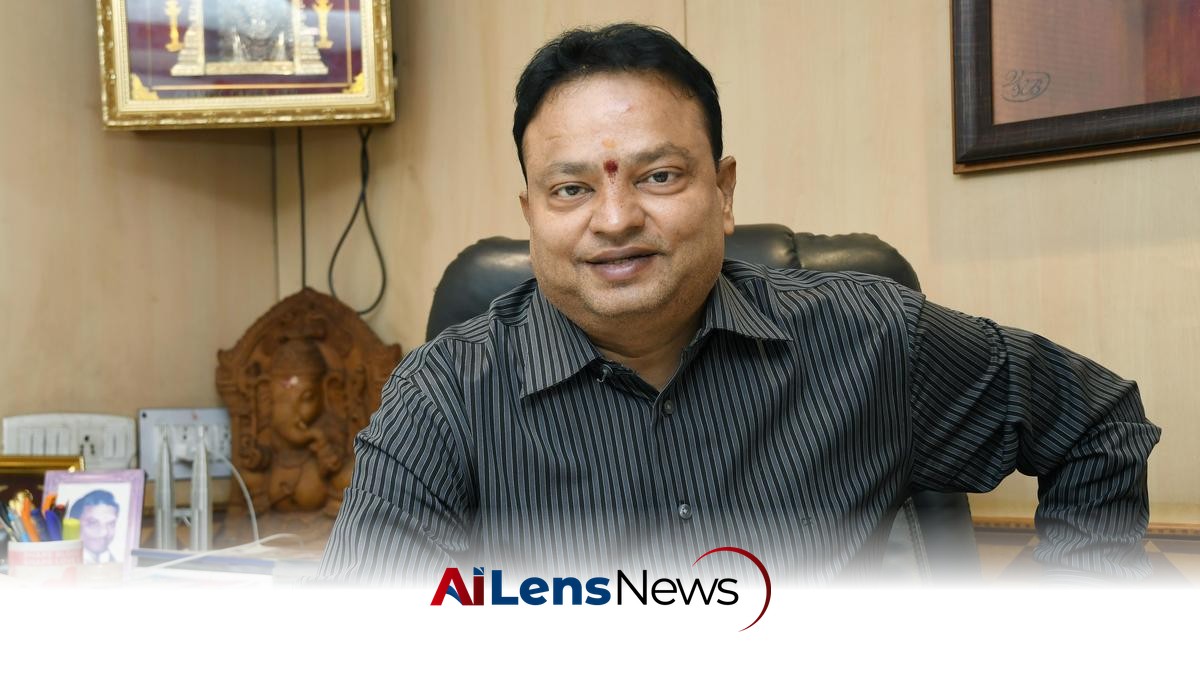


Educationist Ishari K. Ganesh has withdrawn his plea to quash a money laundering case, with the Madras High Court allowing him to approach the court again if needed.
Chennai, India Jul 13, 2026 ALN: The Madras High Court recently witnessed a significant development involving Ishari K. Ganesh, a prominent figure in the education and film industry. Ganesh, who is not only an educationist but also a film producer and actor, had filed a writ petition seeking to quash an Enforcement Case Information Report (ECIR) against him. This ECIR was registered by the Directorate of Enforcement (ED) under the Prevention of Money Laundering Act (PMLA) of 2002, a law designed to combat money laundering and related financial crimes in India.
On Monday, the First Division Bench of the Madras High Court, which included Chief Justice Sushrut Arvind Dharmadhikari and Justice G. Arul Murugan, dismissed Ganesh's plea as withdrawn. The court allowed him to withdraw his petition while also granting him the liberty to approach the court again in the future should circumstances change. This decision came in light of a report submitted by ED Special Public Prosecutor P. Sidharthan, highlighting that the predicate offence related to Ganesh was still active, indicating ongoing investigations or legal proceedings that could impact the case.
Ganesh's counsel informed the court that although the Directorate of Vigilance and Anti-Corruption (DVAC) had filed a closure report before the trial court in 2024, the court had not yet accepted this report. The closure report suggested that there was insufficient evidence to pursue further legal action against Ganesh and his co-accused. As a result, Ganesh opted to withdraw his writ petition, with the understanding that he could return to the court if the situation regarding the predicate offence evolves.
The genesis of this case can be traced back to a suo motu First Information Report (FIR) filed by the DVAC on September 12, 2022. The FIR implicated several individuals, including former AIADMK Minister C. Vijayabaskar, Ganesh, K. Srinivasaraja, the Dean of Vels Medical College and Hospital, and four government doctors, all under the Prevention of Corruption Act, 1988. This legislation aims to address issues of corruption and bribery among public servants in India.
According to the DVAC, the allegations against Ganesh stemmed from his purported actions in 2020, where he allegedly bribed then Health Minister Vijayabaskar to secure an ‘essentiality certificate’ for the newly constructed Vels Medical College. This certificate is crucial for medical colleges in India, as it enables them to admit students for the MBBS course. The DVAC's investigation suggested that Ganesh's college was not eligible for this certificate at the time, as it did not meet the regulatory requirements outlined in the Minimum Requirements for Annual M.B.B.S Admissions Regulations, 2020.
The regulations stipulate that a private medical institution must have been operational for at least two years and possess the capacity to function as a teaching hospital with a minimum of 300 beds to qualify for an ‘essentiality certificate’. The DVAC contended that Vels Medical College did not fulfill these criteria at the time of application. The agency's allegations were bolstered by a field verification report dated June 11, 2020, from the Assistant Director of Town and Country Planning in Tiruvallur district, which indicated that construction of the college was still ongoing, contradicting the claims made during the application process.
The involvement of the four government doctors in the case was due to their participation in an inspection team that allegedly submitted a misleading report regarding the status of the private medical institution. The DVAC accused Vijayabaskar of influencing these doctors to provide a false report to facilitate the issuance of the essentiality certificate, thereby enabling the college to admit students despite not meeting the necessary operational standards.
However, after conducting an extensive investigation, the DVAC concluded in 2024 that there was insufficient incriminating evidence to proceed with criminal charges against Ganesh, Vijayabaskar, and Srinivasaraja. Consequently, the agency decided to close the case against them, recommending only departmental action against the four government doctors involved. This decision reflects the complexities often encountered in cases involving allegations of corruption and the legal standards required to substantiate such claims in court.
The implications of this case extend beyond the individuals involved, touching on broader themes of accountability and transparency within the educational and political sectors in India. As the case highlights, the intersection of politics, education, and alleged corruption raises critical questions about the integrity of institutions tasked with regulating educational standards and the ethical responsibilities of public officials.
Furthermore, the withdrawal of Ganesh's plea does not indicate the end of the matter. The court's permission for him to return if necessary underscores the ongoing nature of the legal proceedings and the potential for future developments. As the legal landscape evolves, it will be crucial to monitor any further actions taken by the ED, DVAC, or the courts regarding this case.
In summary, the Madras High Court's recent decision regarding Ishari K. Ganesh's writ petition marks a significant moment in an ongoing legal saga that intertwines allegations of bribery, corruption, and the operation of medical education institutions in India. The case serves as a reminder of the challenges faced in combating corruption and the importance of upholding legal standards in the pursuit of justice.
The broader context of this case is situated within a landscape marred by corruption allegations in India, particularly within the education sector. The education system in India has long been scrutinized for issues related to quality, access, and integrity. Scandals involving bribery and misuse of power have prompted calls for reform and greater accountability among educational institutions and their administrators.
In recent years, the government has implemented various measures aimed at improving transparency and reducing corruption in the education sector. These include stricter regulations for medical colleges, enhanced oversight mechanisms, and the establishment of bodies tasked with investigating and prosecuting corruption-related offenses. However, the persistence of such cases indicates that significant challenges remain in ensuring the integrity of educational institutions.
The intersection of politics and education, as exemplified in Ganesh's case, raises critical questions about the role of public officials and the ethical implications of their actions. The allegations of bribery not only undermine public trust in educational institutions but also hinder the ability of deserving students to gain access to quality education. This situation calls for a concerted effort from all stakeholders, including the government, educational institutions, and civil society, to foster a culture of integrity and accountability.
Moreover, the legal proceedings surrounding Ganesh's case reflect the complexities of the Indian judicial system, particularly in cases involving high-profile individuals. The involvement of various agencies, such as the ED and DVAC, highlights the multifaceted nature of corruption investigations and the challenges faced in gathering sufficient evidence to support criminal charges. The legal standards required to prove corruption offenses are often stringent, necessitating thorough investigations and corroborative evidence.
As the case progresses, it will be essential to observe how the legal landscape evolves and whether any new developments arise that could impact the proceedings. The potential for appeals, further investigations, or additional allegations could significantly alter the trajectory of the case. Additionally, the broader implications of this case may resonate beyond the individuals involved, influencing public discourse on corruption and accountability in India.
In conclusion, the Madras High Court's decision to allow Ishari K. Ganesh to withdraw his plea while retaining the option to return to court underscores the ongoing nature of legal proceedings in cases of alleged corruption. The complexities surrounding this case serve as a reminder of the challenges faced in addressing corruption within the education sector and the importance of ensuring accountability among public officials. As the situation develops, it will be vital to continue monitoring the implications of this case for the education system and the broader fight against corruption in India.
To learn more about the latest developments in Political Controversies, stay updated with our exclusive reports and analyses on AiLensNews.

