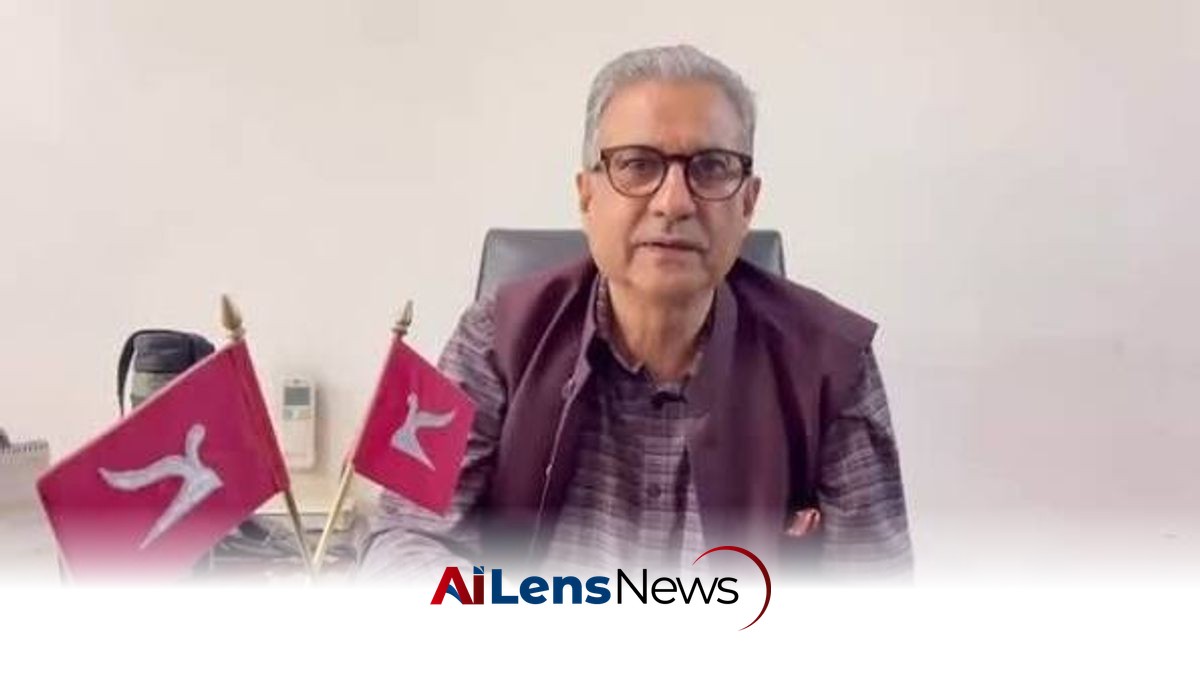


The Jammu and Kashmir National Conference expresses growing public frustration over the ongoing delay in restoring statehood, emphasizing the need for peaceful advocacy for democratic rights.
New Delhi, India Jul 22, 2026 ALN: Jammu and Kashmir National Conference (NC) Provincial President Showkat Ahmad Mir on Wednesday stated that the prolonged delay in the restoration of Jammu and Kashmir’s statehood has intensified public disappointment and strengthened the resolve of the people to pursue their democratic rights through peaceful and constitutional means. This sentiment reflects a broader sense of urgency among the residents of Jammu and Kashmir regarding their political and administrative future, which has been in limbo since significant constitutional changes were enacted in 2019.
The issue of statehood for Jammu and Kashmir has been a central topic of political discourse since the region was reorganized in August 2019. During that time, the Government of India abrogated Article 370, which granted special status to Jammu and Kashmir, and bifurcated the state into two Union Territories: Jammu & Kashmir and Ladakh. This monumental shift was met with widespread protests and significant political upheaval, as it fundamentally altered the governance structure and administrative autonomy that had been in place for decades. The abrogation of Article 370 was viewed by many as a direct attack on the identity and rights of the people in the region, leading to heightened tensions and unrest.
Mir stated that the National Conference had exercised patience for nearly two years, relying on repeated assurances by the Union Government before Parliament, the Supreme Court, and the people that statehood would be restored after the Assembly elections. The complexity of this situation is underscored by the fact that the region has not had a legislative assembly since the dissolution of the Jammu and Kashmir Legislative Assembly in November 2018. The absence of an elected legislative body has left governance in the hands of bureaucrats and the central government, leading to concerns about democratic representation and local governance. Many residents feel that this lack of local representation has resulted in decisions that do not reflect their needs or aspirations, further exacerbating feelings of alienation and frustration.
"Having honoured every democratic process with responsibility and restraint, we were left with no option but to intensify our peaceful movement for the restoration of the people's constitutional and democratic rights," he said. The National Conference, as a major political party in Jammu and Kashmir, has been vocal about the need for restoring statehood, arguing that it is a critical component of the region's democratic framework. The party's leadership believes that without an elected assembly, the voices and aspirations of the people of Jammu and Kashmir are being sidelined. This sentiment is echoed by various civil society groups and political activists who argue that local governance is essential for addressing the unique challenges faced by the people in this region.
Mir highlighted that the campaign for statehood began with a public convention at Hazratbal on July 11, which served as a platform for citizens to express their demands and grievances. This event was significant not only for its symbolic location—Hazratbal is a revered site in the region—but also for its role in galvanizing public support. The movement gained further momentum with a demonstration held in New Delhi, where political parties, social organizations, and civil society groups participated in support of the demand for restoration of statehood and democratic rights. This level of mobilization indicates a growing frustration among the populace regarding their political marginalization and a collective yearning for self-governance. The participation of diverse groups in these demonstrations is indicative of a broader consensus on the importance of restoring statehood and democratic rights.
"Statehood is not a favour to be granted at convenience. It is a constitutional commitment and the democratic right of the people of Jammu & Kashmir," Mir said, emphasizing the legal and moral grounds upon which the demand for statehood is based. He reiterated that the assurances for restoring statehood were not merely political rhetoric but a constitutional obligation that has been recognized by various legal and institutional frameworks, including the Supreme Court of India. This assertion underscores the belief among many in Jammu and Kashmir that statehood is not just a political demand but a matter of constitutional propriety and justice.
The implications of this political struggle extend beyond the immediate demand for statehood. The restoration of statehood is viewed as a crucial step towards strengthening democratic institutions and protecting the rights and aspirations of the people. In the context of Jammu and Kashmir, where political instability and conflict have historically shaped the landscape, the establishment of a local legislative assembly is seen as vital for fostering accountability, transparency, and responsiveness in governance. The absence of such an assembly has raised concerns about the effectiveness of governance, with many citizens expressing dissatisfaction with the bureaucratic processes that currently dominate decision-making.
Furthermore, the demand for statehood is interwoven with broader issues of identity, autonomy, and rights within the region. Many residents feel that the abrogation of Article 370 has not only stripped them of their special status but has also led to a dilution of their cultural and political identity. The perception that decisions affecting their lives are being made by distant bureaucrats in New Delhi has fueled a sense of alienation among the populace. This sense of alienation is compounded by a history of conflict and unrest in the region, which has left deep scars on the collective psyche of its residents.
In this context, the National Conference's efforts to mobilize public support for statehood reflect a deeper yearning for empowerment and self-determination among the people of Jammu and Kashmir. The party's leadership has framed the struggle for statehood as a fight for justice and recognition, appealing to the sentiments of a population that has faced decades of conflict and upheaval. The call for statehood is not merely a political maneuver; it resonates with the aspirations of a people who seek to reclaim their agency and assert their rights in the face of perceived marginalization.
As the NC continues its peaceful and constitutional struggle for the restoration of Jammu and Kashmir’s statehood, the political landscape remains complex and dynamic. The ongoing discourse surrounding statehood is likely to influence future electoral politics, governance, and the overall relationship between Jammu and Kashmir and the central government. The outcome of this struggle will have significant ramifications not only for the political future of the region but also for the broader narrative of democracy and rights in India. The manner in which the central government responds to these demands will likely shape the political climate and the trust between the people of Jammu and Kashmir and the Indian state.
In conclusion, the National Conference's call for the restoration of statehood resonates with a significant segment of the population in Jammu and Kashmir, reflecting a desire for democratic representation and local governance. The party's commitment to pursuing this goal through peaceful means underscores the importance of dialogue and constitutional processes in addressing the aspirations of the people. As the political situation evolves, the demand for statehood will remain a pivotal issue, shaping the future of Jammu and Kashmir and its relationship with the rest of India. The ongoing struggle for statehood is emblematic of the broader quest for justice and recognition in a region that has long grappled with the complexities of identity, governance, and rights.
To learn more about the latest developments in Elections, stay updated with our exclusive reports and analyses on AiLensNews.

