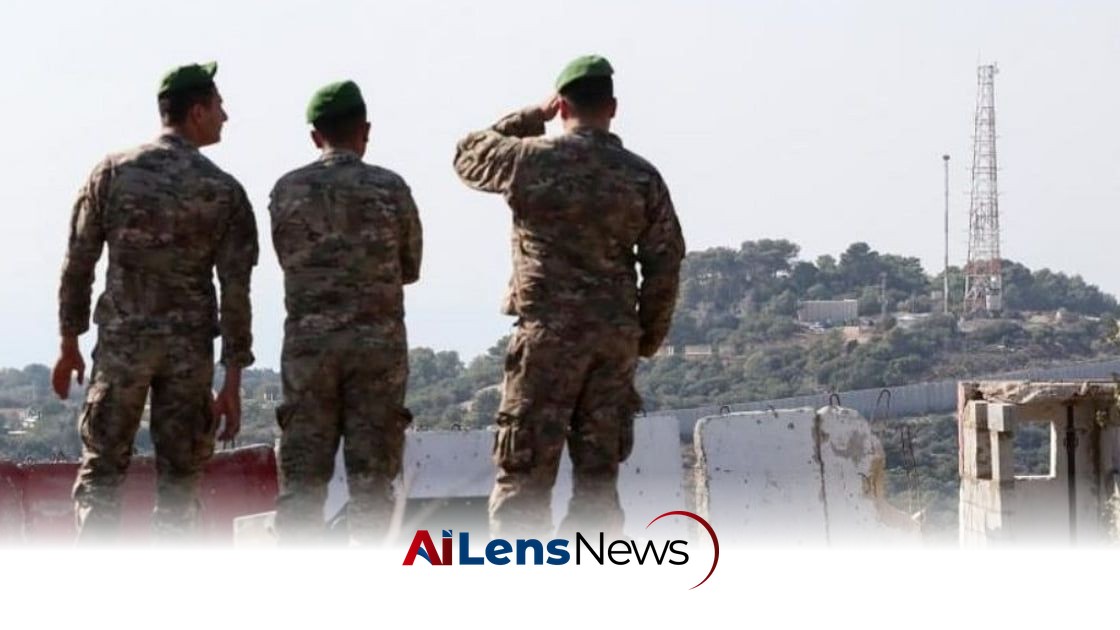


Lebanese Foreign Minister Youssef Raggi asserts that the decision to end Hezbollah's military presence is a sovereign choice, emphasizing state authority.
Gangtok, India Jul 17, 2026 ALN: Lebanese Foreign Minister Youssef Raggi on Thursday declared that ending Hezbollah's military presence is a "sovereign Lebanese decision," marking a decisive shift in the country's efforts to consolidate state authority. This announcement comes at a critical time for Lebanon, a nation that has long grappled with the complexities of governance amid the influence of non-state actors, particularly Hezbollah, a powerful militant group and political party.
Reflecting on his remarks delivered at the French Senate, the Foreign Minister reaffirmed the sovereignty of Lebanon and announced that the nation will not return to duality, a reference to the coexistence of state and non-state military forces. He announced the exclusion of "weapons" outside the state's authority, a statement that underscores the Lebanese government's intention to reassert its control over the military landscape within its borders.
"From the French Senate, I reaffirmed that Lebanon has made its choice: there will be no return to dual authority, and there is no longer any place for weapons outside the authority of the state or for decisions taken outside its constitutional institutions," he wrote in a post on X. This statement is significant as it not only addresses the internal dynamics of power within Lebanon but also signals a shift in the government's approach to its relationship with Hezbollah.
Hezbollah, which has been a dominant force in Lebanese politics and military affairs since its inception in the 1980s, has often operated independently of the Lebanese state. The group was initially formed as a response to the Israeli invasion of Lebanon and has since evolved into a significant political player, holding seats in parliament and even participating in government. However, its military activities, particularly its involvement in the Syrian civil war and its ongoing conflict with Israel, have raised concerns about the implications of its power on Lebanon's sovereignty and stability.
The Foreign Minister further clarified that the state's push to extend its control is tethered to broader security requirements for the nation. This implies that the Lebanese government is not merely reacting to internal pressures but is also responding to external threats and regional dynamics that have complicated Lebanon's security landscape. The presence of armed groups like Hezbollah has been a contentious issue, leading to calls from various factions within Lebanon and the international community for the disarmament of non-state actors.
The implications of Raggi's statement are profound, as it signals a potential turning point in Lebanon's political landscape. For decades, the Lebanese government has struggled to assert its authority over various militias, with Hezbollah being the most prominent. The declaration that the decision to end Hezbollah's military presence is a sovereign one suggests that the Lebanese state is willing to take a firmer stance against the group's military capabilities, which could lead to significant changes in the balance of power within the country.
This announcement also comes against the backdrop of ongoing economic and political crises in Lebanon, which have been exacerbated by the COVID-19 pandemic and the aftermath of the Beirut port explosion in August 2020. The Lebanese economy has faced severe challenges, with rampant inflation, currency devaluation, and widespread poverty affecting millions of citizens. In this context, the government’s ability to consolidate authority and restore stability is seen as critical for the nation’s recovery.
Moreover, the international community has been closely monitoring Lebanon’s political developments, particularly in relation to Hezbollah. Many countries, including the United States and members of the European Union, have designated Hezbollah as a terrorist organization due to its military activities and alleged involvement in various conflicts across the region. This designation complicates Lebanon's diplomatic relations and has implications for international aid and support.
In light of this, Raggi's statement may be interpreted as an attempt to reassure both domestic and international audiences of Lebanon's commitment to sovereignty and stability. By asserting that military decisions will now rest solely with the state, the Lebanese government seeks to strengthen its legitimacy and regain the confidence of its citizens, who have been disillusioned by years of political paralysis and corruption.
However, the path to disarming Hezbollah and asserting state authority is fraught with challenges. The group enjoys significant support among various segments of the Lebanese population, particularly in the Shiite community, where it has established itself as a provider of social services and security. Any attempt to disarm Hezbollah could provoke backlash and unrest, potentially exacerbating existing sectarian tensions within the country.
Furthermore, the regional context cannot be overlooked. Hezbollah's military capabilities are often viewed through the lens of its relationship with Iran, which provides the group with financial and military support. The geopolitical dynamics of the Middle East, including tensions between Iran and Israel, as well as the ongoing civil war in Syria, play a crucial role in shaping Hezbollah's actions and strategies. Therefore, any move by the Lebanese government to limit Hezbollah's military role must consider these external pressures and their potential repercussions.
In conclusion, Foreign Minister Youssef Raggi's declaration regarding Hezbollah's military presence represents a significant development in Lebanon's ongoing struggle for sovereignty and state authority. While the intent to eliminate dual authority and assert control over military decisions is clear, the complexities of Lebanon's political landscape, coupled with regional dynamics, will undoubtedly influence the feasibility and outcomes of such efforts. As Lebanon navigates these challenges, the international community will be watching closely, as the implications of these developments extend beyond the country's borders and into the broader geopolitical arena.
To learn more about the latest developments in Political Controversies, stay updated with our exclusive reports and analyses on AiLensNews.

