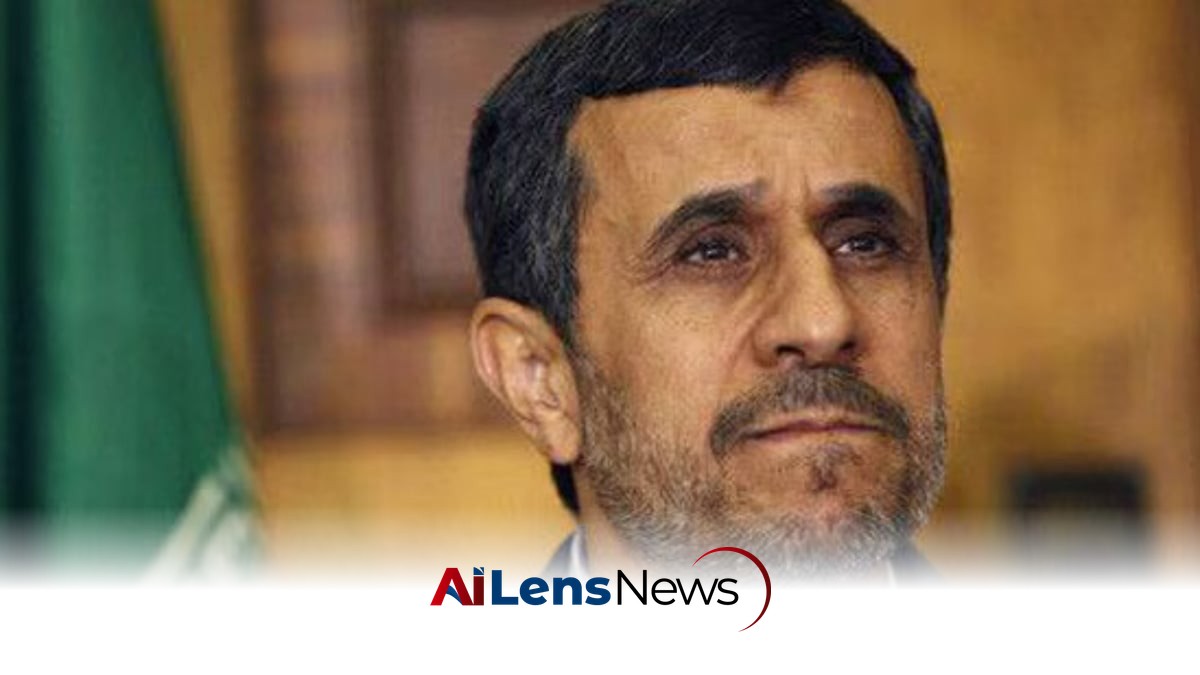


A New York Times report reveals Israel's covert efforts to groom former Iranian President Mahmoud Ahmadinejad as a potential leader in case of regime change in Iran.
Washington DC, United States Jul 15, 2026 ALN: WASHINGTON, DC: Israel spent years pursuing a covert effort to cultivate former Iranian President Mahmoud Ahmadinejad as a potential intelligence asset and possible leader of Iran in the event of regime change, according to The New York Times, citing American, Israeli, and Iranian officials.
The reported effort marked a striking shift in Israel’s approach to Ahmadinejad, who served as Iran’s president from 2005 to 2013 and was known for advancing Iran’s nuclear program, denying the Holocaust, and making repeated threats against Israel. This strategy reflects Israel's broader concerns regarding Iran's regional ambitions and its nuclear capabilities, which have been a point of contention in international relations.
Ahmadinejad's presidency was characterized by a confrontational stance towards the West, particularly the United States and Israel. His administration's aggressive rhetoric and policies, including the pursuit of nuclear technology, led to significant international sanctions against Iran. As a result, Ahmadinejad became a polarizing figure, both domestically and internationally, often criticized for his handling of the economy and human rights issues.
According to the report, Israeli intelligence began viewing Ahmadinejad as a potential partner after he became increasingly estranged from Iran’s ruling establishment following his presidency. Former US officials stated that then-Mossad chief David Barnea met Ahmadinejad in Budapest, after which the Mossad informed the CIA that contact had been established. This meeting underscores a complex dynamic in which intelligence agencies may seek to leverage former adversaries in pursuit of strategic objectives.
The report states that Ahmadinejad sought to reinvent his public image, criticized Iran’s security apparatus and corruption, and attempted to position himself as a reform-minded alternative while maintaining political ambitions. A close associate mentioned that he believed he could return to power only if Iran’s existing political order fractured. This desire for political resurgence highlights the often tumultuous nature of Iranian politics, where various factions vie for influence and control, particularly in the context of widespread public discontent.
Israeli intelligence reportedly saw Ahmadinejad's growing rift with Supreme Leader Ayatollah Ali Khamenei and other senior officials as a strategic opportunity. The internal divisions within Iran's leadership could potentially create openings for external influence and intervention, which Israel has historically sought to exploit. At the same time, Iran’s Islamic Revolutionary Guard Corps (IRGC) became increasingly suspicious of his foreign contacts, particularly after he sent public letters to Donald Trump and Saudi Crown Prince Mohammed bin Salman. These letters, which were perceived as attempts to engage with Western and regional leaders, further alienated Ahmadinejad from the Iranian establishment, exposing the fractures within Iran's political landscape.
Ahmadinejad’s presidency was marked by domestic and international controversy. His disputed 2009 re-election sparked mass protests, known as the Green Movement, which were met with a violent crackdown by Iranian authorities. This period highlighted the deep-seated grievances among the Iranian populace regarding electoral integrity and government accountability. During his second term, he clashed with Parliament, the Revolutionary Guard, and Khamenei. These conflicts illustrated the challenges of governing in a system where multiple power centers exist, each with its own interests and agendas.
After leaving office in 2013, Ahmadinejad unsuccessfully sought to return to the presidency but was barred from running by the Guardian Council in 2017, 2021, and 2024. This pattern of exclusion reflects the restrictive nature of Iran's political system, where candidates must receive approval from the Guardian Council, a body that often favors more conservative candidates aligned with the ruling elite. Ahmadinejad's attempts to re-enter the political arena also signify his enduring ambition and desire to influence Iranian politics, despite being sidelined.
In a related development, the United States has launched a new round of strikes against Iran. These strikes are part of a broader strategy aimed at countering Iran's influence in the region, particularly in light of its support for proxy groups across the Middle East. The U.S. has long viewed Iran's actions as destabilizing, contributing to conflicts in countries like Syria, Iraq, and Yemen. The timing of these military actions may be influenced by the evolving dynamics within Iran, including the potential for a shift in leadership should Ahmadinejad or similar figures gain traction.
The implications of Israel's covert efforts to cultivate Ahmadinejad as a potential asset extend beyond intelligence operations. If successful, such a strategy could lead to significant shifts in Iran's political landscape, potentially undermining the current regime while posing challenges for U.S. foreign policy in the region. The pursuit of regime change in Iran has been a contentious issue, with various stakeholders advocating for different approaches, ranging from diplomatic engagement to military intervention.
Furthermore, the relationship between Israel and Iran remains fraught with tension. Israel views Iran's nuclear ambitions as an existential threat, leading to a complex interplay of espionage, cyber operations, and military posturing. The potential for Ahmadinejad to re-emerge as a political figure complicates this dynamic, as his past actions and rhetoric may influence both domestic and international perceptions of Iran.
In conclusion, Israel's covert efforts to cultivate Ahmadinejad highlight the intricate and often unpredictable nature of Middle Eastern geopolitics. As various actors navigate shifting alliances and rivalries, the potential for regime change in Iran remains a contentious and uncertain prospect, with far-reaching implications for regional stability and international relations.
To learn more about the latest developments in Political Controversies, stay updated with our exclusive reports and analyses on AiLensNews.

