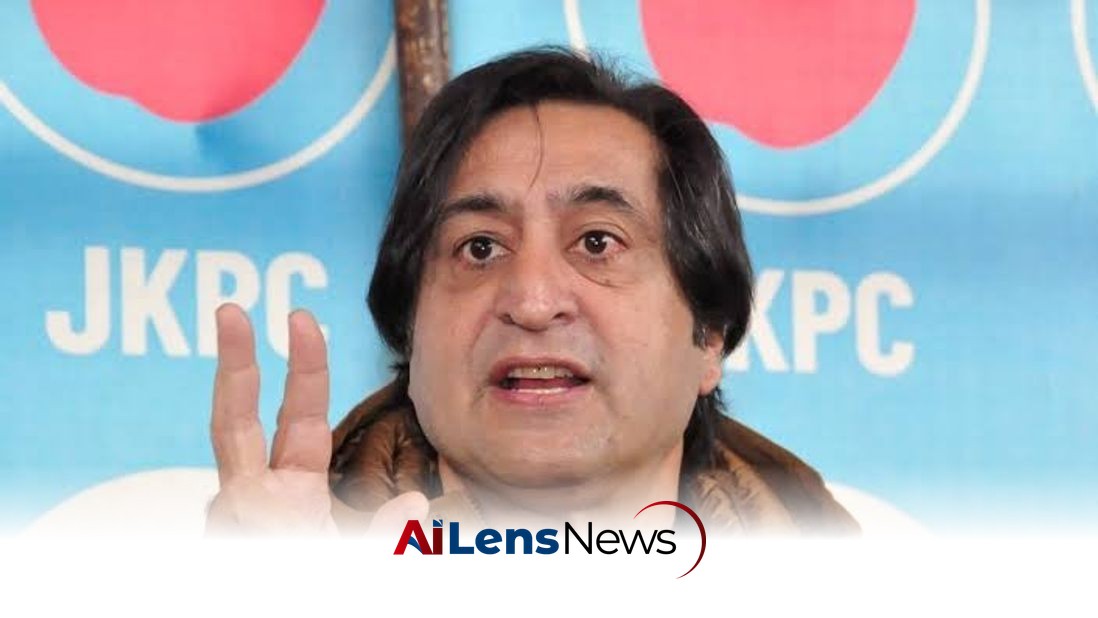


Peoples Conference President Sajad Lone highlights the risk of losing Kashmir's limited working season due to unresolved contractor rate disputes affecting road projects.
New Delhi, India Jul 16, 2026 ALN: Peoples Conference President and MLA Handwara Sajad Lone has raised concerns over the stalled execution of developmental works in Kashmir, particularly road macadamisation, cautioning that the region's already limited working season is at risk of being squandered due to an unresolved dispute over contractor rates.
In a statement, Lone pointed out that Kashmir's short working season for undertaking developmental works, especially road-related projects and macadamisation, is being further constrained by external economic pressures. The unique geographical and climatic conditions of Kashmir contribute to a narrow window for construction activities, typically limited to the summer months when the snow has melted and the weather is more conducive to such works. This seasonal limitation makes it imperative for projects to commence and progress swiftly during these months.
He noted that global market disruptions inevitably trigger price volatility, and that the ongoing Iran–US conflict has disrupted supply chains, including petroleum-linked inputs, driving up the cost of materials essential for road works. The ramifications of international conflicts often extend beyond immediate geopolitical concerns, impacting local economies and development projects. In Kashmir, where many construction materials are sourced from outside the region, fluctuations in global oil prices can have a direct effect on the cost of asphalt and other critical materials used in road construction.
Despite the Government having earmarked funds under various R&B and other development schemes, Lone said execution on the ground is yet to commence even as the season is already well into July. This delay raises questions about the efficiency of the planning and execution processes within the administrative framework. The allocation of funds without corresponding action can lead to public disillusionment and a lack of trust in governmental capabilities.
He attributed the delay to a standoff between contractors, who are demanding a revision of rates to reflect rising input costs, and the Government, which has so far remained unwilling to revise them, a deadlock that has brought road macadamisation and related development work to a complete standstill. This situation exemplifies a common challenge in public procurement and infrastructure development, where the interests of contractors and governmental budgetary constraints often clash. The contractors argue that without a fair adjustment in rates, they cannot sustain operations or guarantee quality work, while the government is concerned about budget overruns and maintaining fiscal responsibility.
Lone was critical of the Government's apparent reliance on budgetary figures and statistics to project progress, asserting that such data cannot substitute for tangible outcomes on the ground. The reliance on quantitative metrics without qualitative assessments can lead to a disconnect between government performance and public perception. For residents of Kashmir, who are directly affected by the state of infrastructure, the absence of visible progress can exacerbate frustrations and lead to calls for accountability from elected officials.
“The Government should not hide behind budgetary allocations and statistics to mask the failure to deliver tangible outcomes,”
he said, urging authorities to act without further delay to break the impasse. The call for action is not merely a political statement; it reflects a deep-seated concern for the welfare of the community that relies on adequate infrastructure for mobility, economic activity, and access to essential services.
He appealed to the administration to resolve the rate dispute urgently and ensure that developmental works begin immediately, warning that any further delay risks losing the limited working season altogether, a setback that could push crucial infrastructure projects into the next year. The implications of such delays extend beyond mere inconvenience; they can hinder economic growth, exacerbate unemployment among construction workers, and stall the overall development agenda for the region.
The situation in Kashmir is further complicated by its socio-political context. The region has faced prolonged periods of unrest and conflict, which have historically impeded development efforts. Infrastructure projects are not just about building roads; they represent hope for economic revitalization and stability in a region that has seen its share of turmoil. The stalled projects could also affect tourism, a vital sector for Kashmir's economy, as improved roads are essential for facilitating travel and access to scenic locations.
Moreover, the ongoing disputes over rates and the subsequent delays could lead to increased costs in the long run. As inflation continues to rise, the longer the projects are stalled, the more expensive they will become when they eventually do commence. This situation creates a cycle of inefficiency that can burden taxpayers and limit the government's ability to fund future projects.
In conclusion, Sajad Lone's warnings highlight the urgent need for dialogue between contractors and the government to address the rate dispute and resume developmental works in Kashmir. The stakes are high, as the region's limited working season and the pressing need for infrastructure development hang in the balance. The resolution of this impasse is not just a matter of policy; it is a question of the future prosperity and stability of Kashmir, a region that is keenly aware of the importance of effective governance and the tangible benefits of development.
Historically, Kashmir has been a region rich in natural beauty and resources, yet its development has often been stunted by political instability and conflict. The ongoing territorial disputes and the resultant security concerns have led to a prolonged period of uncertainty, which has affected not only the local economy but also the quality of life for its residents. Developmental projects, particularly in infrastructure, are seen as a pathway to not just economic growth but also peace and stability in the region.
In light of these challenges, the government’s ability to manage public procurement effectively becomes paramount. The rate dispute between contractors and the government is emblematic of a broader issue in governance, where the needs of the local population clash with fiscal policies and budgetary constraints. As Sajad Lone pointed out, the reliance on statistical data without corresponding real-world outcomes can lead to a significant disconnect between the government and the citizens it serves. This disconnect can foster a sense of disenfranchisement among the populace, further complicating the already delicate socio-political landscape of Kashmir.
The implications of these developmental delays extend into various sectors, including education, healthcare, and tourism, all of which rely on robust infrastructure to function effectively. For instance, poor road conditions can impede access to schools and hospitals, disproportionately affecting rural communities that are already marginalized. Similarly, the tourism sector, which is a significant contributor to the local economy, can suffer from inadequate infrastructure, limiting visitors' ability to explore the region's natural attractions.
In summary, the ongoing rate dispute and the resultant delays in developmental works in Kashmir not only threaten the immediate execution of crucial infrastructure projects but also pose long-term risks to the region’s economic stability and social cohesion. The situation calls for urgent intervention and dialogue to ensure that the needs of the contractors are met while also maintaining fiscal responsibility. Only through collaborative efforts can the government and contractors work together to overcome these challenges and pave the way for a brighter future for the people of Kashmir.
To learn more about the latest developments in Political Controversies, stay updated with our exclusive reports and analyses on AiLensNews.

