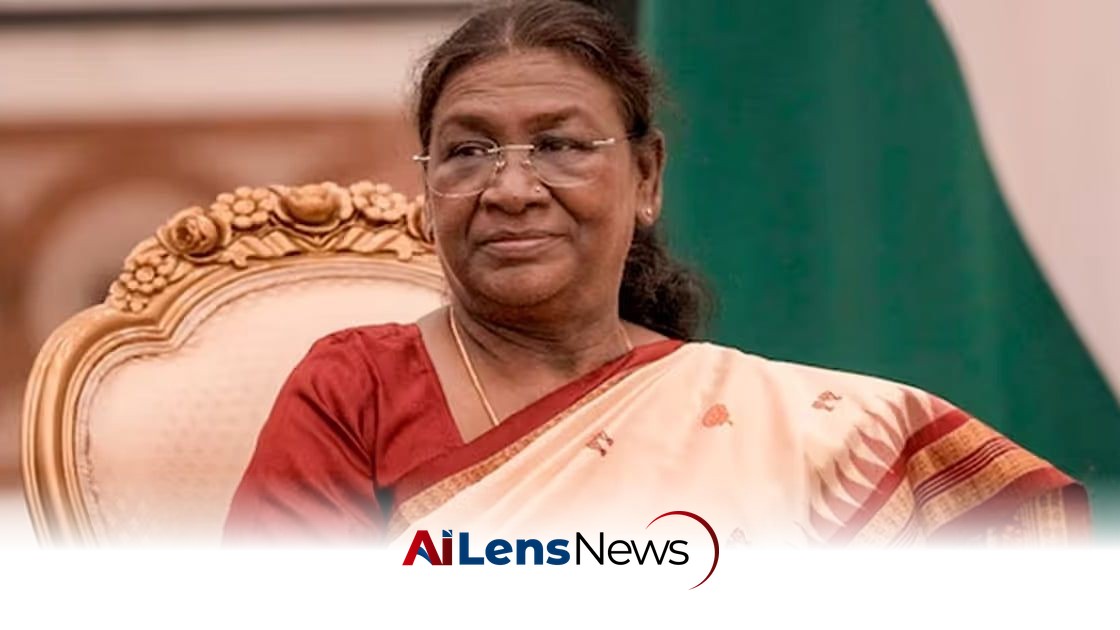


President Droupadi Murmu's state visits to Moldova, North Macedonia, and Romania aim to strengthen India's diplomatic ties and explore new avenues for cooperation.
New Delhi, India Jul 20, 2026 ALN: New Delhi: President Droupadi Murmu on Sunday emplaned for her State Visits to Moldova, North Macedonia, and Romania, marking a significant diplomatic outreach to Eastern Europe and underscoring India’s commitment to strengthening bilateral ties with the three countries.
Announcing her departure, Ministry of External Affairs (MEA) spokesperson Randhir Jaiswal posted on X, “President Droupadi Murmu has emplaned for State Visits to the Republic of Moldova, the Republic of North Macedonia, and Romania. This marks the first-ever visit by a President of India to Moldova and North Macedonia, and the first presidential visit to Romania in over three decades. The visit will impart fresh momentum to India’s relations with these countries.”
The multi-nation visit is expected to enhance political, economic, and people-to-people engagement with the three European nations while opening new avenues for cooperation in key sectors. This is particularly relevant in the context of India’s broader foreign policy objectives, which aim to diversify its diplomatic relationships and strengthen its presence in regions that have historically been less engaged with New Delhi.
President Murmu will begin her visit in Moldova, where she is scheduled to arrive on July 20, at the invitation of President Maia Sandu. This visit is particularly significant as it represents a move towards strengthening India's presence in Eastern Europe, a region that has historically seen limited engagement from India compared to other parts of Europe. Moldova, a small landlocked country, has been striving to strengthen its international ties, particularly with countries outside its immediate neighborhood.
During her stay, President Murmu will hold bilateral talks with President Sandu and meet Moldovan Parliament President Igor Grosu. She will also interact with members of the Moldova-India Parliamentary Friendship Group, address a Business Forum, and engage with members of the Indian community. These engagements are aimed at fostering deeper ties and exploring avenues for collaboration, particularly in sectors where both nations can benefit from shared expertise.
According to the MEA, India and Moldova share warm and friendly relations, and the visit marks a historic milestone that is expected to elevate bilateral ties to a broader strategic partnership. Both countries see significant potential for cooperation in agriculture, healthcare, pharmaceuticals, information technology, and education. Moldova, with its agricultural base, can benefit from India's advancements in technology and agricultural practices, while India can tap into Moldova's growing pharmaceutical sector. This collaboration is particularly timely as both nations seek to bolster their economies and foster sustainable development.
Following her engagements in Moldova, the President will travel to North Macedonia from July 21 to 22 at the invitation of President Gordana Siljanovska-Davkova. This will also be the first-ever visit by an Indian President to North Macedonia. The significance of this visit lies in the fact that North Macedonia is strategically located in the Balkan Peninsula, serving as a gateway to both Western Europe and the Mediterranean. Strengthening ties with North Macedonia could enhance India's influence in the region and facilitate greater access to European markets.
During the visit, President Murmu will hold talks with President Siljanovska-Davkova and Prime Minister Hristijan Mickoski. She is also scheduled to meet the President of the Assembly, address the Assembly, and speak at the India-North Macedonia Business Forum. These discussions are expected to focus on exploring greater cooperation in agriculture, pharmaceuticals, science and technology, information technology, and IT-enabled services. This engagement is particularly timely as North Macedonia continues to seek investment and partnerships to bolster its economy, especially in light of its aspirations to join the European Union.
The backdrop of President Murmu’s visit is the evolving geopolitical landscape in Eastern Europe, especially in the context of increasing tensions between Russia and Western nations. India’s outreach to these countries can be seen as an effort to diversify its diplomatic relations and establish a more balanced approach in its foreign policy. By engaging with these nations, India aims to strengthen its position as a key player in international affairs and promote its interests in the region. This strategic engagement is also reflective of India's commitment to fostering stability and prosperity in Eastern Europe, which has been affected by geopolitical tensions.
After North Macedonia, President Murmu will travel to Romania, where she will engage in discussions with Romanian leaders and participate in various events aimed at enhancing bilateral cooperation. Romania, being a member of the European Union and NATO, holds a significant position in the region. The visit to Romania is particularly noteworthy as it marks the first presidential visit in over three decades, highlighting the importance of rekindling historical ties and exploring new dimensions of cooperation.
In Romania, President Murmu is expected to meet with President Klaus Iohannis and Prime Minister Marcel Ciolacu. The discussions are likely to focus on enhancing trade relations, investment opportunities, and collaboration in areas such as defense, technology, and renewable energy. Romania's strategic location and its role within the EU can provide India with valuable access to European markets, paving the way for increased economic engagement. This is particularly relevant as both countries seek to address pressing global challenges, such as climate change and energy security.
This series of visits is also indicative of India's broader strategy to enhance its global footprint and engage with countries that share similar values and interests. The emphasis on people-to-people connections, as evidenced by President Murmu's interactions with the Indian diaspora, reflects India's commitment to fostering cultural ties and strengthening its global community. The Indian diaspora in Eastern Europe has been growing, and their contributions to the local economies and societies are increasingly recognized, which can further facilitate bilateral cooperation.
In conclusion, President Droupadi Murmu's state visits to Moldova, North Macedonia, and Romania are poised to create a new chapter in India's relations with these Eastern European nations. By establishing strong diplomatic ties and exploring avenues for cooperation, India aims to enhance its influence in the region and contribute to the development of mutual interests. The outcomes of these visits will likely resonate beyond bilateral relations, impacting India's overall foreign policy strategy in Europe and beyond. As India continues to assert itself on the global stage, these engagements could lead to significant partnerships that benefit not only the countries involved but also contribute to regional stability and economic growth.
To learn more about the latest developments in Elections, stay updated with our exclusive reports and analyses on AiLensNews.

