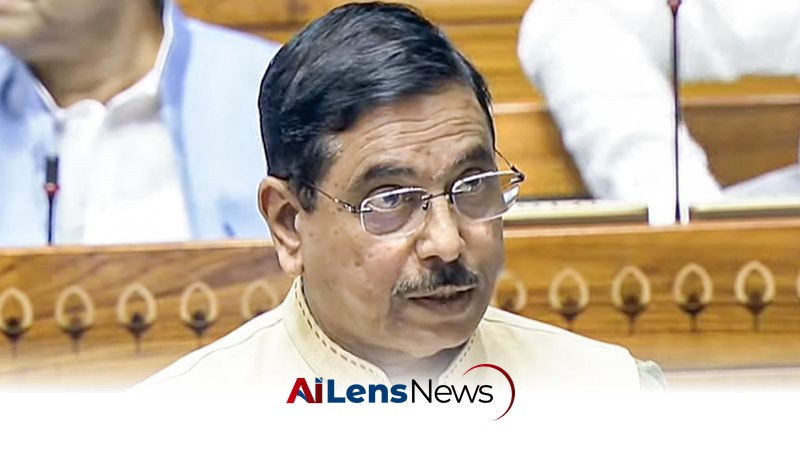


Union Minister Pralhad Joshi has been assigned the additional responsibility of the Education Ministry, while continuing his current roles in Consumer Affairs and Renewable Energy.
New Delhi, India Jul 26, 2026 ALN: Union Minister Pralhad Joshi has been entrusted with the additional charge of the Education Ministry. This development comes as part of a cabinet reshuffle aimed at streamlining responsibilities within the government. The decision reflects the government's intent to consolidate leadership in key sectors, particularly education, which has faced numerous challenges in recent years.
Currently, Joshi holds multiple portfolios, including Consumer Affairs, Food and Public Distribution, and New and Renewable Energy. His appointment as the Education Minister is seen as an opportunity to leverage his extensive experience in managing diverse portfolios to bring a fresh perspective to the education sector. The educational landscape in India has been evolving rapidly, with increasing demands for quality education, accessibility, and technological integration.
Pralhad Joshi, a senior leader from the Bharatiya Janata Party (BJP), has been active in Indian politics for several years. He has represented the Dharwad constituency in Karnataka in the Lok Sabha since 2014. His political career has been marked by a commitment to public service and a focus on developmental issues. Joshi has previously held key positions within the party and has been instrumental in various initiatives aimed at improving governance and public welfare.
His experience in managing diverse portfolios is viewed as an asset as he takes on the crucial role of overseeing education in the country. Joshi's background in consumer affairs and public distribution may provide him with unique insights into the challenges faced by students and educational institutions, particularly in terms of resource allocation and accessibility. Additionally, his involvement in renewable energy initiatives indicates a commitment to sustainability, which could influence his approach to educational reforms.
The Education Ministry has been under scrutiny for various issues, including curriculum reforms, digital education initiatives, and the implementation of new educational policies. In recent years, the sector has struggled with the impact of the COVID-19 pandemic, which disrupted traditional learning methods and accelerated the need for digital solutions. Joshi's appointment is anticipated to provide the necessary leadership to address these challenges effectively.
One of the pressing concerns in the education sector is the need for curriculum reforms that align with contemporary skills and job market demands. Stakeholders have been advocating for a more holistic approach to education that emphasizes critical thinking, creativity, and practical skills. Joshi's leadership may signal a renewed focus on these areas, potentially leading to significant changes in how education is delivered and assessed. The emphasis on skills development is crucial as India strives to prepare its youth for a competitive global job market.
Moreover, the Ministry has been working on digital education initiatives to bridge the gap between urban and rural education. The pandemic highlighted the disparities in access to technology and quality education, prompting calls for greater investment in digital infrastructure. Joshi's experience in the renewable energy sector may also influence his approach to integrating sustainable practices within educational institutions. The integration of technology in classrooms has become a necessity, and ensuring that all students have access to digital tools will be a key focus area.
As Joshi steps into this additional role, stakeholders in the education sector are keenly observing how his leadership will influence ongoing projects and future initiatives. His focus on integrating technology and enhancing educational infrastructure may play a pivotal role in shaping the future of education in India. The government has already launched several initiatives aimed at improving educational access and quality, including the National Education Policy (NEP) 2020, which seeks to overhaul the education system.
Under Joshi's leadership, there may be an emphasis on furthering the goals set out in the NEP, particularly in areas such as teacher training, vocational education, and the promotion of regional languages. The NEP aims to create a more inclusive and flexible educational framework, which aligns with the government's broader vision of fostering a knowledge-based economy. The implementation of the NEP is seen as a crucial step towards addressing systemic issues within the education sector, and Joshi's role will be vital in ensuring its success.
Additionally, the role of private educational institutions and their collaboration with the government will be an important aspect to consider. As the government seeks to enhance the quality of education, partnerships with private entities may be explored to leverage resources and expertise. Joshi's background in public distribution could provide insights into how to effectively manage such collaborations while ensuring that public interests are prioritized. The involvement of private players in education has been a topic of debate, and a balanced approach will be necessary to maintain educational standards.
In summary, Pralhad Joshi's additional charge as the Education Minister marks a significant shift in the government's approach to education, aiming for a more cohesive strategy across various ministries. His multifaceted experience and leadership are expected to bring about necessary reforms and innovations in the education sector, addressing the challenges faced by students and educators alike. As he embarks on this new role, the educational landscape in India may witness transformative changes that could impact generations to come.
Furthermore, the implications of Joshi's leadership extend beyond immediate reforms. The focus on educational quality and accessibility is critical as India looks to enhance its human capital. With a young population, the country has the potential to harness its demographic dividend, provided that the education system evolves to meet the needs of the 21st century. Joshi's approach will likely be scrutinized by educators, policymakers, and the public, as they seek to understand how his vision aligns with the aspirations of millions of students across the nation.
In conclusion, the appointment of Pralhad Joshi as the Education Minister is a pivotal moment for India's education system. His leadership will be crucial in navigating the complexities of educational reforms, technological integration, and the promotion of inclusive practices. As the government aims to build a robust educational framework, Joshi's role will be instrumental in shaping the future of education in India, ensuring that it is equitable, innovative, and aligned with global standards.
To learn more about the latest developments in Elections, stay updated with our exclusive reports and analyses on AiLensNews.

