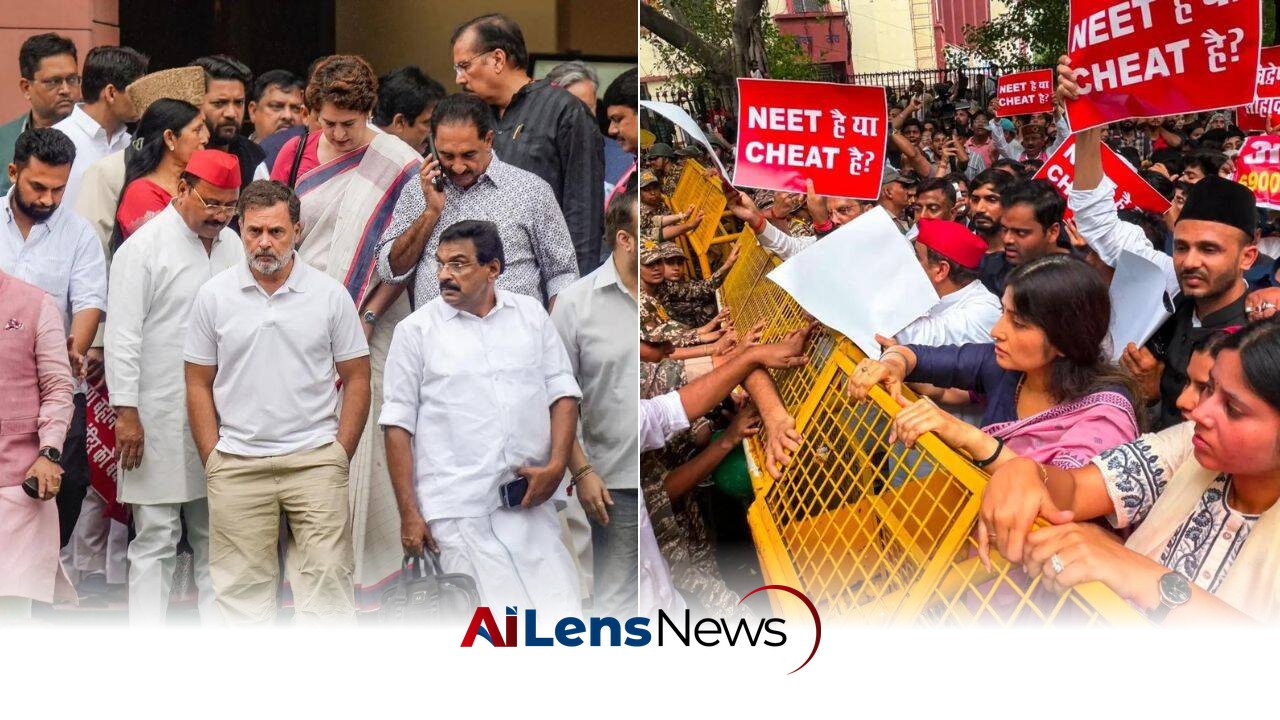


In a show of unity, opposition leaders including Rahul Gandhi and Mamata Banerjee support the CJP's protest against exam paper leaks, demanding action from the Centre.
New Delhi, India Jul 21, 2026 ALN: In a significant display of solidarity, several opposition parties have united to support the Cockroach Janta Party (CJP) in their protest against the alleged paper leak of the NEET-UG and other competitive examinations. This coalition includes prominent leaders such as Rahul Gandhi, Mallikarjun Kharge, Mamata Banerjee, Akhilesh Yadav, and Arvind Kejriwal, all of whom are calling for the resignation of Union Education Minister Dharmendra Pradhan.
The protest stems from serious allegations regarding the integrity of the NEET-UG examination process, which has raised concerns among students and parents alike. The National Eligibility cum Entrance Test for Undergraduate (NEET-UG) is a crucial examination for students aspiring to pursue medical education in . Conducted annually, it serves as a gateway to various medical colleges across the nation. Given its importance, any allegations of malpractice or irregularities can have far-reaching implications, not only for the students involved but also for the credibility of the educational system as a whole.
The CJP has taken a strong stance, accusing the government of negligence and demanding accountability for the alleged leaks that could compromise the fairness of the examination. Such allegations are not new; in recent years, there have been multiple instances where the integrity of competitive examinations has come under scrutiny, leading to widespread protests and calls for reform. The NEET-UG, in particular, has faced criticism for its transparency and the measures in place to protect against cheating and leaks.
The NEET-UG examination is critical, as it determines the future of thousands of aspiring medical students each year. The examination is not only a test of knowledge but also a reflection of the educational policies and practices in place. Any suspicion of malpractice can destabilize the trust that students and parents place in the educational system, leading to broader societal implications.
Rahul Gandhi, the leader of the Congress party, emphasized the need for a transparent examination process, stating, "The future of our youth should not be compromised by corruption and incompetence." His remarks resonate with many who believe that the current government has failed to uphold the standards necessary for a fair educational environment. Mamata Banerjee, the Chief Minister of West Bengal and leader of the Trinamool Congress, echoed these sentiments, highlighting the importance of safeguarding educational integrity. She has been a vocal critic of the central government's policies, especially those affecting the educational sector.
Akhilesh Yadav, the leader of the Samajwadi Party, also joined the protest, asserting that the government must take immediate action to restore trust in the examination system. His party has historically championed educational reforms and has called for greater accessibility and fairness in the educational landscape. Kejriwal, representing the Aam Aadmi Party, criticized the Centre for its inaction and called for a thorough investigation into the allegations. His administration in Delhi has focused on improving educational standards, and he has been an advocate for reforming the examination processes to eliminate corruption.
These demands reflect a growing frustration among opposition parties and the public regarding the perceived inadequacies in the government's handling of educational issues. The call for Pradhan's resignation underscores a broader sentiment that the current leadership is failing to address systemic problems within the examination framework, which is critical for millions of students who depend on these assessments for their futures.
The CJP's demands are not merely about accountability for the alleged paper leaks; they also highlight a broader desire for systemic reform in how competitive examinations are conducted. The opposition parties are advocating for an overhaul of the examination processes to ensure that they are fair, transparent, and free from corruption. This includes the implementation of advanced technologies to safeguard against cheating, as well as regular audits of examination procedures to ensure compliance with established standards.
As of now, the Central Government has not issued a formal response to the demands raised by the opposition and the CJP. The lack of communication has led to increased frustration among the protesting parties, who are determined to keep the pressure on the government. This silence from the government could be interpreted in various ways: as a sign of confidence in their examination processes, or as a failure to engage with legitimate concerns raised by stakeholders. The government's ability to address these issues effectively will be pivotal in shaping public perception and trust in their commitment to education.
The absence of a response from the government raises questions about their priorities and commitment to educational integrity. Stakeholders, including students and parents, are left in a state of uncertainty, which can exacerbate the anxiety surrounding the examination process. The longer the government delays in addressing these allegations, the more the credibility of the examination system is called into question.
The implications of this protest extend beyond the immediate demands of the CJP and the opposition parties. The integrity of competitive examinations is a pressing issue that affects not only students but also the broader educational framework in . If the allegations of paper leaks are substantiated, it could lead to calls for sweeping reforms in how examinations are conducted, potentially reshaping the landscape of competitive testing in the country.
Moreover, the unity displayed by the opposition parties in this protest marks a significant moment in national politics, as they rally around a common cause that affects millions of students across the country. This coalition could also signal a shift in the political dynamics leading up to future elections, as education remains a key issue for voters. The NEET-UG examination process, under scrutiny, could become a focal point for political campaigns, with parties leveraging the situation to highlight their commitment to educational reform.
The potential fallout from this situation could extend to the public's perception of the government and its handling of educational issues. A failure to adequately address the concerns raised could lead to a loss of trust in the government, particularly among young voters who are directly impacted by these policies. Conversely, a proactive response that addresses the concerns raised by the opposition and the CJP could bolster the government's image as one that is responsive to the needs of its citizens.
With the NEET-UG examination process under scrutiny, the coming days will be crucial in determining how the government addresses these serious allegations. The outcome of this protest and the government's response could have lasting effects on public trust in educational institutions and the political landscape. As students and parents await clarity and action, the urgency of the situation underscores the need for accountability and reform in the examination process. The future of many aspiring medical students hangs in the balance, and how this situation unfolds will be closely monitored by all stakeholders involved.
To learn more about the latest developments in Political Controversies, stay updated with our exclusive reports and analyses on AiLensNews.

