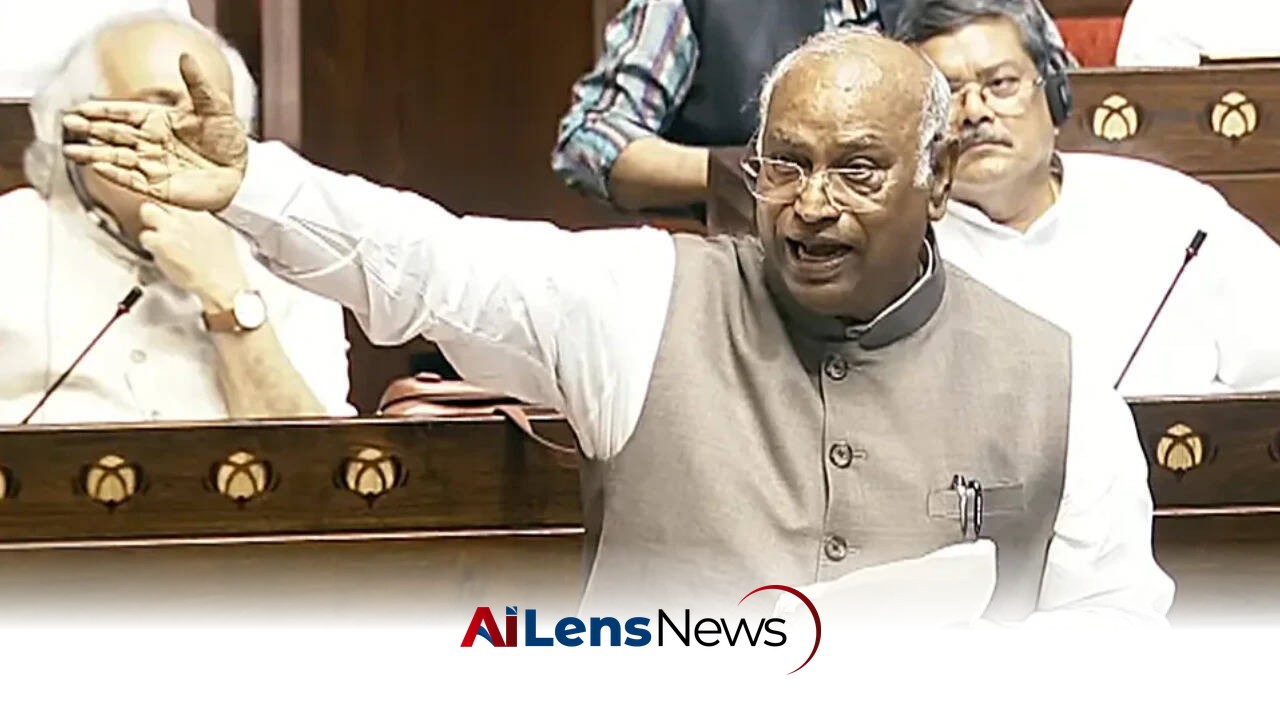


The Rajya Sabha witnessed intense discussions over NEET protests, with opposition leaders questioning the silence of PM Modi and Amit Shah on the issue.
New Delhi, India Jul 31, 2026 ALN: The Rajya Sabha erupted in a political storm as opposition leader Mallikarjun Kharge raised concerns about the absence and silence of Union Home Minister Amit Shah regarding the ongoing NEET protests. Kharge emphasized that his remarks were intended to highlight the need for accountability from the government, rather than advocating for any form of physical force. This incident has not only intensified the ongoing political debate but has also sparked discussions on the broader implications of student protests in .
During the session, opposition MPs voiced their frustrations over the government's response to the student protests, which have been fueled by allegations of irregularities in the NEET examination process. The National Eligibility cum Entrance Test (NEET) is a crucial examination for students aspiring to enter medical colleges in . However, its implementation has been marred by controversies, including accusations of cheating, paper leaks, and unfair evaluation practices. Several parties have called for the complete abolition of the NEET exam, arguing that it undermines the integrity of the education system and places undue stress on students. The protests have brought to light the challenges faced by students in an increasingly competitive educational landscape, where the pressure to perform can lead to significant mental health issues.
Opposition members also scrutinized the effectiveness of the newly introduced anti-paper leak bill. They questioned whether the legislation would adequately address the issues surrounding exam integrity and protect students from potential exploitation. The debate highlighted the growing unease among students and parents regarding the fairness of the examination process. Many believe that the government’s response has been insufficient, and that more rigorous measures are needed to ensure that the examination process is transparent and equitable.
In recent years, NEET has faced significant scrutiny, with various stakeholders voicing their concerns about its impact on the education system. The introduction of the anti-paper leak bill is seen as a step towards addressing some of these issues, but critics argue that it may not go far enough. They contend that simply creating laws is not enough; effective implementation and oversight are crucial to instill confidence in the examination system.
The discussions in the Rajya Sabha reflect a broader concern about the government's engagement with pressing issues affecting students. Opposition leaders are demanding that Prime Minister Narendra Modi and Amit Shah address these protests directly, rather than remaining silent amidst rising tensions. This demand for accountability is not just limited to the NEET protests but extends to how the government handles educational policies and the welfare of students in general.
The ongoing protests serve as a reminder of the critical need for accountability in governance, especially in matters that directly impact the youth. The opposition argues that the government must take a more active role in addressing the grievances of students and ensuring that their voices are heard. This call for engagement is particularly significant in light of the fact that young people represent a substantial portion of the electorate in , and their concerns can influence political outcomes.
Moreover, the protests highlight the increasing politicization of education in . As students mobilize to voice their concerns, they are becoming more aware of their rights and the importance of advocacy. This shift is indicative of a broader trend where young people are using social platforms and traditional media to raise awareness about educational inequalities and systemic issues within the academic framework.
The political discourse surrounding the NEET protests underscores the importance of addressing student grievances and ensuring the integrity of the examination process. As the opposition presses for answers, the government faces mounting pressure to respond effectively to the concerns raised by students and their advocates. This situation presents an opportunity for the government to reassess its policies related to education and consider reforms that could lead to a more equitable system.
In light of these developments, it is crucial for policymakers to engage with student representatives and educational experts to develop solutions that address the root causes of dissatisfaction. This could involve revisiting the structure of entrance examinations, enhancing transparency in the evaluation process, and providing additional support for students who may be struggling under the weight of academic pressures.
Furthermore, the implications of the NEET protests extend beyond immediate policy changes. They reflect a growing awareness among students about their role in shaping the educational landscape in . As more students participate in protests and advocate for their rights, there is potential for a more informed and engaged citizenry that demands accountability from their leaders. This shift could lead to significant changes in how educational policies are formulated and implemented in the future.
The ongoing NEET protests have not only ignited a political debate but have also highlighted the urgent need for reforms within the educational system. As students take to the streets to voice their concerns, the government must recognize the importance of addressing these issues in a timely and effective manner. The calls for accountability from opposition leaders serve as a crucial reminder that the voices of the youth cannot be ignored, and that their concerns must be taken seriously in the pursuit of a fair and just educational system.
In conclusion, the political discourse surrounding the NEET protests underscores the importance of addressing student grievances and ensuring the integrity of the examination process. As the opposition presses for answers, the government faces mounting pressure to respond effectively to the concerns raised by students and their advocates. The outcome of this political debate could have lasting implications for the future of education in , shaping the landscape for generations to come.
To learn more about the latest developments in Political Controversies, stay updated with our exclusive reports and analyses on AiLensNews.

