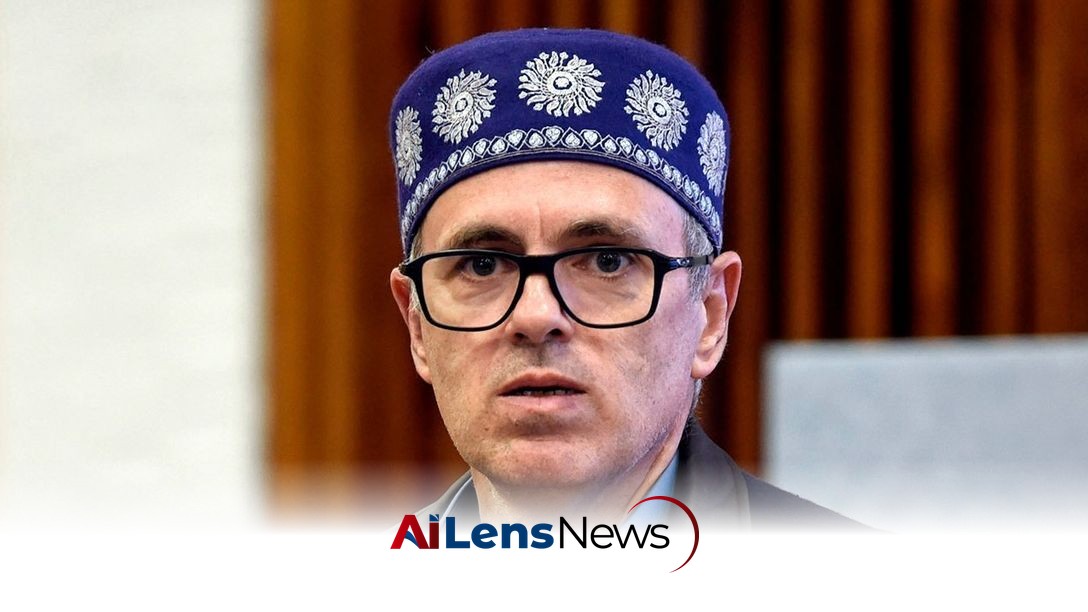


Chief Minister Omar Abdullah announces that the National Conference will proceed to New Delhi on July 19 for a protest, regardless of permission status.
New Delhi, India Jul 15, 2026 ALN: Chief Minister Omar Abdullah on Wednesday stated that the National Conference will depart for New Delhi on July 19, even if permission for the planned protest at Jantar Mantar is not granted. The announcement comes amidst a backdrop of heightened political tension in Jammu and Kashmir, where the National Conference, a significant political party in the region, has been vocal about its demands for restoring what it describes as the "snatched rights" of the people.
Jantar Mantar, a prominent protest site in New Delhi, has historically been a venue for various political demonstrations and movements, providing a platform for voices from different regions of India to gather and express their grievances. The National Conference's decision to hold a protest there reflects its strategy to draw national attention to the issues faced by the people of Jammu and Kashmir, particularly in light of the political changes that have occurred since the abrogation of Article 370 in August 2019.
Article 370 granted special status to Jammu and Kashmir, allowing it to have its own constitution and considerable autonomy. The revocation of this article has been a contentious issue, leading to widespread protests and political unrest. Abdullah emphasized that the party's commitment to restoring Jammu and Kashmir's rights remains unwavering. He remarked, "There will be no change in our programme. Dr. Mustafa Kamal also wanted our snatched rights to be restored." This statement underlines the National Conference's historical role as a defender of regional autonomy and its ongoing struggle to reclaim what it perceives as lost rights.
In the context of the National Conference's planned protest, Abdullah noted that the party had resolved to continue with its scheduled political activities, even when Dr. Kamal's health declined on July 11. Dr. Mustafa Kamal, a senior leader of the National Conference and a member of the Abdullah family, has been a prominent figure in advocating for the rights of the people of Jammu and Kashmir. His health issues have raised concerns within the party, but Abdullah's reference to the party's commitment to its agenda, even in the face of personal difficulties, illustrates the deep-rooted dedication of the National Conference to its political mission.
Abdullah recalled, "Doctors had then told us that perhaps he would not survive. Even at that time, National Conference president Dr. Farooq Abdullah instructed us that whatever happens, we have to continue with our Jammu programme on July 12. If we did not cancel that programme, there is no question of cancelling the July 20 protest." This determination to persist with political activities, regardless of personal or health challenges, signifies the resilience of the party's leadership and its steadfast focus on the larger political objectives.
The Chief Minister confirmed that he has already informed party leaders to proceed to New Delhi on July 19, irrespective of whether permission is granted for the protest. This decision reflects a strategic approach by the National Conference to maintain visibility and relevance in national politics, especially at a time when the political landscape of Jammu and Kashmir is undergoing significant changes. Abdullah's insistence on proceeding with the protest plans, despite potential legal or administrative hurdles, underscores the party's commitment to its cause and its willingness to challenge the status quo.
Abdullah reiterated that the National Conference would maintain its patience while also preparing alternative plans. He stated, "We know how to remain patient. We will wait, but we will also keep our alternate plan ready." This statement reveals a dual strategy: while the party is prepared to demonstrate its resolve through public protests, it is also mindful of the need for strategic planning and flexibility in its approach. The ability to adapt to changing circumstances is crucial in political activism, particularly in a region as sensitive and complex as Jammu and Kashmir.
The implications of the National Conference's planned protest extend beyond the immediate political landscape. The protest is likely to draw attention to the ongoing issues in Jammu and Kashmir, including governance, human rights, and the socio-economic challenges faced by its residents. The National Conference's actions may also influence public sentiment and mobilize support among the populace, particularly among those who feel disenfranchised following the changes made in 2019.
Moreover, the protest could serve as a catalyst for broader political discourse regarding the future of Jammu and Kashmir, including discussions around autonomy, governance, and the relationship between the region and the central government. The National Conference's persistence in advocating for its agenda may resonate with other political parties and groups in the region that share similar concerns about the implications of the revocation of Article 370.
As the National Conference prepares for its protest, the political atmosphere in Jammu and Kashmir remains charged. The party's actions will be closely monitored by both supporters and critics, and the outcomes of the planned protest could have lasting ramifications for the political landscape in the region. The National Conference's commitment to its cause, as articulated by Abdullah, signifies a broader struggle for representation and rights in a rapidly evolving political context.
To understand the significance of this planned protest, it is essential to consider the historical context of Jammu and Kashmir's political landscape. The region has a long history of political strife, marked by demands for greater autonomy and rights. The National Conference, founded in 1932, has been a key player in advocating for the rights of the people of Jammu and Kashmir. The party has historically positioned itself as a champion of regional identity and autonomy, particularly in the face of central government policies perceived as encroaching on local governance and rights.
The abrogation of Article 370 in 2019 was a watershed moment that altered the political dynamics in Jammu and Kashmir. It removed the special status that had been granted to the region, leading to significant changes in its governance structure. Many residents and political leaders viewed this move as a direct assault on their rights and identity. The National Conference's protest is, therefore, not just a reaction to recent events but part of a long-standing narrative of resistance against perceived injustices.
Furthermore, the socio-economic implications of the political changes in Jammu and Kashmir cannot be overlooked. The region has faced economic challenges, exacerbated by political instability and conflict. Issues such as unemployment, lack of infrastructure, and limited access to education and healthcare are pressing concerns for the residents. The National Conference's protest aims to highlight these issues and push for policies that address the needs of the people.
In addition to local concerns, the protest at Jantar Mantar also represents a strategic move to engage with the national political discourse. By taking their grievances to the heart of the Indian political landscape, the National Conference aims to amplify its voice and garner support from other political entities and civil society groups. This approach underscores the party's recognition of the need to connect local issues with broader national narratives, potentially influencing public opinion and policy decisions.
As the National Conference navigates this complex political terrain, the response from the central government and other political parties will be crucial. The way in which the protest is handled could set the tone for future interactions between Jammu and Kashmir's political entities and the central government. A heavy-handed approach may exacerbate tensions, while a more conciliatory stance could open avenues for dialogue and negotiation.
In conclusion, the National Conference's planned protest at Jantar Mantar is a significant political maneuver that reflects the party's commitment to advocating for the rights of the people of Jammu and Kashmir. As the region continues to grapple with the implications of the abrogation of Article 370, the protest serves as a reminder of the ongoing struggle for representation, autonomy, and socio-economic justice. The outcomes of this protest will likely reverberate throughout the political landscape, influencing both local and national conversations about the future of Jammu and Kashmir.
To learn more about the latest developments in Political Controversies, stay updated with our exclusive reports and analyses on AiLensNews.

