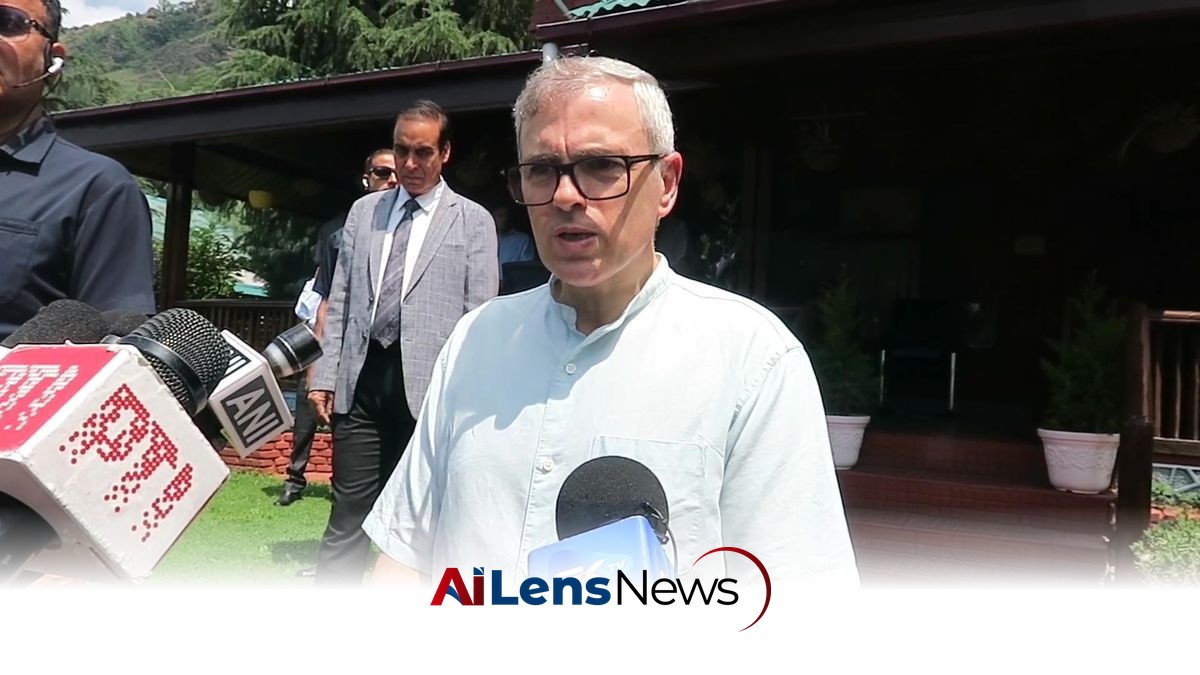


Omar Abdullah criticizes Mehbooba Mufti's 'Kashmir ka toh banta hai' comment, urging her to apologize for justifying misuse of power in Jammu and Kashmir.
New Delhi, India Jul 27, 2026 ALN: Jammu and Kashmir Chief Minister Omar Abdullah has intensified his criticism of Peoples Democratic Party (PDP) president Mehbooba Mufti over her controversial remarks made during a recent event at Delhi's Jantar Mantar. Mufti's statement, "Kashmir ka toh banta hai," which can be translated to mean that certain actions are justified in Kashmir, has sparked significant backlash from various political quarters, including Abdullah, who is demanding an apology.
Abdullah's comments come in the wake of increasing tensions in Jammu and Kashmir, a region that has long been embroiled in conflict due to ongoing militancy and political unrest. The area has a history of political strife, with various parties vying for power while navigating the complex socio-political landscape shaped by both local sentiments and national policies. Abdullah's assertion that Mufti's remarks justify the alleged misuse of power and arrests is indicative of the broader concerns regarding governance and civil liberties in the region.
In his statement, Abdullah emphasized that Mufti's comments send a dangerous message, suggesting that extraordinary measures against people in Jammu and Kashmir are acceptable due to the presence of militancy. He questioned the rationale behind such a justification, asking, "On what basis is it justified?" This inquiry reflects a critical aspect of the ongoing debate surrounding the balance between security measures and civil rights, particularly in a region that has faced significant military and police presence over the years.
Abdullah further elaborated on the implications of Mufti's remarks, stating, "Does militancy mean the law should not apply here? Does militancy mean children should not get justice? Does militancy mean people's passports should be withheld?" His questions highlight the potential erosion of legal protections and civil liberties in the context of counter-terrorism efforts. Abdullah's perspective underscores a growing concern that the normalization of extraordinary measures can lead to a slippery slope where rights are systematically undermined.
In the wake of the controversy, Abdullah suggested that Mufti should have acknowledged her mistake, particularly after facing criticism from various quarters. He stated, "It would not have diminished her stature if she had simply admitted that she had spoken in the heat of the moment and apologised." This call for accountability reflects a broader expectation among political leaders to maintain a standard of responsibility in their public statements, especially in a politically sensitive environment like Jammu and Kashmir.
Abdullah accused the PDP of exacerbating the situation by claiming that the viral video of Mufti's remarks was AI-generated, a claim he dismissed as unfounded. "The entire national media was present there. There is more than one recording. You should at least acknowledge that what you said was wrong," he asserted. This dismissal of the PDP's defense points to a larger issue of political trust and credibility in Jammu and Kashmir, where narratives can be easily contested and manipulated.
Linking the remarks to the broader political atmosphere in Jammu and Kashmir, Abdullah argued that such statements undermine democratic dissent. He posed a critical question: "When a former Chief Minister says suppressing protests through force is justified, then who among Kashmiris will come out to demand their rights?" This statement reflects the precarious state of political expression in the region, where fear of repression can stifle public discourse and activism.
Abdullah's concerns extend to the potential chilling effect on future protests and demands for statehood. He warned that if citizens perceive that there is open permission for repression, they may hesitate to advocate for their rights. This sentiment resonates deeply in a region where calls for autonomy and self-determination have historically been met with resistance from the central government.
Moreover, Abdullah criticized what he described as a dual political approach, stating, "It is an old habit—one thing in Kashmir and another in Delhi." This observation underscores the perceived disconnect between the central government's policies and the realities faced by the people in Jammu and Kashmir. The perception of differential treatment can exacerbate feelings of alienation among the local population.
In light of recent events, Abdullah reiterated that excessive coercive measures, such as mass arrests, are counterproductive in tackling militancy. He stated, "We cannot eliminate militancy this way. To truly end militancy, it is essential to keep the people with us. Without public support, we cannot achieve the final success." This perspective aligns with a growing body of thought that emphasizes the importance of community engagement and dialogue in addressing the roots of conflict.
Abdullah's argument regarding mass detentions further highlights the potential for backlash. He noted that if 3,000 people were arrested, it could lead to at least 15,000 individuals feeling alienated, considering the families and communities affected. This observation points to the broader social ramifications of heavy-handed security measures, which can foster resentment and perpetuate cycles of violence.
In a separate context, Abdullah commented on the resignation of Union Education Minister Dharmendra Pradhan, suggesting that it should have occurred earlier. He acknowledged, however, that "better late than never," indicating a recognition of the political pressures that can lead to such outcomes. Abdullah credited the protesting students rather than political parties for forcing the resignation, stating, "Many people will claim credit for his resignation. But if anyone truly deserves the credit, it is the students who refused to move from the protest site and did not back down from their stand." This reflection on student activism highlights the power of grassroots movements in influencing political change, particularly in an era where traditional political structures are often seen as ineffective or disconnected from the youth's aspirations.
To learn more about the latest developments in Political Controversies, stay updated with our exclusive reports and analyses on AiLensNews.

