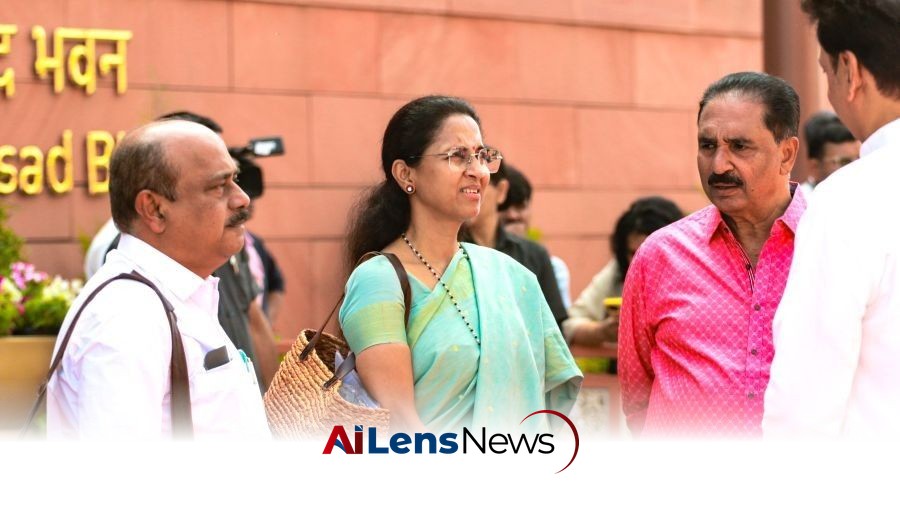


Supriya Sule condemns the government's insensitivity towards Sonam Wangchuk's protest and the NEET-UG paper leak, calling for urgent reforms.
Kohima, India Jul 17, 2026 ALN: Nationalist Congress Party (NCP) MP, Supriya Sule, on Friday launched a scathing attack on the Central Government, labelling it "highly insensitive" for ignoring the ongoing protest by world-renowned social reformer and environmentalist Sonam Wangchuk. This criticism comes at a time when the nation is grappling with various socio-political issues, including the recent leak of the NEET-UG (National Eligibility cum Entrance Test for Undergraduate) examination paper, which has raised significant concerns about the integrity of the educational system in India.
The NEET examination is a pivotal event for aspiring medical students in India, serving as a gateway to medical colleges across the country. The recent leak of the NEET-UG paper has not only compromised the examination's integrity but has also led to widespread discontent among students and parents alike. The leak is perceived as a severe blow to the credibility of the examination system, which is already under scrutiny for its rigorous and often stressful nature. The implications of such a scandal extend beyond immediate academic concerns; they also raise questions about the fairness and transparency of the educational landscape in India.
On Friday, Sule visited Jantar Mantar to support Sonam Wangchuk and fellow activist Abhijit Dipke, urging Wangchuk to end his 19-day-long fast-unto-death due to health concerns. Wangchuk, known for his innovative approaches to education and environmental sustainability, has been on a hunger strike to draw attention to the urgent need for reform in the education sector, particularly in light of the NEET paper leak scandal. His activism highlights the intersection of education and environmental issues, emphasizing the need for a holistic approach to reform that considers not just academic integrity but also the sustainability of educational practices.
Sule strongly condemned the NEET-UG paper leak malpractice, calling it a nationwide "crime" that is affecting millions of students across the country. "The government is showing absolute insensitivity. Someone from the ruling side should have reached out to him to initiate a dialogue, but no one bothered to show up. The irregularities in the NEET exam are not isolated incidents; it is a grave injustice perpetrated against lakhs of innocent children across the entire country," she said, emphasizing the need for accountability and transparency in the educational system. Her remarks resonate with a growing sentiment among the public that the education system must prioritize students' welfare over bureaucratic interests.
Expressing solidarity with Wangchuk, Baramati MP Supriya Sule stated that he is an invaluable asset to the nation. Her decision to support Wangchuk and youth activist Abhijit Dipke has received overwhelming praise and encouragement from hundreds of citizens within her own constituency. This public backing underscores the growing concern among the populace regarding the integrity of educational institutions and the need for reform. While she requested Wangchuk to break his fast considering his failing health, she noted his unyielding determination to see his demands for the resignation of Union Education Minister Dharmendra Pradhan and a dialogue with the central government met. The call for resignation reflects a broader demand for accountability from government officials involved in overseeing education policies and examination processes.
Addressing other national political issues, Sule clarified her party's stance on proposed legislative shifts, particularly the Constitutional Amendment Bill. She emphasized that the Opposition strongly objects to the current format of the Bill, highlighting the importance of thorough debate and discussion before any legislative changes are made. "There is an absolute need for extensive debate and discussion on this Bill. We are firmly against its implementation in its current state," she stated, indicating a commitment to democratic processes and the need for consensus in governance. The Constitutional Amendment Bill has sparked controversy, with critics arguing that it could undermine democratic institutions and processes.
Touching upon the controversial 'One Nation, One Election' proposal, which aims to synchronize elections for various levels of government, Sule noted that discussions are still ongoing. She added that any debate over a Delimitation Bill is premature until an official draft is formally introduced. This reflects the complexities and challenges inherent in such sweeping electoral reforms, which have implications for the political landscape and governance in India. The synchronization of elections is a contentious issue, with proponents arguing that it could lead to cost savings and more efficient governance, while opponents warn that it could dilute local representation and accountability.
Defending her recent high-profile meeting with Uttar Pradesh Chief Minister Yogi Adityanath in Lucknow, Sule maintained a pragmatic stance on federal governance. "We are public representatives. To get the public's work done, meeting ministers across party lines is a routine necessity," she said, indicating that collaboration across party lines is essential for effective governance, especially in a diverse and populous nation like India. This perspective underscores the importance of bipartisanship in addressing pressing national issues, regardless of political affiliations.
Sule also addressed the long-standing speculation regarding a political truce within the Pawar family following the split in the NCP. She revealed that her late brother, Ajit Pawar, had desperately wanted the family and the two splintered factions to reunite harmoniously to serve the nation. "It was my brother's final wish, and the proposal came entirely from his side. As a family, we tried our best to fulfill his last wish. However, the responses and public statements coming from the other side made it crystal clear that they have absolutely no intention of joining hands. Now that my brother is no more, we are putting an end to this discussion. The chapter is officially closed. We will continue to do our work with utmost self-respect," Sule concluded. This statement reflects the emotional and political turmoil within the NCP and highlights the challenges of maintaining unity in a fragmented political landscape.
Sule's comments regarding her late brother highlight the deep-rooted emotional and political friction that continues to define Maharashtra's political landscape. The NCP has been a significant player in the state's politics, and the internal dynamics within the party can have implications for its future direction and influence. The ongoing political discourse surrounding the NEET paper leak, the Constitutional Amendment Bill, and the broader electoral reforms illustrate the complexities of governance in India, where issues of accountability, transparency, and public welfare are paramount. The NCP's position on these issues may shape its electoral strategy and influence its relationship with the ruling party and other opposition factions.
As the situation unfolds, it remains to be seen how the central government will respond to the protests and demands raised by activists like Wangchuk and political leaders like Sule. The intersection of activism, politics, and governance will continue to shape the narrative of India's educational reforms and political landscape. The NEET paper leak incident serves as a critical reminder of the need for vigilance and integrity in the examination processes that determine the futures of countless students across the country. The ongoing discourse around educational reforms, accountability, and political integrity is likely to gain momentum as stakeholders from various sectors engage in discussions aimed at addressing the systemic issues plaguing the education system in India. The outcomes of these discussions may well determine the trajectory of educational policies and governance in the years to come.
To learn more about the latest developments in Political Controversies, stay updated with our exclusive reports and analyses on AiLensNews.

