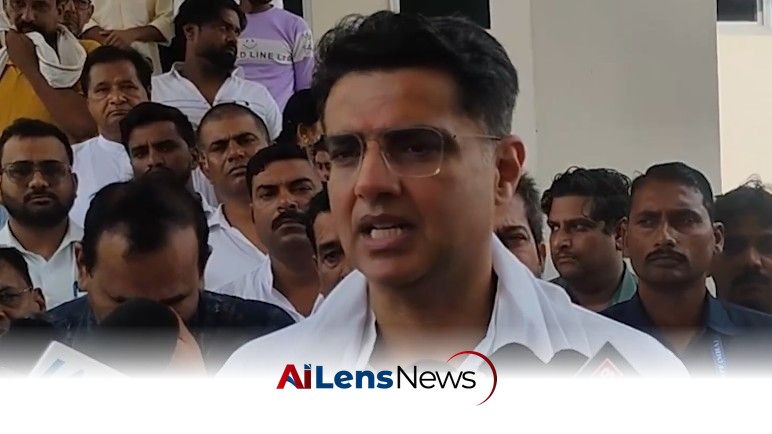


Congress leader Sachin Pilot condemns the government's failure to engage in dialogue with activist Sonam Wangchuk, highlighting public support for Wangchuk's hunger strike.
Kohima, India Jul 18, 2026 ALN: Congress leader Sachin Pilot on Saturday accused the Centre of failing to engage in dialogue with activist Sonam Wangchuk and instead resorting to force, saying the government should have addressed his concerns through discussions rather than removing him during a peaceful hunger strike.
Addressing the media in Tonk, Pilot said it was surprising that the government was neither willing to hold discussions with Wangchuk nor prepared to consider his demands, despite the Parliament session being scheduled to begin on July 20. This statement reflects a growing sentiment among various political leaders and activists who believe that the government is increasingly resorting to authoritarian measures to quash dissent rather than engaging in constructive dialogue.
Wangchuk, a prominent activist and education reformer known for his innovative approaches to sustainable development and education, has been vocal about the need for reforms in India's educational system. His hunger strike was aimed at drawing attention to several critical issues, including the demand for transparency in examination processes and the need for reforms that would benefit students across the country. Pilot claimed Wangchuk had intended to march to Parliament to press his demands, which, according to him, had created panic within the government.
Pilot alleged that Wangchuk's hunger strike had received widespread public support, particularly among the youth, and said the Congress party and Leader of Opposition Rahul Gandhi were seeking answers from the government while demanding the resignation of the Union Education Minister. The youth's support for Wangchuk underscores a broader trend of increasing activism among younger generations in India, who are increasingly dissatisfied with the status quo and are demanding accountability from their leaders.
"The government should have initiated dialogue instead of forcibly removing a person who was observing a peaceful hunger strike," Pilot said. His remarks highlight a growing concern among opposition leaders that the government’s approach to dissent is becoming more repressive, particularly in light of the increasing number of protests and movements across the country advocating for various social issues.
He alleged that the government's response reflected an unwillingness to engage with public concerns and demonstrated a defensive approach. This sentiment resonates with many observers who have noted that the government has often chosen to ignore or suppress dissent rather than address the underlying issues raised by activists and protestors.
He further claimed that after such a prolonged hunger strike, the government's priority should have been to discuss the issues and work towards resolving the concerns raised. Instead, he alleged, the authorities chose to remove the protester rather than address the demands. This raises questions about the government's commitment to democratic principles and the right to peaceful protest, which are foundational to a healthy democratic society.
Referring to issues concerning education and competitive examinations, Pilot said students across the country were demanding transparency, accountability, an end to examination paper leaks, and strict action against those responsible. The issue of examination paper leaks has been a persistent problem in India, undermining the integrity of the educational system and causing significant distress among students and parents alike. Pilot's comments reflect a broader frustration among the public regarding the government's inability to address these systemic issues effectively.
He said the Congress party's nationwide 'Chhatron Ki Goonj' (Voice of Students) campaign, launched from Kota, seeks to amplify these concerns. This initiative is part of a larger strategy by the Congress party to connect with younger voters and address their pressing concerns, particularly in the realm of education and employment.
Questioning the government's response to previous examination paper leak cases, Pilot referred to the CBI investigation into the alleged NEET paper leak and asked how many people had been arrested or held accountable. This inquiry into accountability highlights a significant issue in governance: the need for transparency and justice in addressing corruption and malpractice within the education system.
He alleged that the government lacked the political will to ensure accountability and instead sought to suppress public protests. This claim is indicative of a broader trend in which many citizens feel that their concerns are being ignored by those in power, leading to a growing sense of disillusionment with the political process.
Pilot also criticized the Rajasthan government over the continued delay in holding panchayat and urban local body elections. Local governance plays a crucial role in addressing the needs of communities, and delays in elections can lead to a lack of representation and accountability at the grassroots level.
Referring to observations made by the Rajasthan High Court, he alleged that the government was using reasons such as extreme weather to postpone the elections. This has raised eyebrows among political analysts and activists, who argue that such excuses may be a cover for the government’s reluctance to face the electorate amid growing dissatisfaction with its performance.
According to Pilot, the repeated postponement of elections for panchayats, municipalities, and student unions reflected the government's lack of confidence in facing the electorate. This assertion underscores a growing concern that the government may be prioritizing its political survival over democratic principles and the will of the people.
He further alleged that the government had failed in key sectors such as education and healthcare and claimed that several infrastructure projects initiated during the previous Congress government had come to a standstill. The implications of these failures are far-reaching, as they directly affect the quality of life and opportunities available to citizens, particularly in rural and underserved areas.
Pilot said the government should address public concerns through dialogue and accountability rather than delaying democratic processes or suppressing protests. His call for dialogue reflects a broader desire among many citizens for a more participatory and responsive government that is willing to listen to and address the needs of its constituents. As the political landscape continues to evolve, the emphasis on dialogue, transparency, and accountability will likely remain central to the discourse surrounding governance in India.
To learn more about the latest developments in Political Controversies, stay updated with our exclusive reports and analyses on AiLensNews.

