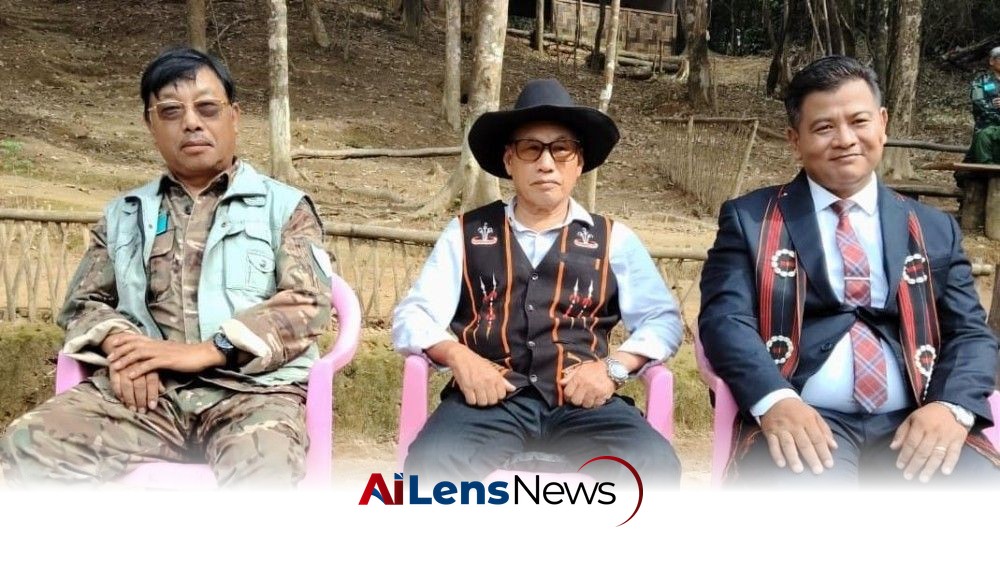


A breakaway faction of NSCN (IM) has established a Provisional Government, rejecting expulsion orders and accusing the leadership of compromising Naga political positions.
Kohima, India Jul 23, 2026 ALN: DIMAPUR, JULY 23: A breakaway group of the NSCN (IM), identifying itself as the NSCN/GPRN, Eastern Flank, has announced the establishment of a “Provisional Government,” while rejecting earlier expulsion orders against several of its leaders and accusing the NSCN (IM) leadership of compromising the Naga political position.
The announcement followed what the group termed an “Extraordinary Joint Emergency Meeting” of its Civil National Workers and Naga Army officers held at Mt Horeb Camp on July 21. The meeting was chaired by Lt Gen (Retd) Hs Ramsan.
According to a statement issued by Edward Sayai, Additional Secretary to the NSCN/GPRN, the meeting declared the establishment of a Provisional Government until a “full-fledged government is formed.” This decision marks a significant escalation in the ongoing internal conflict within the Naga nationalist movement, which seeks greater autonomy or independence for the Naga people, who inhabit regions across northeastern India and parts of Myanmar.
The meeting also entrusted and empowered nine national workers to form the Provisional Government led by Ikato I Chishi Swu as Chairman, with Lt Gen (Retd) Hs Ramsan, Lt Col (Retd) Victor Angami, Lt Gen A Raman, Brig Detail Dani, and Angyo Jacob Jingseya as members. Ngaranmi Jagoi, Merry Ramsan, and Rev Vitovi Yeputho were named advisors. The Eastern Flank stated that the chairman, members, and advisors would be administered an oath of allegiance by an ordained minister, which underscores the group's intent to legitimize its governance structure.
Rejects Expulsion Orders
The meeting also declared “null and void” expulsion orders issued against Ramsan and Raman on June 24, 2026, as well as another dated July 7 against Angami, Swu, Yeputho, Pamshang Zimik, and Angyo Jingseya. It alleged that the expulsions were intended to “silence the veterans” and facilitate what it described as a “piecemeal solution.” This internal strife highlights the fragmentation within the Naga nationalist movement, which has been characterized by various factions and differing ideologies regarding the approach to negotiations with the Government of India (GoI).
The statement maintained that those who had, in its words, “surrendered and yielded to the pressure” of the Government of India had no authority to expel those continuing to pursue what it termed the “sovereign existence of the Naga nation.” This assertion reflects a broader sentiment among certain factions within the Naga movement that the ongoing peace negotiations have not adequately addressed their aspirations for self-determination and political sovereignty.
Alleges ‘Compromised’ Competencies
The Eastern Flank also rejected the “Competencies” submitted to the Government of India (GoI) by the NSCN (IM) leadership, alleging that these compromised the Naga political position by placing it within the “Union/Constitution of India.” The term “Competencies” refers to the specific powers and responsibilities that would be granted to the Naga region as part of any potential agreement with the Indian government. This rejection signals a fundamental disagreement over the terms of engagement with the Indian state, which has been a point of contention since the initiation of peace talks in the early 1990s.
It further claimed that the “Competencies” violated the NSCN manifesto and the Preamble of the Yehzabo, citing provisions concerning the Naga political position and sovereignty. The Yehzabo, which serves as the constitution for the NSCN, outlines the principles and aspirations of the Naga people, emphasizing their right to self-determination and governance.
Referring to the Naga peace talks, the Eastern Flank alleged that the GoI had “betrayed” the Framework Agreement of August 3, 2015, and served a three-month ultimatum (August-October 2019) to NSCN (IM), stipulating that there would be no further talks on a separate Naga flag and constitution. This assertion suggests a growing frustration among certain factions regarding the pace and substance of negotiations, as well as the perceived intransigence of the Indian government in recognizing Naga aspirations.
It also cited a November 7, 2024 statement attributed to NSCN (IM) General Secretary and Chief Political Negotiator Th Muivah concerning the possibility of resuming “violent armed resistance” if the political initiative outlined by the NSCN was rejected by the NSCN. This statement reflects the precarious nature of the peace process, as the threat of renewed violence looms over the negotiations and underscores the deep-seated grievances that continue to fuel the conflict.
Despite this, the leadership at Hebron continued negotiating the “compromised and surrendered ‘competencies,’ it alleged. This ongoing dialogue has raised concerns among various stakeholders regarding the potential for a lasting resolution to the Naga issue, which has persisted for decades and resulted in significant loss of life and disruption in the region.
The Eastern Flank further declared that in its assessment, the “spirit of the Cease-fire Agreement has ceased to exist” following the GoI’s alleged betrayal of the Framework Agreement, and stated that it would continue “both political as well as armed resistance” in pursuit of its stated political objective. This declaration indicates a potential shift in strategy for the Eastern Flank, as it seeks to assert its authority and legitimacy in the face of internal divisions and external pressures.
The meeting also renewed its commitment to “Nagalim for Christ” and said it would uphold what it termed the Naga national principle for the “sovereign existence of the Naga nation.” This commitment highlights the intertwining of faith and nationalism within the Naga movement, where religious beliefs play a significant role in shaping the identity and aspirations of the Naga people.
In its final resolution, the Eastern Flank called upon Naga national workers and the wider Naga public to join in forming what it described as a “unified national government” based on the principles of the organisation’s founding leaders. This call for unity reflects a desire to consolidate power and resources among factions that share a common vision for Naga sovereignty, while also addressing the challenges posed by internal dissent and external negotiations.
The establishment of the Provisional Government by the NSCN/GPRN, Eastern Flank, is a pivotal moment in the ongoing struggle for Naga self-determination. It underscores the complexities of the Naga political landscape, characterized by competing ideologies, leadership disputes, and the overarching influence of the Indian state. The implications of this development could reverberate throughout the region, affecting not only the Naga people but also the broader dynamics of ethnic and nationalist movements in northeastern India.
As the situation unfolds, it remains to be seen how the Indian government will respond to this latest challenge, as well as how other factions within the Naga movement will react to the Eastern Flank's declaration. The potential for renewed conflict or a shift towards a more unified approach to negotiations will depend on a range of factors, including the willingness of all parties to engage in dialogue and the broader geopolitical context in which these developments are occurring.
To learn more about the latest developments in Political Controversies, stay updated with our exclusive reports and analyses on AiLensNews.

