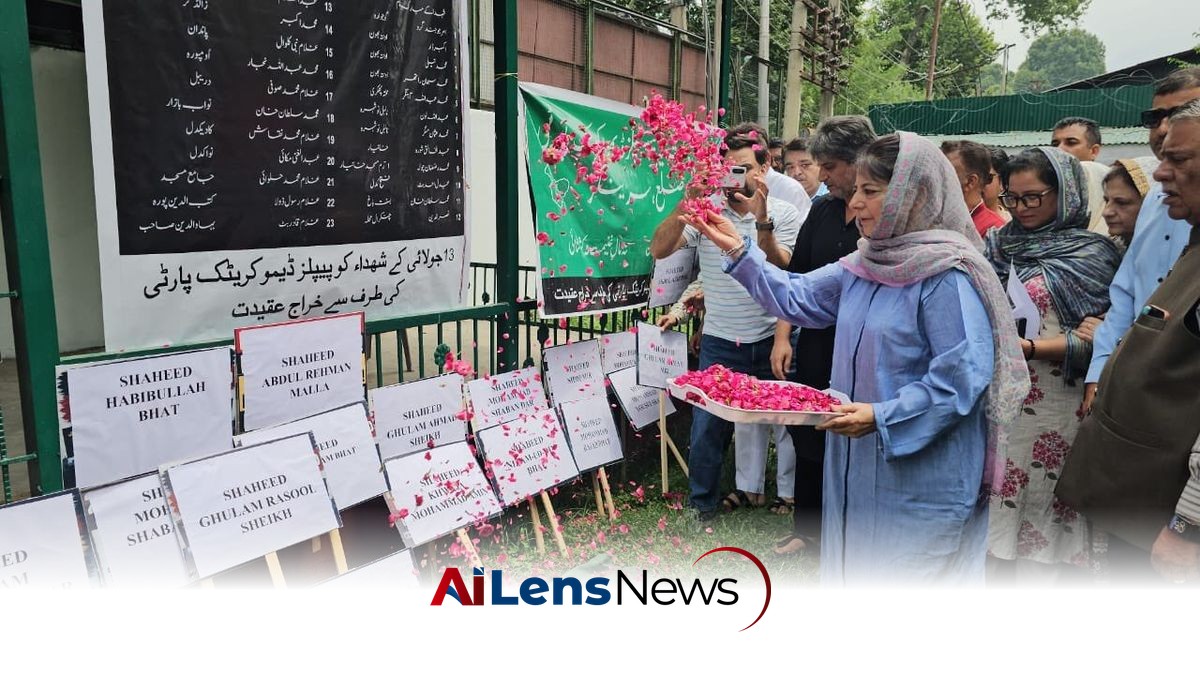


PDP leader Mehbooba Mufti honors the martyrs of 1931, condemning BJP for politicizing their sacrifice and imposing restrictions on tributes.
New Delhi, India Jul 13, 2026 ALN: PDP chief Mehbooba Mufti on Monday accused the BJP of turning the issue of the 'martyrs' of 1931 into a communal matter, saying those killed by the Dogra Maharaja's soldiers sacrificed their lives fighting the "autocratic rule". This statement comes against the backdrop of the ongoing political tensions in Jammu and Kashmir, where historical narratives often intersect with contemporary political ideologies.
The former chief minister paid tributes to the 22 protestors, who died on this day in 1931, at the PDP headquarters here. The events of that day are pivotal in the history of Kashmir, representing a significant moment of resistance against oppressive governance. The protestors were executed while demonstrating against the repressive measures of the Dogra rulers, and their martyrdom is commemorated annually, symbolizing the struggle for rights and justice in the region.
In a move that reflects the heightened sensitivities surrounding this commemoration, the authorities had placed restrictions around the martyr's graveyard in the Naqshband Sahib area of the city to prevent people, including politicians, from paying their tributes. Such restrictions have been a common occurrence in Jammu and Kashmir, especially during sensitive anniversaries, as the government often seeks to control public gatherings and potential protests.
Speaking to reporters at the party office, Mehbooba said 22 Kashmiris sacrificed their lives outside Srinagar Central Jail against the "autocratic rule". Her remarks highlight the enduring legacy of these martyrs and their role in the collective memory of the Kashmiri people, who view their sacrifices as foundational to the region's ongoing struggle for political representation and autonomy.
"They raised their voice against the autocratic rule of that time, its oppression and tyranny, and awakened our nation," she said. This statement underscores the historical context of the 1931 protests, which were not merely about immediate grievances but also about a broader quest for justice and self-determination that resonates with contemporary political movements.
Drawing parallels with iconic figures such as Bhagat Singh, Sukhdev, Rajguru, and Ashfaqullah Khan, Mehbooba stated that while the people of Kashmir acknowledge and respect their sacrifices, the BJP has turned the issue of the martyrs of 1931 into a communal issue. This assertion reflects a growing concern among various political factions in Jammu and Kashmir regarding the BJP's narrative framing, which many feel seeks to divide communities along religious lines.
"As far as the sacrifice of Kashmiris is concerned, the BJP has made it a Hindu-Muslim issue, it has made it a Dogra-Kashmiri issue, it has made it a Jammu-Kashmir issue. Our elders raised their voice against the autocratic rule at that time and became martyrs and sacrificed themselves," she said. This framing of the issue suggests that the BJP's approach to governance and historical interpretation is seen as exclusionary, potentially alienating significant segments of the population.
Asserting that the BJP cannot put restrictions on the minds of the people of Jammu and Kashmir, the PDP president remarked, "these martyrs awakened our nation, and laid the foundation for the people's rule that we see today." This statement indicates a belief in the resilience of collective memory and the importance of historical figures in shaping contemporary political identity.
"So, even if the BJP tries harder, it won't be able to control our minds. They are our heroes. Just like Bhagat Singh, Sukhdev, Ashfaqullah Khan, and Gandhi ji are. Just as (Nathuram) Godse is the hero of BJP, these people who were martyred in 1931 for the sake of the people's rule, they are our martyrs and will remain so. No matter how many restrictions they impose, no matter how many barbed wires they put up," she added. This comparison highlights the stark ideological divide between the PDP and the BJP, with each party claiming different historical narratives and heroes to bolster their political positions.
Terming the restrictions as an "excess done by the BJP," Mehbooba claimed she was placed under house arrest on Sunday while the Naqshband Sahib area was completely sealed and checkpoints were put up on Monday. Such actions have been criticized by various political leaders and human rights advocates as attempts to stifle dissent and suppress the voices of those who wish to commemorate their history.
"I think this is an excess by the BJP, they should not do this. If they cannot respect our martyrs, then at least they should not stop us from paying tribute to them," she said. This plea reflects a broader call for recognition and respect for historical sacrifices, a sentiment echoed by many in the region who feel marginalized by current political dynamics.
Mehbooba's daughter, Iltija Mufti, also accused the BJP of trying to "distort" and "erase" Jammu and Kashmir's history. Her comments emphasize a generational continuity in the resistance against perceived injustices and the importance of historical memory in shaping identity and political discourse.
"The police is not even allowing us to take a few steps outside (the party office). They want to erase and distort our history. This Martyr's day is not illegal, it is not seditious. These are the people who sacrificed their lives; it is because of them that democracy came to Jammu and Kashmir. They raised their voice against the injustice done by Dogra rulers; it is because of them that the seeds of democracy were sown," Iltija said. This assertion connects the historical events of 1931 with the ongoing political struggles in the region, framing them as part of a larger narrative of democratic aspirations and resistance against oppression.
She expressed frustration over the restrictions imposed on party leaders, stating, "I want to tell the LG and the administration here that you cannot erase or rewrite our history. The people of Kashmir will themselves decide who their heroes or villains are. The Martyrs are heroes for us, and we will always salute them and their spirit." This statement encapsulates the ongoing tensions in Jammu and Kashmir regarding historical interpretation, identity, and the right to commemorate one's past, which remain deeply intertwined with the region's present political landscape.
The events surrounding the commemoration of the 1931 martyrs are emblematic of the broader struggles faced by the people of Jammu and Kashmir. They highlight the complexities of identity, history, and politics in a region that has long been marked by conflict and division. As political parties navigate these sensitive issues, the narratives they construct will continue to shape the future of Jammu and Kashmir, influencing both local sentiments and national discourse.
To learn more about the latest developments in Political Controversies, stay updated with our exclusive reports and analyses on AiLensNews.

