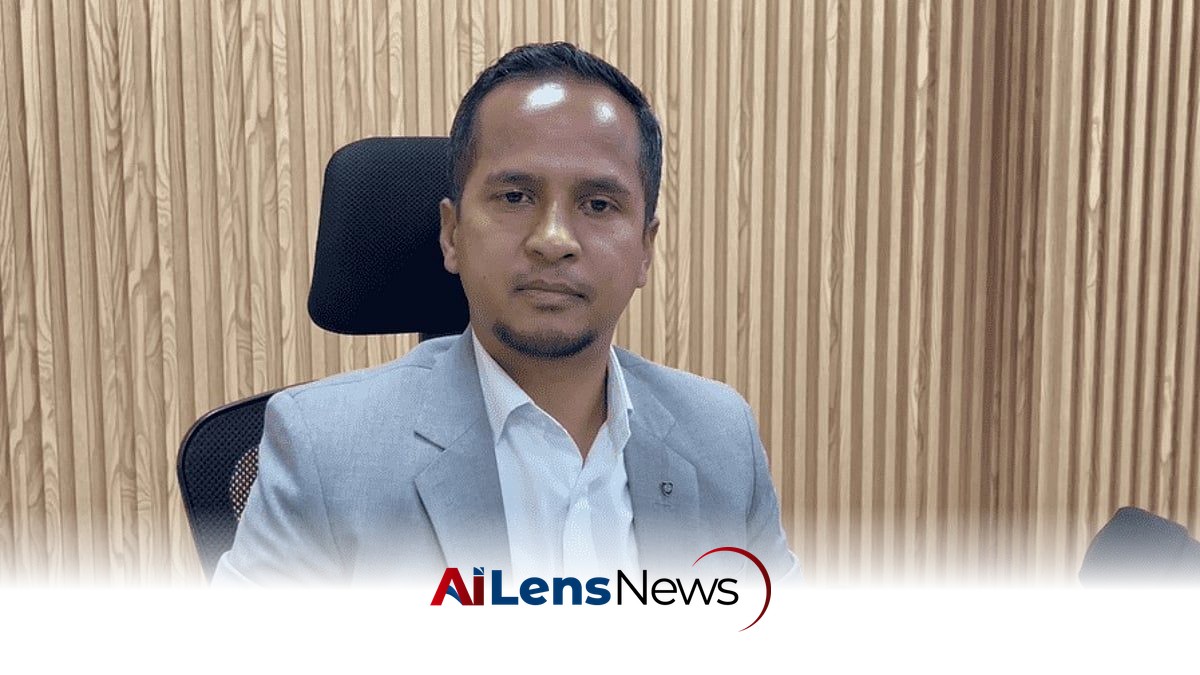


Kyrmen Shylla of the UDP aims for an opposition-free Meghalaya post-2028 elections, reaffirming alliances with NPP and BJP.
Shillong, India Jul 26, 2026 ALN: United Democratic Party (UDP) legislator Kyrmen Shylla has expressed his desire for Meghalaya to have an opposition-free government following the 2028 Assembly elections. He reaffirmed that the UDP would maintain its alliance with the National People's Party (NPP) and the Bharatiya Janata Party (BJP), even if it emerges as the single largest party.
In discussing the party's political roadmap, Shylla dismissed claims regarding the UDP's diminishing relevance, asserting that the regional party has been steadily strengthening its organizational base and legislative presence. He emphasized the party's aspiration to lead the state government in the future and its commitment to expanding support across Meghalaya.
Shylla highlighted the party's electoral growth, noting that the UDP increased its strength from six MLAs in 2018 to 12 in 2023. He expressed confidence that the party could secure more than 30 seats in the 2028 Assembly elections if party leaders and workers continued to work diligently.
While leading the government remains the UDP's long-term objective, Shylla stressed that electoral success would not alter its relationship with coalition partners. He praised the NPP-led Meghalaya Democratic Alliance government under Chief Minister Conrad K. Sangma and reiterated that the UDP would continue to work collectively with the NPP and BJP, emphasizing that political allies should not be abandoned after elections.
Shylla also outlined his vision for consensus-based governance, stating his hope that Meghalaya would one day have all 60 legislators as part of the government, regardless of party affiliation. He argued that such an arrangement would eliminate confrontation in the Assembly and facilitate the smooth passage of legislation in the interest of the state.
He expressed a wish for future governments to strive to bring all elected representatives together, adding that he hopes Meghalaya will eventually function without an opposition, irrespective of who occupies the Chief Minister's office.
The political landscape of Meghalaya has been characterized by a coalition-based governance model, where regional parties often join forces to form a government. This approach has been particularly significant in a state where no single party has historically been able to secure a clear majority in the Assembly. The UDP, founded in 1997, has played a crucial role in the state's political dynamics, advocating for the rights and interests of the indigenous Khasi and Jaintia people.
Shylla's ambition for an opposition-free government reflects a broader trend in Indian politics where some leaders advocate for greater unity among political parties to facilitate governance. The idea is that by minimizing opposition, legislative processes can become more efficient, allowing for quicker decision-making and implementation of policies. However, this vision raises questions about the role of opposition in a democracy, which traditionally serves to hold the ruling party accountable and represent diverse viewpoints.
In the context of Meghalaya, Shylla's proposal may resonate with voters who are fatigued by political conflict and desire stability. However, it also challenges the fundamental principles of a democratic system, where opposition parties are essential for debate and dissent. Critics might argue that an opposition-free government could lead to a lack of checks and balances, potentially resulting in authoritarian tendencies.
Shylla's remarks come at a time when the UDP is experiencing a resurgence in popularity, particularly among younger voters who are looking for effective governance and development. The party's increase in seats from six to twelve in the 2023 elections underscores its growing influence and the potential for further gains in the upcoming elections. The UDP's alliance with the NPP and BJP has also been strategic, allowing it to leverage the strengths of its partners while maintaining a distinct regional identity.
Moreover, the socio-political context of Meghalaya, marked by its unique ethnic composition and historical grievances, plays a critical role in shaping voter preferences. The UDP's focus on consensus-based governance may appeal to constituents who prioritize stability and development over partisan politics. Shylla's vision could be seen as an attempt to address the challenges of governance in a state where tribal affiliations and regional identities often complicate political alliances.
As Meghalaya approaches the 2028 Assembly elections, the political strategies of parties will be closely scrutinized. The UDP's commitment to its coalition partners and its vision for an opposition-free government will certainly influence electoral dynamics. It remains to be seen how other parties will respond to this vision and whether they will adapt their strategies in light of Shylla's proposals.
In conclusion, Kyrmen Shylla's aspiration for an opposition-free Meghalaya presents an intriguing perspective on governance in the state. While it aims to foster unity and streamline legislative processes, it also invites critical reflection on the role of opposition in a healthy democracy. As the UDP prepares for the upcoming elections, its ability to balance coalition politics with its own ambitions will be pivotal in shaping the future political landscape of Meghalaya.
To understand the implications of Shylla's vision, it is essential to consider the historical context of Meghalaya's political environment. The state has a complex political history, characterized by the interplay of various ethnic groups, regional parties, and national influences. The UDP has historically been a strong advocate for the rights of the indigenous Khasi and Jaintia communities, positioning itself as a regional alternative to national parties. This background informs the party's current strategies and its aspirations for the future.
The UDP's rise in the 2023 elections can be attributed to several factors, including its grassroots mobilization efforts, effective communication of its developmental agenda, and the disillusionment of voters with traditional political narratives. As the party seeks to expand its influence, it is essential to analyze how its policies resonate with the electorate, particularly in the context of regional aspirations and identity politics.
Furthermore, the coalition-based governance model in Meghalaya raises questions about the sustainability of such alliances. While the UDP, NPP, and BJP currently collaborate, the dynamics of political partnerships can shift rapidly, influenced by changing voter sentiments, internal party dynamics, and external pressures. The UDP's commitment to maintaining its alliances while striving for a greater share of power will require careful navigation of these complexities.
In the broader Indian political landscape, the call for opposition-free governance has sparked debates about the essence of democracy. While proponents argue that unity can lead to effective governance, critics caution against the risks of sidelining dissenting voices. The balance between governance efficiency and democratic accountability remains a critical challenge for political leaders across the country.
Ultimately, Shylla's vision for an opposition-free Meghalaya is emblematic of a larger discourse on governance in India, where the quest for stability often clashes with the need for robust democratic processes. As the UDP prepares for the 2028 elections, its ability to articulate a clear vision that resonates with the aspirations of the electorate while respecting democratic principles will be crucial in shaping the future of Meghalaya's political landscape.
To learn more about the latest developments in Elections, stay updated with our exclusive reports and analyses on AiLensNews.

