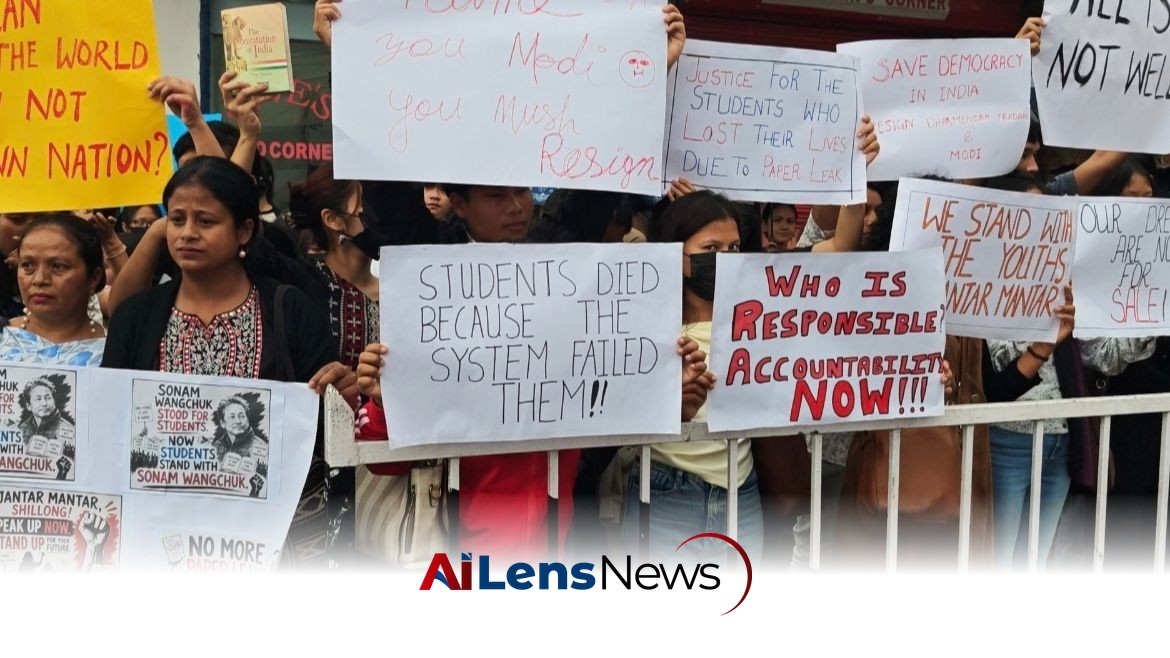


Mewak Lyngdoh Pakma, the BJP youth wing president, avoids media scrutiny following his controversial remarks about NEET protestors, while state leadership remains silent.
Shillong, India Jul 22, 2026 ALN: BJP youth wing president and lawyer Mewak Lyngdoh Pakma has found himself at the center of a significant controversy following his inflammatory comments regarding the National Eligibility cum Entrance Test (NEET) protests in New Delhi. On July 21, Pakma attended a meeting on Special Intensive Revision (SIR) for political parties, convened by the Chief Electoral Officer, but chose to evade questions from the media regarding his remarks, which suggested a violent approach towards the protestors.
The NEET exam is a crucial stepping stone for students aspiring to pursue medical education in India. Introduced in 2013, NEET has become the sole entrance test for undergraduate medical courses in India, replacing multiple entrance exams previously conducted by different states and institutions. The exam has been the subject of various protests over the years, particularly concerning issues such as alleged discrepancies in the examination process, concerns about the fairness and accessibility of the test, and the impact of the test on students from different socio-economic backgrounds. The recent protests have reignited debates about the exam's integrity and the government's handling of related issues, prompting students to voice their frustrations more vocally.
Pakma's comments have drawn widespread condemnation, prompting journalists to seek clarification from him as he exited the additional secretariat. However, he did not respond to their inquiries, leaving many to speculate about the implications of his statements on the BJP's image, particularly among the youth and student communities. The silence from Pakma, especially in the face of mounting criticism, may be indicative of a larger struggle within the party regarding how to manage dissent and the image of its youth leaders.
In light of the controversy, media personnel also sought a response from the state BJP leadership. Instead of addressing the issue directly, the party released a press statement that highlighted the achievements of the National Democratic Alliance (NDA) government in contrast to the previous United Progressive Alliance (UPA) administration. This strategic move appears to be an attempt to divert attention from Pakma's comments and reinforce the party's narrative regarding governance and accountability. The BJP's communication strategy often involves emphasizing its successes and distancing itself from any negative narratives that could impact its standing among voters.
The press release emphasized Prime Minister Narendra Modi's 'zero-tolerance' policy towards NEET-related irregularities, specifically referencing a recent NEET paper leak incident. The statement outlined the government's swift actions in arresting individuals involved in the scandal and highlighted legislative measures aimed at preventing such occurrences in the future. By framing the government's response in this manner, the BJP aims to project an image of decisiveness and commitment to transparency in national examinations, countering any narrative that suggests negligence or indifference towards student welfare.
Wankitbok Pohshna, the state BJP general secretary, underscored the importance of maintaining the integrity of national examinations and protecting the interests of students. His comments suggested that the government is taking proactive measures to ensure that the examination process is secure and fair, reinforcing the party's commitment to educational reforms. This is particularly relevant in the context of ongoing discussions about the need for reforms in the education sector, where issues like corruption and accessibility have been prominent concerns.
The implications of Pakma's comments extend beyond his personal reputation; they also raise questions about the BJP's stance on student protests and dissent. Historically, student movements in India have played a pivotal role in shaping political discourse and influencing policy decisions. The BJP's response, or lack thereof, to Pakma's remarks could signal its approach to handling dissent within its ranks and among the broader youth population. In a democratic society, the ability to voice dissent is often seen as a vital component of political engagement, and how the BJP navigates this situation could have lasting effects on its relationship with young voters.
The BJP has often positioned itself as a party that prioritizes the aspirations of young people, particularly in the context of education and employment. However, controversial statements made by party leaders could alienate potential supporters, especially in a politically charged environment where students are increasingly vocal about their rights and grievances. The party's image as a champion of youth interests may be compromised if it fails to address the concerns raised by Pakma's comments adequately.
Moreover, the ongoing discourse surrounding NEET and related issues is emblematic of larger systemic challenges within India's education sector. The exam has faced scrutiny over its accessibility, with critics arguing that it disproportionately affects students from rural and economically disadvantaged backgrounds. This raises fundamental questions about equity in education and the mechanisms in place to support all students in their pursuit of higher education. The debate around NEET is not merely about the exam itself but also reflects broader societal issues, including the disparity in educational resources and opportunities available to different segments of the population.
As the BJP navigates this controversy, it must consider the potential backlash from students and the broader public. The party's ability to address the concerns raised by Pakma's comments, as well as the underlying issues related to NEET, will be crucial in shaping its future electoral prospects, particularly in states where youth voter turnout is significant. The youth demographic has increasingly become a focal point in Indian politics, and parties that successfully engage with this group may find themselves with a significant advantage in upcoming elections.
In conclusion, Mewak Pakma's controversial remarks regarding NEET protestors have sparked a media frenzy and raised important questions about the BJP's approach to student activism and dissent. As the party grapples with the fallout from this incident, it must also contend with the broader implications for its image and policies in the education sector. The ongoing dialogue surrounding NEET and student rights will undoubtedly continue to be a focal point in the political landscape, as stakeholders from various sectors advocate for reforms and greater accountability in the education system. The BJP's response to this controversy will not only shape its immediate political fortunes but may also influence the overall discourse on education and student rights in India for years to come.
To learn more about the latest developments in Political Controversies, stay updated with our exclusive reports and analyses on AiLensNews.

