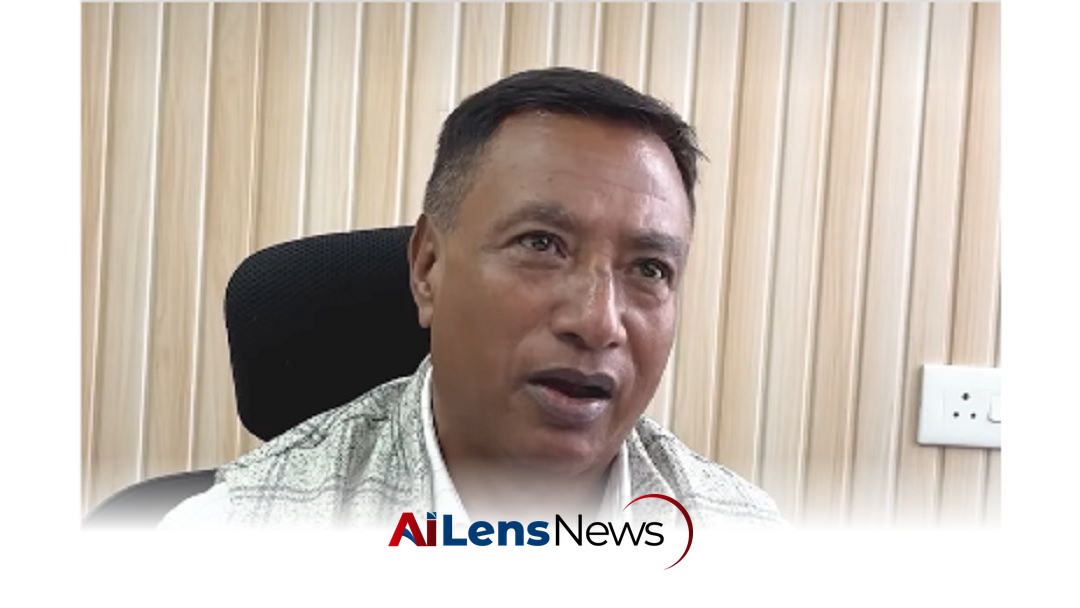


BJP MLA Alexander Laloo Hek argues against the presence of worship places in government offices, emphasizing the need for neutrality in public spaces.
Shillong, India Jul 16, 2026 ALN: SHILLONG, JUL 15: BJP MLA Alexander Laloo Hek on Wednesday stated that government offices should not house places of worship. His remarks followed an incident where the Khasi Students’ Union (KSU) locked an alleged illegal temple within the Central Bureau of Investigation office premises in Shillong, demanding its demolition within a week.
Speaking to reporters, Hek, who represents Pynthorumkhrah, clarified that he was not taking sides regarding the KSU's actions. Instead, he emphasized the importance of maintaining neutrality in workplaces. This assertion comes amid a broader context of ongoing discussions about the role of religion in public life and the need for a secular approach in government institutions.
“My personal opinion is that any workplace, whether in the state or central government, should not include worship places. These should be in private spaces or designated worship areas, not in public places,” Hek asserted. His comments are reflective of a growing sentiment among some political leaders and citizens who advocate for a clear separation between religion and state affairs, particularly in a diverse and pluralistic society such as India.
Hek further elaborated that government offices serve as public spaces frequented by individuals from diverse backgrounds. The introduction of religious spaces could lead to “unnecessary inconvenience” for both staff and visitors. This perspective touches on the potential complications that can arise when personal beliefs intersect with public duties, especially in a nation where multiple religions coexist.
“Government offices are public places. All kinds of people will visit. Why create unnecessary inconvenience for those working in that organization or any other?” Hek questioned. His remarks highlight a critical issue in contemporary Indian society: the challenge of maintaining a secular state while respecting the individual rights of citizens to practice their faith.
The KSU's actions and Hek's statements reflect ongoing tensions surrounding religious practices in public areas, raising questions about the balance between personal beliefs and public neutrality. The incident at the CBI office is not an isolated one; it is part of a larger narrative regarding the presence of religious symbols and practices in government spaces across India. The debate often centers on whether such practices infringe on the secular nature of the state, as enshrined in the Indian Constitution.
Secularism, as a principle, aims to ensure that government remains neutral in matters of religion, treating all citizens equally, regardless of their faith. This principle is particularly significant in India, which is home to a multitude of religions, including Hinduism, Islam, Christianity, Sikhism, Buddhism, and others. The challenge lies in navigating the complex landscape of religious beliefs while upholding the secular framework that governs public institutions.
In recent years, there have been various instances across India where the presence of religious symbols in government offices has sparked controversy. For example, some officials have faced backlash for allowing religious rituals in public spaces, while others have been criticized for their attempts to enforce strict secularism. These incidents often lead to public debates and protests, reflecting the deep-seated emotions tied to religious identity and expression.
Hek's comments come at a time when the political landscape in India is increasingly polarized, with religion often playing a pivotal role in electoral politics. The BJP, as a party, has been associated with Hindu nationalism, which complicates the discourse around secularism. Critics argue that the party's policies sometimes blur the lines between religion and state, while supporters contend that they promote a unified national identity.
The implications of Hek's statements are multifaceted. On one hand, advocating for secular workplaces aligns with constitutional principles and may foster a more inclusive environment for all citizens. On the other hand, it may also alienate those who view their religious practices as integral to their identity and daily lives. The challenge for policymakers is to find a balance that respects individual rights while maintaining the secular integrity of public institutions.
As the debate continues, it remains to be seen how government policies will adapt to address these concerns while respecting the diverse beliefs of the populace. The need for dialogue and understanding among different religious communities is paramount as India navigates the complexities of its secular identity in a rapidly changing socio-political landscape.
In conclusion, Alexander Laloo Hek's remarks underscore a significant conversation about the role of religion in public spaces and the necessity for secularism in government offices. As the KSU's actions and Hek's statements illustrate, the intersection of personal beliefs and public duties will continue to be a focal point of discussion in India, influencing both policy decisions and community relations in the years to come.
Historically, India has grappled with the concept of secularism, especially in light of its diverse religious demographics. The Indian Constitution, adopted in 1950, enshrined secularism as a fundamental principle, aiming to ensure that the state treats all religions equally and does not favor any particular faith. However, the practical application of this principle has often been contentious, with various political parties and groups interpreting secularism through their own ideological lenses.
In many instances, local and regional political dynamics have influenced how secularism is perceived and enacted. For example, in some states, religious symbols may be more prevalent in public institutions, reflecting the cultural and religious demographics of the area. Conversely, in regions with a more significant emphasis on secular governance, there may be stricter adherence to the separation of religion and state. This divergence often leads to tensions and conflicts, as seen in the recent incident involving the KSU and the CBI office.
Moreover, the rise of religious nationalism in India has further complicated the discourse surrounding secularism. As political parties increasingly align themselves with particular religious identities, the notion of a secular state is challenged. This has led to a growing divide among the populace, with some advocating for a return to strict secularism, while others push for the recognition and promotion of religious identities in public life.
The implications of maintaining secular workplaces extend beyond mere policy; they touch on the very fabric of Indian society, where religious identity plays a crucial role in personal and community life. The challenge lies in creating an environment where individuals feel free to express their beliefs without imposing them on others. As Hek's comments suggest, there is a pressing need for a dialogue that fosters mutual respect and understanding among different faiths.
As India continues to evolve, the intersection of religion and public life will remain a critical issue. Policymakers, religious leaders, and citizens alike must engage in constructive conversations to navigate the complexities of secularism in a diverse society. The goal should be to create public spaces that are inclusive and respectful of all beliefs while ensuring that the secular nature of the state is upheld.
In summary, the ongoing discourse surrounding secularism in India is essential for the nation's democratic fabric. The recent comments by Alexander Laloo Hek, coupled with the actions of the KSU, highlight the need for a thoughtful approach to the role of religion in public spaces. As India continues to grapple with these issues, the commitment to secularism will be tested, and the outcomes will shape the future of community relations and governance in the country.
To learn more about the latest developments in Political Controversies, stay updated with our exclusive reports and analyses on AiLensNews.

