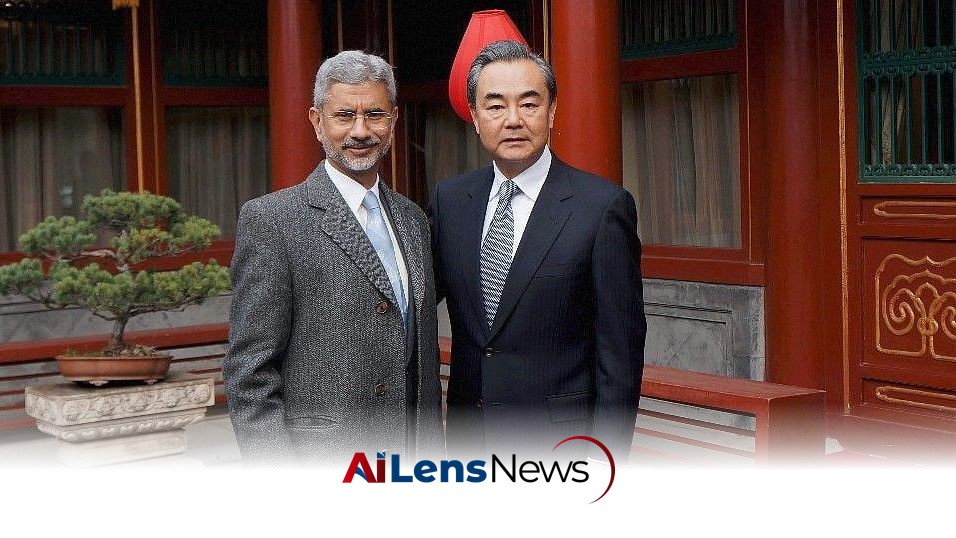


India's External Affairs Minister S. Jaishankar asserts sovereignty and maritime security during talks with China's Wang Yi, rejecting claims made in a Chinese readout.
New Delhi, India Jul 25, 2026 ALN: The meeting between India's External Affairs Minister S. Jaishankar and Chinese Foreign Minister Wang Yi, held on July 23, 2026, during the East Asia Summit in Manila, was a significant diplomatic engagement aimed at addressing various bilateral issues. One of the most pressing topics discussed was the ongoing border tensions between India and China, which have been a source of friction for decades. The two nations share a long and contested border, with disputes primarily centered around the regions of Aksai Chin and Arunachal Pradesh. The historical context of these disputes is rooted in colonial-era agreements and subsequent conflicts, particularly the Sino-Indian War of 1962, which has left a legacy of mistrust and unresolved territorial claims.
During the meeting, Jaishankar took the opportunity to reiterate India's steadfast position on territorial integrity and the necessity for maintaining peace along the border. This is particularly relevant given the recent skirmishes and military standoffs in the region, which have raised concerns about the potential for escalation into more serious conflicts. The Indian government has consistently emphasized the importance of dialogue and diplomacy in resolving these issues, reflecting a broader strategic approach to foreign policy that seeks to balance assertiveness with diplomatic engagement.
However, the meeting took a contentious turn when the Ministry of External Affairs (MEA) of India issued a response to a Chinese readout of the discussions. According to reports, the Chinese side claimed that Jaishankar had assured respect for China's sovereignty, including on sensitive issues concerning Taiwan and Tibet. In contrast, the MEA firmly rejected this assertion, clarifying that Jaishankar made no such statements. Instead, he emphasized India's concerns regarding China's occupation of Indian territories since 1963, which includes significant areas in Jammu and Kashmir and Ladakh. This discrepancy between the two nations' accounts highlights the complexities and sensitivities involved in diplomatic communications, particularly when historical grievances are at stake.
In addition to border issues, Jaishankar's remarks at the East Asia Summit also touched upon broader geopolitical concerns. He underscored the necessity for safe and unimpeded global maritime channels, a statement that resonates with India's strategic interests in the Indo-Pacific region. The South China Sea, in particular, has been a flashpoint for regional tensions, with China asserting expansive territorial claims that have been challenged by several Southeast Asian nations and the United States. Jaishankar's call for adherence to international law and the establishment of a legally binding Code of Conduct in the South China Sea reflects India's commitment to upholding the rules-based international order, which is crucial for regional stability and security.
Furthermore, Jaishankar raised concerns about fair access to Chinese markets and the need for balanced trade, emphasizing the importance of supply chain predictability. This aspect of the discussion is particularly pertinent as India seeks to enhance its economic engagement with China while addressing trade imbalances that have long favored the latter. The Indian government has been vocal about the need for equitable trade practices and has raised concerns over issues such as non-tariff barriers and market access restrictions that Indian businesses face in China.
India's position on the South China Sea was further reiterated during the summit, with Jaishankar advocating for ASEAN centrality in regional affairs and highlighting the importance of collective action for stability in the Indo-Pacific. This aligns with India's broader strategic vision, which seeks to enhance its role as a key player in regional security architectures and multilateral forums.
“India does not violate China’s sovereignty in any manner and has been consistent, but China is in illegal occupation of Indian territories in Jammu and Kashmir and Ladakh since 1963, where India’s right is officially acknowledged even by China,” said MEA spokesperson Randhir Jaiswal.
Jaishankar's remarks also encompassed a call for dialogue and diplomacy to address regional crises, including those in the Persian Gulf and Myanmar. This reflects India's nuanced approach to foreign policy, which seeks to balance national interests with a commitment to regional stability and humanitarian concerns. The Indian government has emphasized its policy of zero tolerance for terrorism, advocating for collective action against threats that transcend national borders, such as cyber scams and terrorism.
India's objections to Chinese infrastructure projects in Pakistan-occupied Kashmir and the Shaksgam Valley further illustrate the complexities of India-China relations. These projects are viewed by India as encroachments on its sovereign territory, exacerbating existing tensions. The MEA's statement regarding China's occupation of over 43,000 square kilometers of Indian territory, including Aksai Chin, underscores the longstanding territorial disputes that continue to shape bilateral relations.
“Calling for dialogue and diplomacy to end the West Asia/Gulf conflict, India stresses that international waterways must remain safe and unimpeded, fully in consonance with international law,” Jaishankar stated at the summit.
As the diplomatic landscape evolves, India's official stance remains that resolution of border and sovereignty issues must be grounded in mutual respect and sensitivity to each other's core concerns. The MEA has previously been proactive in issuing clarifications when Chinese readouts have attributed statements to Indian officials that do not align with India's official records. This pattern of communication reflects a broader diplomatic strategy aimed at ensuring that India's perspectives are accurately represented in international discourse.
The implications of the Jaishankar-Wang meeting extend beyond the immediate bilateral context. The ongoing tensions between India and China are emblematic of broader geopolitical rivalries in the Asia-Pacific region, where power dynamics are continually shifting. As both nations navigate their complex relationship, the outcomes of such diplomatic engagements will play a crucial role in shaping the future of regional security, economic cooperation, and multilateral relations.
In conclusion, the meeting between Jaishankar and Wang Yi serves as a reminder of the intricate and often contentious nature of India-China relations. While both sides have expressed a commitment to dialogue, the underlying issues of territorial disputes, trade imbalances, and regional security will require sustained diplomatic efforts and a willingness to engage in constructive conversations. As the international community watches closely, the outcomes of these discussions could have far-reaching implications for the stability and prosperity of the Indo-Pacific region.
To learn more about the latest developments in Elections, stay updated with our exclusive reports and analyses on AiLensNews.

