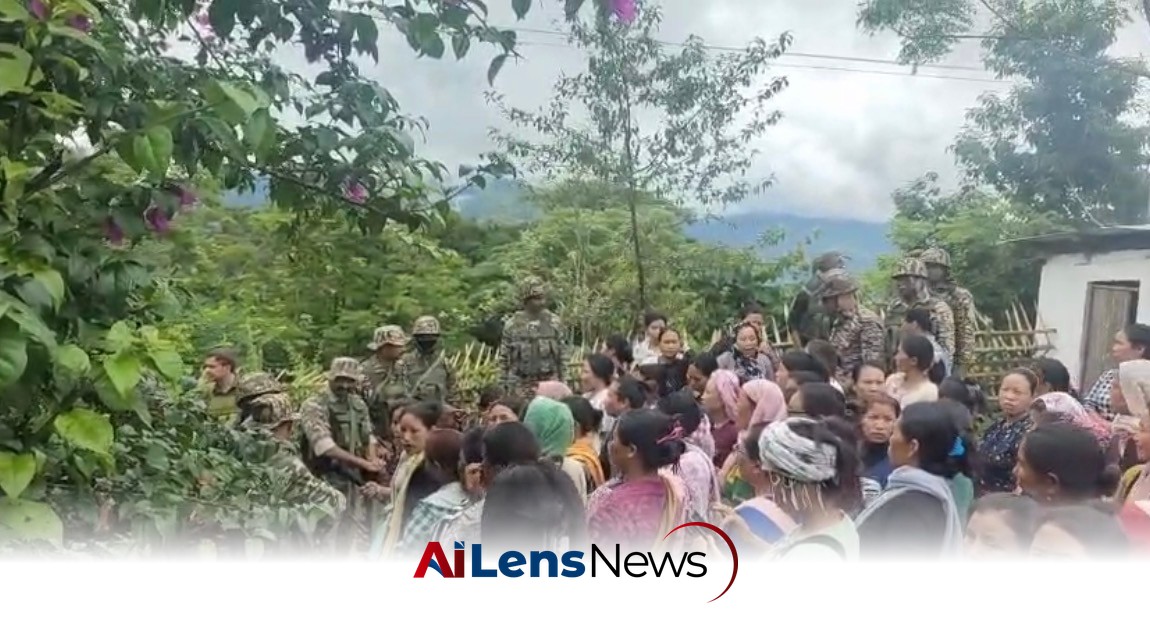


The NSCN/GPRN has condemned an attack on Naga Village Guard volunteers in Manipur, questioning the Centre's neutrality and alleging collusion with armed groups.
Imphal, India Jul 29, 2026 ALN: Imphal: The National Socialist Council of Nagalim/Government of the People’s Republic of Nagalim (NSCN/GPRN) has condemned what it described as an “unprovoked attack” on volunteers of the Western Command of the Naga Village Guard (NVG) and the Joint Tribes Council Manipur (JTCM), who were defending Bitiang village in Manipur’s Noney district on Wednesday morning. This incident has raised significant concerns regarding the ongoing tensions and violence in the region, which has a long history of ethnic conflict and political strife.
The NSCN/GPRN, a prominent Naga nationalist group, alleged that the attack resulted in the death of a Naga Village Guard volunteer, describing it as “a grave and unacceptable assault” on the indigenous Naga community’s right to security and protection. The Naga community has historically sought greater autonomy and recognition of their rights within the Indian state, leading to a complex interplay of local, regional, and national politics. The demand for autonomy has been fueled by a sense of marginalization and the desire to preserve their cultural heritage in the face of external pressures.
The group further alleged that the operation was carried out by the Zeliangrong United Front (Jiangchui) in collusion with personnel of the Commando Battalion for Resolute Action (CoBRA), a specialized unit of the Central Reserve Police Force (CRPF). The involvement of state security forces in such conflicts often raises questions about their role in maintaining peace and order in sensitive areas. The NSCN/GPRN's statement highlights a perceived betrayal of trust by the Indian government, which is expected to act as a neutral arbiter in conflicts involving indigenous communities. This perception is crucial as it shapes the relationship between the Naga people and the state, often leading to increased hostilities.
“The apparent alignment of India’s elite forces with armed aggressors undermines the neutrality and accountability of India,” the statement said. This accusation reflects broader concerns among the Naga people regarding the Indian government's approach to handling ethnic tensions, particularly in regions with a history of insurgency and resistance against state authority. The Naga struggle for rights has involved various forms of activism, including armed resistance, and the community's historical grievances are often exacerbated by incidents of violence.
The NSCN/GPRN also questioned the Centre’s commitment to maintaining neutrality and ensuring accountability in conflict-affected areas. The ongoing strife in Manipur, characterized by ethnic divisions and clashes between various groups, has often seen the government accused of bias, particularly in favor of certain communities over others. This perception of partiality can exacerbate existing grievances and fuel further violence. The complexity of Manipur's socio-political landscape, where multiple ethnic groups vie for power and recognition, makes it imperative for the government to adopt a more inclusive approach in addressing these tensions.
Expressing condolences to the family of the deceased, the organization said it mourned the loss of a “brave martyr” who, it claimed, laid down his life while defending his village and community. The notion of martyrdom plays a significant role in the narratives constructed by nationalist groups, serving to galvanize support and reinforce collective identity among their members. The NSCN/GPRN's framing of the deceased as a martyr underscores the emotional and symbolic weight of such incidents in the ongoing struggle for Naga rights and recognition. This narrative not only serves to honor the individual but also aims to unify the community around a shared cause.
“May the Almighty grant him eternal rest, and may his family be given strength and solace in this time of grief,” the statement added. This expression of sympathy is not just a personal condolence but also a call to the community to rally around the cause of justice for the deceased and, by extension, for the Naga people as a whole. The communal grieving process is often intertwined with political mobilization, as the loss of life in conflicts can serve to reignite calls for action and solidarity among the Naga populace.
The allegations made by the NSCN/GPRN could not be independently verified, and there was no immediate response from the CRPF or the government at the time of filing this report. The lack of official commentary from the CRPF is notable, as it raises questions about transparency and accountability in the actions of security forces operating in conflict zones. In situations like these, the absence of a timely response can lead to speculation and further exacerbate tensions between communities and the state. Historical precedents in Manipur and similar regions have shown that lack of clarity from authorities can lead to mistrust and resentment among affected populations.
The incident in Noney district is not an isolated occurrence but part of a broader pattern of violence and unrest in Manipur, which has seen various ethnic groups, including the Nagas and the Meiteis, engaged in clashes over issues such as land rights, political representation, and cultural identity. The state has witnessed numerous instances of violence in recent years, often ignited by disputes over land and resources, leading to significant loss of life and property. The resulting instability has prompted calls for comprehensive peace initiatives that address the root causes of conflict rather than merely focusing on immediate security concerns.
Manipur's complex demographic landscape, characterized by a multitude of ethnic groups, has historically contributed to tensions. The Naga people, primarily residing in the hills of Manipur, have long sought greater autonomy and recognition of their unique identity, often clashing with the predominantly Meitei population in the valley. This ethnic divide is further complicated by political maneuvering at both the state and national levels, with various parties seeking to leverage these divisions for electoral gains. The political landscape in Manipur is often influenced by these ethnic affiliations, making it challenging to achieve consensus on governance and resource allocation.
The NSCN/GPRN, which advocates for the unification of all Naga-inhabited areas across India and Myanmar, has been involved in peace talks with the Indian government for several years. However, the progress of these negotiations has been slow, and incidents like the recent attack can derail efforts towards a peaceful resolution. The ongoing conflict not only affects the immediate community but also has broader implications for regional stability and national security. The international community has also been watching these developments closely, as they could influence geopolitical dynamics in Northeast India and its borders with Myanmar.
In conclusion, the attack on the Naga Village Guard in Manipur highlights the fragile situation in the region, where ethnic tensions and historical grievances continue to shape the lives of the people. The response from both the NSCN/GPRN and the Indian government will be crucial in determining the future trajectory of peace and conflict in Manipur. As the situation unfolds, it remains imperative for all parties involved to engage in dialogue and seek a resolution that respects the rights and aspirations of all communities in the region. The path to lasting peace will require a commitment to understanding and addressing the underlying issues that fuel these conflicts, as well as a willingness to foster an inclusive and equitable political environment.
To learn more about the latest developments in Political Controversies, stay updated with our exclusive reports and analyses on AiLensNews.

