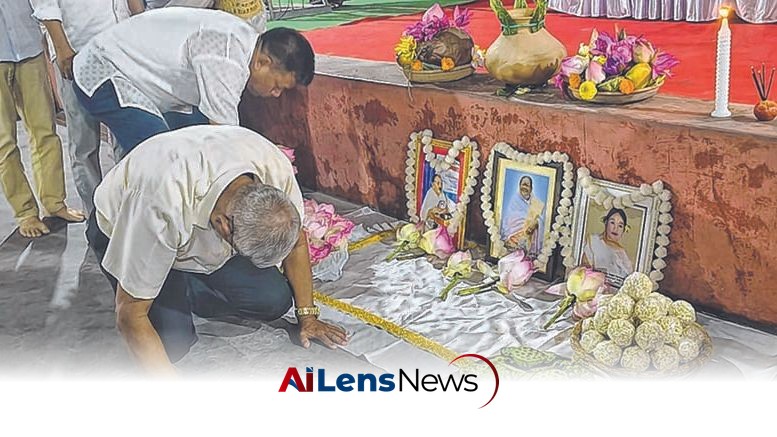


Anti-Repression Day in Imphal honors the 2004 nude protest by mothers against state violence, reflecting ongoing struggles for justice.
Imphal, India Jul 16, 2026 ALN: Anti-Repression Day was observed today at Lamyanba Shanglen, Palace Compound, commemorating the historic nude protest staged by 12 mothers near the western gate of Kangla on July 15, 2004. This protest was a powerful response against state violence and human rights violations in the region, specifically in , which has been marred by conflict and a history of military presence since the late 20th century.
The event saw a gathering of activists, local leaders, and community members who paid tribute to the courage of the mothers who stood bare in protest, demanding justice for the victims of state repression. Their act was not just a demonstration of defiance but also a poignant reminder of the ongoing struggles faced by the people of , a state that has been grappling with issues of identity, autonomy, and governance.
The nude protest of 2004 was ignited by the brutal killing of a young woman, Thangjam Manorama, by security forces. The incident sparked outrage and led to widespread protests across the region. Thangjam Manorama was allegedly arrested by the Assam Rifles, a paramilitary force, and her body was found later, showing signs of torture and sexual violence. This event was not an isolated incident but part of a larger pattern of violence and human rights abuses that have plagued the region for decades. The mothers' act of protest became a symbol of resistance against the pervasive culture of impunity and violence, highlighting the struggles of women in conflict zones.
During the commemoration, speakers emphasized the need to continue the fight against oppression and to seek justice for all victims of state violence. They highlighted the importance of remembering the past to inspire future generations to advocate for human rights and justice. The speakers included activists who have dedicated their lives to fighting for the rights of the marginalized and oppressed, often at great personal risk. Their stories serve as a reminder of the sacrifices made in the pursuit of justice and the ongoing need for vigilance in protecting human rights.
The observance included cultural performances, speeches, and a moment of silence for the victims of state violence. Local artists performed traditional songs and dances that conveyed messages of resilience and hope. Community members expressed their solidarity with the families affected by such tragedies and reiterated their commitment to uphold the values of justice and peace. The gathering also served as a platform for local organizations to share their work in promoting human rights and to mobilize support for ongoing campaigns against state repression.
As the gathering reflected on the significance of the 2004 protest, discussions also turned to current issues facing the region. Participants voiced concerns over ongoing human rights violations and the need for accountability from state authorities. Reports of extrajudicial killings, enforced disappearances, and arbitrary detentions continue to emerge, raising alarm among human rights advocates both locally and internationally. The Armed Forces (Special Powers) Act, which grants sweeping powers to security forces in conflict areas, remains a contentious issue, with many calling for its repeal as a necessary step towards restoring peace and justice.
The commemoration of Anti-Repression Day serves as a reminder of the resilience of the people of and their unwavering quest for justice in the face of adversity. It underscores the need for a sustained movement advocating for human rights, accountability, and the rule of law. The legacy of the 2004 protest continues to inspire new generations, fostering a culture of resistance against oppression and a commitment to social justice.
The 2004 nude protest is particularly significant in the context of women's rights and activism in . Women have historically played a crucial role in the resistance against state violence and have often been at the forefront of movements for justice and peace. The act of the mothers, stripping down to their bare bodies, was a powerful statement that challenged societal norms and highlighted the intersection of gender and violence in conflict situations. This event has since become a rallying point for women's rights activists, emphasizing the need for gender-sensitive approaches to peacebuilding and conflict resolution.
The commemoration of Anti-Repression Day and the legacy of the 2004 protest carry significant implications for future generations. It serves as a reminder of the power of collective action and the importance of civic engagement in the fight for justice. Young activists are inspired by the courage of the mothers and are increasingly taking up the mantle of advocacy, using social media and other platforms to raise awareness about human rights issues in and beyond.
Educational initiatives focusing on human rights and social justice are essential in fostering a culture of activism among the youth. By learning about the struggles of their predecessors, young people can better understand the importance of standing up against oppression and advocating for the rights of others. The commemoration also highlights the need for intergenerational dialogue, where older activists can share their experiences and insights with younger generations, ensuring that the lessons of the past are not forgotten.
The observance of Anti-Repression Day not only honors the past but also serves as a catalyst for broader societal change. It encourages critical conversations about governance, accountability, and the role of the state in protecting human rights. The continued emphasis on justice and the need for systemic reforms is crucial in addressing the root causes of conflict and violence in .
As the community comes together to reflect on the events of 2004 and the ongoing struggles for justice, it is evident that the fight against repression is far from over. The resilience demonstrated by the mothers and the solidarity shown by the community provide a foundation for continued advocacy and activism. The commemoration serves as a reminder that the quest for justice is a collective responsibility, and it is through unity and perseverance that change can be achieved.
To learn more about the latest developments in Political Controversies, stay updated with our exclusive reports and analyses on AiLensNews.

