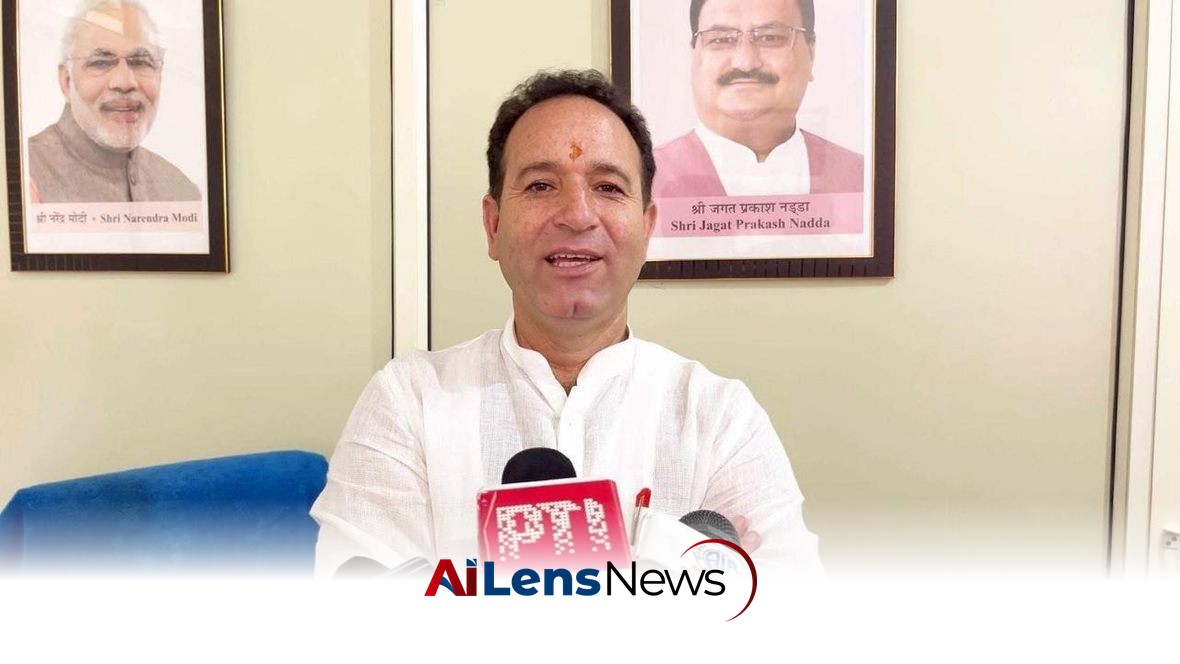


BJP leader Sunil Sharma labels Chief Minister Omar Abdullah's flood review visit as mere theatrics, questioning the government's commitment to flood victims.
Leh, India Jul 21, 2026 ALN: In a recent political exchange, Sunil Sharma, the Leader of Opposition (LoP) and a senior leader from the Bharatiya Janata Party (BJP), has publicly criticized the actions of Chief Minister Omar Abdullah regarding his visit to Jammu and Kashmir to assess the flood situation. Sharma characterized Abdullah's visit from Delhi as "nothing but a drama," suggesting that the government is not genuinely engaged in addressing the significant hardships faced by the residents affected by the recent flash floods.
This incident highlights the ongoing tensions in the political landscape of Jammu and Kashmir, particularly in the wake of natural disasters that often exacerbate existing grievances among the populace. The region has a history of political strife, particularly between the BJP and the National Conference, which Abdullah leads. This rivalry often intensifies during crises, as each party seeks to position itself as the more responsible and responsive option for the electorate.
Sharma made these remarks during his visit to the flood-affected areas of Rajouri district, where he personally assessed the damage caused by the severe weather conditions that have plagued the region. His visit came in the aftermath of devastating flash floods that have led to widespread destruction and loss of life, with reports indicating that 17 to 18 individuals have died as a result of the flooding. The situation has raised urgent questions about the government's preparedness and response to natural disasters, which are not uncommon in this hilly terrain.
During his press conference, Sharma questioned the effectiveness of Abdullah's visit, particularly noting that the Chief Minister chaired a meeting at the Civil Secretariat while most officials attended virtually. This raised eyebrows among observers, as Sharma pointedly asked, "If the meeting had to be held online, what was the need for him to return from Delhi?" This question underscores a broader critique of political leaders who may appear to be taking action without making meaningful contributions to on-the-ground efforts.
Sharma's comments reflect a growing frustration among opposition parties regarding the perceived inaction of the ruling government in times of crisis. He lamented that the elected government was not adequately supporting the people affected by the floods, claiming, "It is unfortunate that the elected government is not standing with the people. Instead of being on the ground, its leaders are sitting in air-conditioned rooms in Delhi and indulging in political rhetoric over the restoration of statehood." This statement encapsulates a broader sentiment among many citizens who feel abandoned by their leaders during times of need.
Moreover, Sharma alleged that the members of the ruling coalition and Independent MLAs supporting the government were notably absent from the flood-hit areas, further emphasizing his point about the lack of accountability and presence of elected officials in the face of disaster. He stated, "All MLAs of the ruling alliance and supporting Independents are missing from the ground. Only the BJP MLA from Kalakote has been among the people." This assertion not only serves to bolster his argument but also seeks to rally public support around the BJP by portraying them as the more proactive party in times of crisis.
The remarks made by Sharma did not go unchallenged. They drew a sharp response from Iftkhar Ahmed, a Congress MLA from Rajouri, who accused Sharma of politicizing a humanitarian crisis. Ahmed stated, "Sunil Sharma always finds an opportunity to play politics, even during disasters. From day one, I have been in Rajouri, visiting affected areas and working to restore essential services. The LoP is trying to mislead people through false statements." This exchange highlights the contentious nature of political discourse in the region, particularly during emergencies when the stakes are high.
In his rebuttal, Ahmed urged Sharma to redirect his focus towards securing financial assistance for the flood victims rather than making political allegations. He emphasized the importance of collaboration among political leaders during such crises, stating, "Instead of indulging in politics over the tragedy, he should approach the Centre and seek a comprehensive relief package for the affected families." This call for unity reflects a desire among some leaders to prioritize the needs of the constituents over partisan politics, although the reality of political rivalry often complicates such aspirations.
The political dynamics in Jammu and Kashmir are further complicated by the region's unique status within India. Following the revocation of Article 370 in August 2019, which granted special autonomy to Jammu and Kashmir, the political landscape has been in flux. The BJP has sought to consolidate its power in the region, while parties like the National Conference and Congress have been striving to regain influence. This backdrop of political maneuvering often overshadows genuine efforts to address the pressing needs of the population, especially in times of crisis.
As the region continues to grapple with the aftermath of the floods, the implications of this political drama extend beyond mere rhetoric. The effectiveness of government response, the availability of aid, and the long-term recovery of affected communities will hinge on the actions taken by both the ruling party and the opposition. The public's perception of their leaders during such crises can have lasting effects on electoral outcomes and the overall trust in governmental institutions.
In conclusion, the exchange between Sunil Sharma and Iftkhar Ahmed serves as a microcosm of the larger political struggles in Jammu and Kashmir. As the region faces the immediate challenges posed by natural disasters, the need for effective governance and genuine leadership is paramount. The ongoing dialogue, though contentious, may ultimately shape the future of political engagement and disaster response in this complex and diverse region.
To learn more about the latest developments in Political Controversies, stay updated with our exclusive reports and analyses on AiLensNews.

