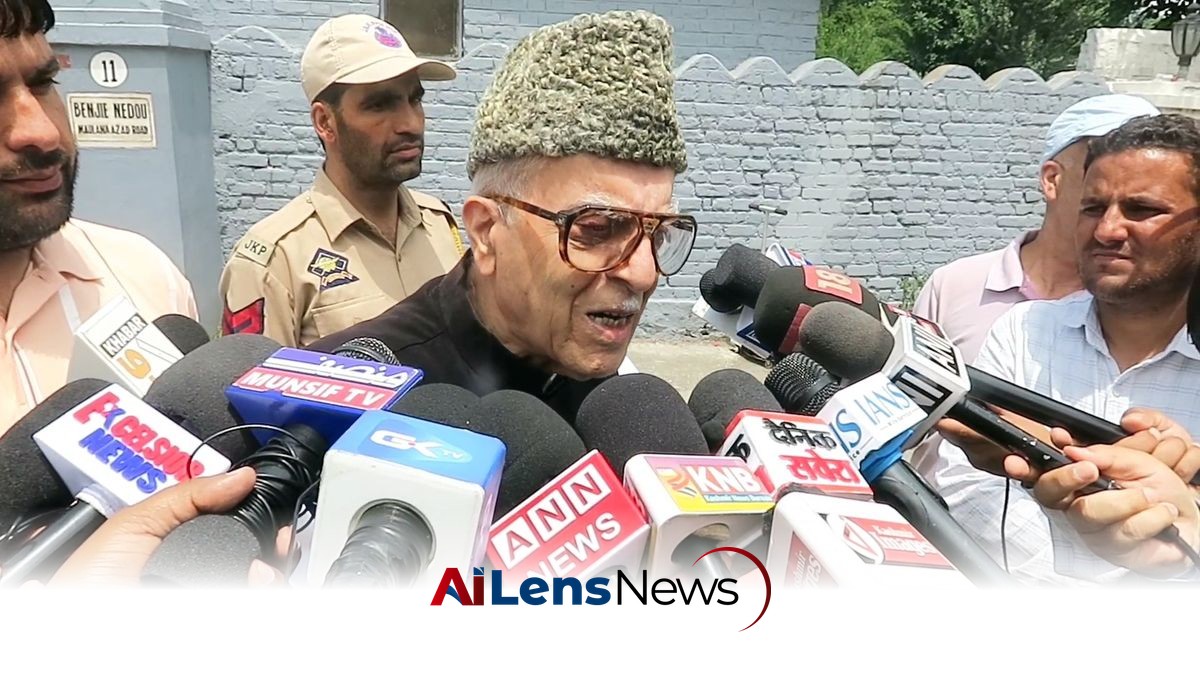


Congress leader Saifuddin Soz calls on the National Conference to expand its protest demands to include the reinstatement of Article 370, emphasizing the need for internal autonomy in Jammu and Kashmir.
Leh, India Jul 15, 2026 ALN: In a recent statement, Congress leader Saifuddin Soz emphasized the importance of the National Conference (NC) expanding its agenda beyond merely demanding the restoration of statehood for Jammu and Kashmir. He urged the party to also advocate for the reinstatement of special status under Article 370, a legal provision that granted the erstwhile state a degree of autonomy.
Article 370 was abrogated in August 2019 by the Government of India, a move that stripped Jammu and Kashmir of its special status and restructured it into two Union Territories: Jammu & Kashmir and . This decision was met with widespread political and social unrest, as it fundamentally altered the relationship between the region and the Indian Union. The abrogation has been a contentious issue, with various political leaders and parties, including the National Conference, continuing to call for its restoration.
Soz, who has a long political history, including a tenure as a member of the Lok Sabha during the time when the National Conference was part of the National Democratic Alliance (NDA), has been vocal about the implications of the 2019 changes. His political journey has seen significant shifts; after voting against the NDA government led by Atal Behari Vajpayee in 1999, which led to its downfall, Soz was expelled from the NC and subsequently joined the Congress party. This background underscores his deep engagement with the political landscape of Jammu and Kashmir.
In his remarks, Soz stated, "The National Conference should not (only) talk about statehood at Jantar Mantar. Our issue is not of statehood." He raised concerns about the long-term implications of Jammu and Kashmir's current status as a Union Territory, questioning whether it could remain in this state indefinitely. His assertion reflects a common sentiment among many in Jammu and Kashmir who view the Union Territory status as a temporary arrangement that should not be permanent.
Soz's comments came after he paid his respects to NC leader and former minister Sheikh Mustafa Kamal, who had recently passed away. This visit highlights the ongoing legacy of political figures in Jammu and Kashmir and their influence on contemporary political discourse. The passing of such leaders often reignites discussions about the region's political history and future.
When asked about his participation in the NC's planned protest at Jantar Mantar, Soz indicated that he had not received an invitation, further emphasizing his position outside the immediate political activities of the NC. His lack of invitation may also reflect the complex relationships within Jammu and Kashmir's political landscape, where alliances and rivalries often shift.
Soz articulated a broader vision for the people of Jammu and Kashmir, emphasizing the significance of internal autonomy. He stated, "The real issue of the people of J-K is internal autonomy and they should fight for the restoration of Article 370." This call for internal autonomy resonates with many residents of the region, particularly those who feel that their unique cultural and political identity has been undermined by recent changes.
He further elaborated on the historical context of Jammu and Kashmir's accession to India, noting the demographic realities of the time. Soz highlighted that during the time of accession, the Muslim-majority state chose to join a predominantly Hindu India, a decision made by Sheikh Mohammad Abdullah, a prominent political figure and the founder of the NC. Soz's reflection on the demographic shifts, with the Muslim population in India reportedly increasing significantly since 1947, underscores the complexities of identity, belonging, and representation in contemporary India.
Soz's insistence that the youth in Jammu and Kashmir should recognize their historical context and the rationale behind their accession to India aims to empower the younger generation. He believes that understanding their past can help them navigate their present and future aspirations. He cautioned against a narrative of despair that suggests they would not receive anything from the central government, framing such beliefs as detrimental to their political consciousness.
The implications of Soz's statements are significant, as they highlight ongoing tensions between the central government and the people of Jammu and Kashmir. The demand for the restoration of Article 370 is not merely a political issue; it resonates deeply with the identities and aspirations of the region's residents. The NC, as a major political party in Jammu and Kashmir, has a critical role in shaping the discourse around these issues, and Soz's call for a broader agenda may influence its future strategies.
As the political landscape continues to evolve, with the Monsoon session of Parliament approaching, the discussions surrounding statehood and Article 370 are likely to remain at the forefront of political debates. The responses from various stakeholders, including the central government, will be crucial in determining the future trajectory of Jammu and Kashmir's political identity. The region's unique historical, cultural, and political context must be acknowledged and addressed in any discussions about its future governance and autonomy.
In conclusion, Saifuddin Soz's remarks serve as a reminder of the complexities involved in Jammu and Kashmir's political landscape. His call for the National Conference to advocate for both statehood and the restoration of Article 370 reflects a broader sentiment among many in the region who seek to reclaim their autonomy and preserve their unique identity within the Indian Union. As political dynamics continue to shift, the voices of leaders like Soz will play a vital role in shaping the future of Jammu and Kashmir.
The abrogation of Article 370 not only altered the political framework of Jammu and Kashmir but also had significant social and economic implications. The special status that Article 370 conferred allowed for certain protections and privileges for the residents of the region, including exclusive rights to land and employment. With its removal, many residents fear an influx of outsiders that could alter the demographic composition of the region, leading to potential tensions over land and resources.
Furthermore, the political discourse surrounding Article 370 is intertwined with issues of identity and representation. For many in Jammu and Kashmir, the region's unique cultural heritage and history are integral to their sense of self. The removal of the article has led to concerns about the erasure of this identity, as many feel that their voices are being marginalized in national conversations.
The National Conference, as one of the oldest political parties in the region, has historically championed the rights and aspirations of the people of Jammu and Kashmir. In the wake of the abrogation, the party has faced challenges in maintaining its relevance and addressing the concerns of its constituents. Soz's call for a renewed focus on Article 370 reflects an understanding of the need for the party to reconnect with its base and articulate a vision that resonates with the aspirations of the people.
Moreover, the political landscape in Jammu and Kashmir is marked by a diverse array of voices, including those advocating for greater autonomy, statehood, and even independence. The multiplicity of perspectives complicates the political discourse, as different factions vie for attention and legitimacy. In this context, Soz's remarks can be seen as an attempt to unify various strands of thought within the region, fostering a collective narrative that emphasizes the importance of autonomy and self-determination.
The implications of these discussions extend beyond the borders of Jammu and Kashmir, as they reflect broader trends in Indian politics regarding federalism, identity, and governance. As the central government navigates its relationship with various states and regions, the situation in Jammu and Kashmir serves as a litmus test for its approach to regional autonomy and minority rights.
As the political landscape continues to evolve, the voices of leaders like Saifuddin Soz will be crucial in shaping the future trajectory of Jammu and Kashmir. Their ability to articulate the aspirations and concerns of the people will play a pivotal role in determining the region's political identity and its relationship with the Indian Union. The ongoing debates surrounding Article 370 and statehood will likely remain central to the political discourse in the region, influencing the actions of both political leaders and the electorate.
In summary, the call for the restoration of Article 370 and the demand for statehood are not merely political slogans; they encapsulate the deeply rooted sentiments of the people of Jammu and Kashmir. As the region grapples with its identity and future, the political discourse will need to address these issues with sensitivity and a recognition of the historical context that shapes them. The ongoing dialogue, led by figures like Soz, will be essential in navigating the complexities of Jammu and Kashmir's political landscape.
To learn more about the latest developments in Political Controversies, stay updated with our exclusive reports and analyses on AiLensNews.

