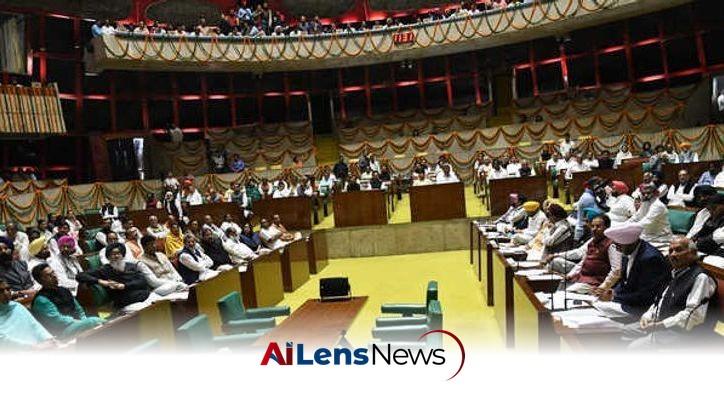


The Punjab government plans to convene the Monsoon Session of the Vidhan Sabha in early August, with a primary focus on amending the Sacrilege Act.
Leh, India Jul 15, 2026 ALN: The Punjab government, led by the Aam Aadmi Party (AAP), is preparing to convene the Monsoon Session of the Punjab Vidhan Sabha in the first week of August. This session is anticipated to address significant legislative changes, particularly concerning amendments to the Sacrilege Act. The timing of this session is noteworthy, as it comes in the wake of heightened tensions and public discourse surrounding religious sentiments and communal harmony in the state.
The decision to hold the session comes amid ongoing discussions about the need for stricter laws to combat incidents of sacrilege, which have been a point of contention in the state. These incidents often provoke strong reactions from various religious communities, leading to protests and unrest. The amendments aim to enhance the legal framework surrounding such offenses, reflecting the government's commitment to addressing community concerns and restoring public confidence in the legal system.
One of the key proposals expected to be discussed during the session is the amendment of the Sacrilege Act. This legislation has been under scrutiny due to various incidents that have sparked unrest among the public and religious communities. The government is likely to propose measures that would impose harsher penalties for those found guilty of sacrilege, aiming to deter future offenses. This move is seen as a response to the increasing number of incidents that have raised alarm among citizens and religious leaders alike.
The Sacrilege Act was introduced to protect religious sentiments and maintain communal harmony. It was designed to address acts that are perceived as disrespectful to religious symbols and practices, thereby preventing potential conflicts. However, critics argue that the existing provisions are insufficient to address the growing number of sacrilege cases, which have often resulted in violent confrontations and societal divisions. The AAP government has expressed its intention to strengthen the law, ensuring that it serves its intended purpose effectively and provides a robust mechanism for justice.
Historically, sacrilege cases in Punjab have been linked to broader issues of identity and community relations. The state, which has a rich tapestry of religious diversity, has seen various incidents that have tested the limits of tolerance among different groups. The amendments to the Sacrilege Act are expected to reflect a nuanced understanding of these dynamics, aiming to balance the protection of religious sentiments with the principles of justice and fairness.
For instance, past incidents of sacrilege have often ignited widespread protests, leading to clashes between different community groups. These events have underscored the deep-seated sensitivities surrounding religious beliefs in Punjab, a region that is home to a multitude of faiths, including Sikhism, Hinduism, and Islam. The government's approach to amending the Sacrilege Act could potentially play a crucial role in either mitigating or exacerbating these tensions, depending on how effectively the law is perceived to protect religious sentiments.
In addition to the amendments to the Sacrilege Act, the Monsoon Session is expected to cover various other legislative matters. The government aims to discuss policies that impact the welfare of the citizens, including education, healthcare, and infrastructure development. These discussions are particularly crucial as the state grapples with challenges in these sectors, which have been exacerbated by the ongoing economic pressures and the aftermath of the COVID-19 pandemic.
The review of existing laws related to communal harmony is particularly significant in light of recent events that have highlighted the fragility of inter-community relations in Punjab. The government’s commitment to fostering an environment of peace and cooperation among different religious and cultural groups will likely be a central theme of the discussions. This is critical in a state where communal tensions can quickly escalate into violence, influencing not only the immediate community but also the broader socio-political landscape.
The upcoming session is also seen as a crucial moment for the AAP government, as it seeks to solidify its position in the state amidst political challenges. The party, which came to power with a promise of good governance and accountability, faces pressure to deliver on its commitments. By addressing the concerns surrounding sacrilege and other pressing issues, the government hopes to reinforce its commitment to governance and public welfare.
Political analysts suggest that the outcome of the Monsoon Session could have far-reaching implications for the AAP's standing in Punjab. The party has been navigating a complex political landscape, with opposition parties keen to capitalize on any perceived failures or missteps. The amendments to the Sacrilege Act, therefore, represent not just a legislative initiative but also a strategic move to consolidate support among the electorate.
As the session approaches, stakeholders from various sectors are keenly observing the developments. Religious leaders, civil society organizations, and political opponents are all watching closely to gauge the government's commitment to addressing the sensitive issue of sacrilege. The outcome of the discussions could have significant implications for the state's political landscape and community relations.
Moreover, if the amendments are perceived as effective in curbing sacrilege incidents, the AAP government could bolster its image as a protector of religious sentiments, potentially attracting support from various community leaders. Conversely, if the amendments are criticized as inadequate or overly punitive, it could lead to further discontent among the populace, particularly among those who feel that their religious sentiments are not being adequately protected.
In conclusion, the Monsoon Session of the Punjab Vidhan Sabha is set to be a pivotal event, focusing on the much-debated amendments to the Sacrilege Act, alongside other legislative priorities. The government's approach will be closely monitored as it navigates the complexities of governance in Punjab. As the state continues to grapple with issues of identity, community relations, and governance, the decisions made during this session could shape the future trajectory of Punjab's political and social landscape. The implications of these decisions will not only affect the current political climate but may also influence the long-term stability and harmony among the diverse communities that inhabit Punjab.
To learn more about the latest developments in Elections, stay updated with our exclusive reports and analyses on AiLensNews.

