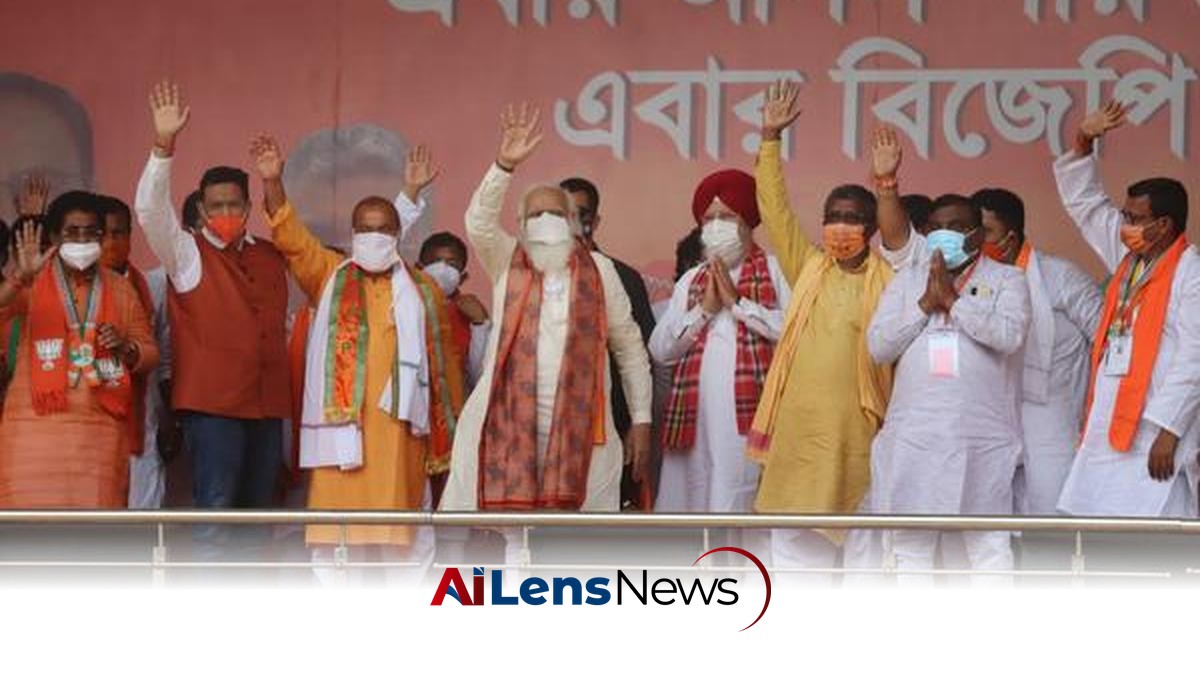


During a rally in Bardhaman, PM Modi criticized the Trinamool Congress for derogatory remarks against Scheduled Castes, claiming it reflects poorly on Mamata Banerjee's leadership.
Leh, India Apr 12, 2021 ALN: Prime Minister Narendra Modi, during a series of election rallies in West Bengal on April 12, made significant allegations against the Trinamool Congress (TMC) leadership, accusing them of insulting the Scheduled Caste population in the state. This accusation comes amid a politically charged environment as West Bengal prepares for crucial elections.
At a public meeting held in Bardhaman town, Mr. Modi specifically pointed out that a senior leader from the TMC had allegedly referred to members of the Scheduled Caste community as "beggars." This remark, according to Mr. Modi, reflects a deep-seated disrespect towards a historically marginalized group in Indian society. He stated, "Didi has neither condemned such remarks nor has sought any apology," highlighting his view that Chief Minister Mamata Banerjee bears responsibility for the comments made by her party members. Modi emphasized that such statements could not be made without the knowledge of the party's top leadership.
Scheduled Castes, often referred to as Dalits, have been a focal point in Indian politics, especially in states like West Bengal, where caste dynamics play a crucial role in electoral outcomes. The Scheduled Caste population has historically faced discrimination and socio-economic challenges, making the Prime Minister's comments particularly poignant. By invoking the legacy of Baba Saheb Ambedkar, a key figure in the fight for Dalit rights and the architect of the Indian Constitution, Modi sought to resonate with the sentiments of the Dalit community. He declared, "Baba Saheb Ambedkar’s soul is hurt by the insult hurled at the Scheduled Castes," condemning the TMC's alleged remarks as a significant transgression against the dignity of Dalits.
Mr. Modi's remarks were directed specifically at TMC leader Sujata Khan Mondal, who was purportedly recorded making the derogatory comments about Scheduled Caste voters. Such accusations not only aim to undermine the TMC's credibility but also to galvanize support among Dalit voters for the Bharatiya Janata Party (BJP), which has been actively seeking to expand its base in West Bengal.
In a broader context, Modi's rally in Kalyani included discussions about his recent visit to Orakandi in Bangladesh, the birthplace of Harichand Thakur, the founder of the Matua sect. The Matua sect has a significant following among the Scheduled Caste population in West Bengal, particularly in the districts of North 24 Parganas and Nadia, where many Matua followers have settled after migrating from Bangladesh. Modi's reference to his visit was strategic, as he noted that during his trip, a priest from the Matua sect acknowledged him as the first Prime Minister to visit Thakur's birthplace. This connection to the Matua community is crucial for the BJP, which aims to position itself as a champion of the rights and interests of Hindu refugees from Bangladesh.
Modi further criticized what he termed the "appeasement politics" of Mamata Banerjee, arguing that such policies have adversely affected the interests of both the Matuas and Namasudras, another Scheduled Caste community in West Bengal. He reiterated the BJP's commitment to providing citizenship and justice to refugees, particularly emphasizing the plight of Hindu refugees from Bangladesh. This narrative aligns with the BJP's broader agenda of advocating for the rights of Hindus in the context of migration and citizenship, a topic that has resonated with many voters in West Bengal.
During his address, Mr. Modi also focused on the political landscape in West Bengal, asserting that the people of Nandigram have decisively rejected Mamata Banerjee, suggesting that her political career is nearing its end. He claimed that residents of West Bengal have recognized her intentions to transfer power to her nephew, which he framed as a betrayal of the public's trust. Modi's assertion, "The reality of West Bengal is that it is game over for Didi," reflects the BJP's strategy to portray the TMC as a party that has lost touch with the electorate.
In his third public meeting of the day at Barasat, Modi accused the TMC of corruption and the practice of "cut money," a term used to describe the alleged siphoning off of funds intended for public welfare. By linking the TMC with corruption, Modi aims to further undermine the party's credibility and appeal to voters' concerns about governance and accountability. He assured the electorate that supporting the BJP would ensure that every farmer receives ₹18,000, which are pending under the PM Kisan Samman Nidhi scheme, as well as benefits under the Ayushman Bharat scheme, which aims to provide health insurance to economically vulnerable populations.
The elections in Bardhaman, Nadia, and North 24 Parganas, where Prime Minister Modi addressed public meetings, are scheduled for the fifth phase on April 17. This phase is critical as it involves regions with significant electoral weight, and the outcomes could have a substantial impact on the overall election results in West Bengal. The BJP's strategy appears to be focused on consolidating support among marginalized communities, including Dalits and refugees, while simultaneously challenging the TMC's governance record and leadership.
As the election date approaches, the political atmosphere in West Bengal is likely to become even more charged, with both the BJP and TMC ramping up their campaigns. The accusations made by Modi not only highlight the ongoing political rivalry but also underscore the importance of caste dynamics in shaping voter behavior in the state. The implications of these remarks could be far-reaching, potentially influencing the electoral fortunes of both parties as they vie for control in a state that has historically been a stronghold for the TMC.
In conclusion, PM Modi's allegations against the TMC regarding their treatment of the Scheduled Caste population reflect a broader narrative in Indian politics where caste identity plays a crucial role. The BJP's attempts to court Dalit voters and other marginalized communities could reshape the political landscape in West Bengal, making the upcoming elections a pivotal moment for both the BJP and TMC.
To learn more about the latest developments in Elections, stay updated with our exclusive reports and analyses on AiLensNews.

