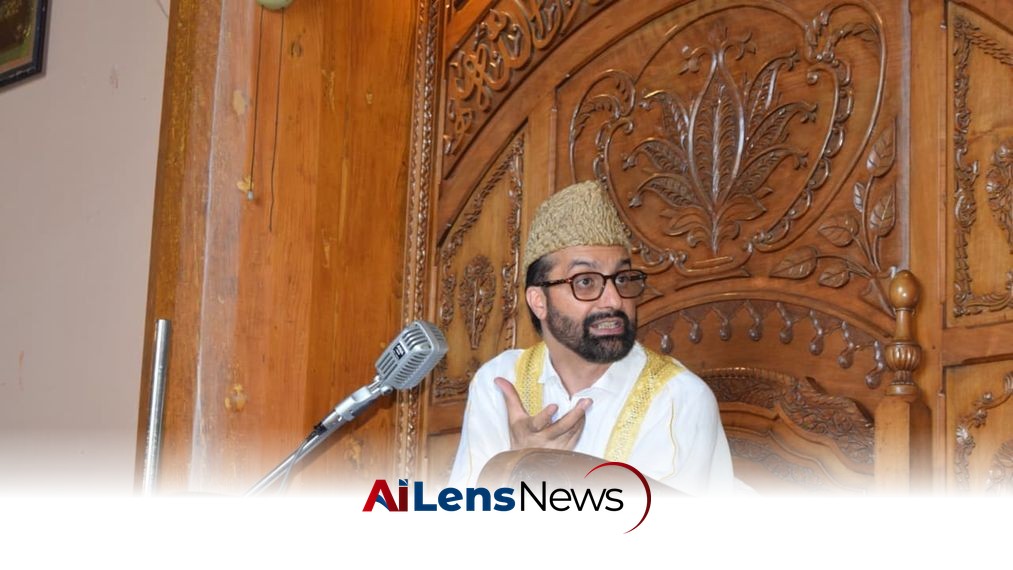


Kashmir's chief cleric Mirwaiz Umar Farooq expresses sorrow over casualties in ongoing unrest along the Line of Control and calls for dialogue to resolve differences.
Leh, India Jul 15, 2026 ALN: Kashmir’s chief cleric Mirwaiz Umar Farooq on Wednesday expressed deep anguish over reports of civilian and police casualties in the continuing unrest across the Line of Control (LoC), particularly in Rawalakot and Poonch, and appealed to the Government of Pakistan, local authorities, and protesters to resolve differences through dialogue instead of confrontation.
This call for dialogue comes at a time when tensions have escalated in the region, which has been a flashpoint for conflict between India and Pakistan for decades. The LoC, which serves as the de facto border in the disputed region of Jammu and Kashmir, has witnessed numerous skirmishes and violence, often resulting in loss of life and property. The ongoing unrest in areas like Rawalakot and Poonch has raised concerns about the humanitarian impact of such conflicts, particularly on civilians who are caught in the crossfire.
In a post on X, the Mirwaiz said he was deeply saddened by the loss of lives and extended his condolences to the bereaved families. His statements reflect a broader sentiment among many in Kashmir who are weary of the cycle of violence that has plagued the region for years. The Mirwaiz, as a spiritual leader, holds significant influence and his calls for peace resonate with many who desire an end to the suffering caused by ongoing hostilities.
"Deeply saddened and pained by reports of loss of life of civilians and police personnel in the continuing unrest on the other side of the LoC, especially in Rawalakot and Poonch. My thoughts and prayers are with the bereaved families and all those affected by these tragic events," he wrote. This expression of sorrow underscores the human cost of the conflict, which often gets overshadowed by political and military narratives.
The Mirwaiz also voiced concern over ongoing discussions related to the representation and constitutional and political status of a large number of Kashmiri State Subjects residing in Pakistan. This issue is particularly sensitive, as it touches on the identity and rights of those who have been displaced or affected by the long-standing conflict. The political representation of Kashmiris, both in India and Pakistan, remains a contentious topic, with many feeling that their voices are not adequately represented in discussions that affect their lives.
He said issues concerning identity, political representation, and constitutional rights required sensitivity, dialogue, and broad public confidence. The historical context of the Kashmir conflict is essential to understand the complexities surrounding these issues. Since the partition of India in 1947, Kashmir has been a disputed territory claimed by both India and Pakistan, leading to several wars and ongoing military tensions. The differing narratives and historical grievances have made it challenging to find a mutually acceptable solution.
"The legitimacy and strength of any system of governance rests ultimately upon the consent, trust, and confidence of the people it serves," he said, emphasizing the need for governance systems that reflect the will of the people. This statement highlights the importance of inclusive governance, particularly in regions with diverse populations and complex identities, such as Jammu and Kashmir.
Moreover, the shared social, cultural, and family ties across the LoC mean that developments in one part of Jammu and Kashmir deeply affect people in the other as well as the Kashmiri diaspora. Families often find themselves divided by the border, with relatives living on either side of the LoC. This division exacerbates the emotional toll of the conflict, as families are unable to maintain regular contact or visit each other due to the tense political situation.
Recalling his family's historic association with communities across Jammu and Kashmir, including those living across the LoC, the Mirwaiz said he had been receiving expressions of anguish and concern from people affected by the unrest. This personal connection to the issue underscores the human element of the conflict, reminding all stakeholders that behind the political rhetoric are real people whose lives are affected by decisions made at higher levels.
He appealed to the Government of Pakistan and the local administration there to prioritize restraint, engagement, and dialogue. The call for restraint is particularly pertinent in a region where military responses can quickly escalate into broader conflicts, resulting in further casualties and suffering. Engaging in dialogue, rather than confrontation, is essential for building trust and finding a peaceful resolution to the ongoing tensions.
"I urge the Government of Pakistan and the local government there to prioritize dialogue, restraint, and engagement, resolving differences through consultation and accommodation rather than confrontation, with respect for human rights and the sanctity of human life remaining paramount," he said. This emphasis on human rights is crucial, as violations often occur during times of unrest, leading to a cycle of retaliation and further violence.
The Mirwaiz also appealed to the protesting groups to act with wisdom and responsibility to help restore peace and public confidence. His call for responsibility among protesters reflects a recognition of the power of civil society to influence change. Peaceful protests can serve as a platform for voicing grievances and demanding rights, but they must be conducted in a manner that does not escalate tensions further.
"I also appeal to protesting parties to exercise wisdom and responsibility. Both need to work towards restoring peace and public confidence at the earliest," he said. The need for collective action towards peace is evident, as prolonged unrest can lead to a breakdown of social cohesion and trust within communities.
Concluding his message, the Mirwaiz prayed for lasting peace and stability across Jammu and Kashmir. "I pray for lasting peace and stability for all the people of Jammu and Kashmir on both sides of the LoC and for its resolution," he said. This prayer for peace reflects a deep yearning among many in the region for an end to violence and a return to normalcy, where communities can thrive without the constant threat of conflict.
The implications of the Mirwaiz's message extend beyond the immediate context of the unrest. His call for dialogue and peace resonates with broader efforts to seek reconciliation in Kashmir, a region that has often been characterized by division and strife. As various stakeholders reflect on the Mirwaiz's words, there is hope that a renewed commitment to dialogue and understanding can pave the way for a more peaceful future in Jammu and Kashmir.
To learn more about the latest developments in Political Controversies, stay updated with our exclusive reports and analyses on AiLensNews.

