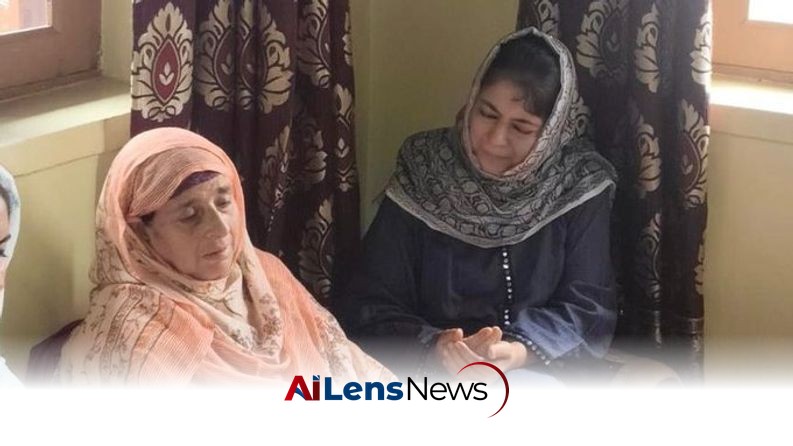


PDP president Mehbooba Mufti visited the family of a slain policeman, urging government jobs for his children and advocating for flood relief in Beerwah.
Leh, India Jul 30, 2026 ALN: Peoples Democratic Party (PDP) president Mehbooba Mufti visited the family of Head Constable Ashiq Hussain Qureshi at Lolpora in Beerwah, Budgam, on Wednesday to offer condolences and advocate for government employment for his children. This visit comes in the wake of Qureshi's death while serving in the line of duty, a loss that has resonated deeply within the community and highlights the sacrifices made by law enforcement personnel in Kashmir.
Head Constable Ashiq Hussain Qureshi was a dedicated member of the Jammu and Kashmir Police, a force that has faced numerous challenges in a region marked by conflict and instability. His death is a poignant reminder of the risks that police officers take daily to maintain law and order, often at the expense of their own lives. The Jammu and Kashmir Police has a storied history, often being at the forefront of maintaining peace in a region characterized by political unrest and violence. The sacrifices made by officers like Qureshi not only reflect their commitment to their duty but also the profound impact such losses have on their families and communities.
Mufti emphasized that the ultimate tribute to Qureshi's sacrifice should extend beyond mere words of condolence; it must translate into tangible support for his family, particularly his children, who now face an uncertain future without their father. The emotional and psychological toll on families of martyred personnel is immense, and addressing their needs is crucial for their well-being. Mufti's advocacy for government jobs for Qureshi's children is a recognition of the need for stability and security for those left behind. Such support can mitigate the financial hardships that often accompany the loss of a breadwinner, allowing families to rebuild their lives.
During her visit, Mehbooba Mufti made a heartfelt appeal to the government, urging them to provide suitable government jobs to Qureshi's children. This call for employment is not merely a request for financial assistance; it is a plea for dignity and security for a family that has already endured significant loss. She stated, “A martyr’s sacrifice must be honoured not only with tributes but by standing firmly with those he leaves behind.” Such statements underscore the importance of community support and governmental responsibility in times of grief. The sentiment expressed by Mufti resonates with many in the region, where the families of security personnel often find themselves navigating a difficult landscape of grief and economic uncertainty.
Mufti's visit was accompanied by Ghulam Ahmad Khan, the PDP’s Beerwah in-charge, illustrating the party's commitment to supporting local issues and engaging with constituents during challenging times. The presence of party members during such visits often serves to reinforce the political party's connection to the community, showcasing their dedication to addressing the needs of families affected by violence and loss. This engagement is critical in a region where political parties play a significant role in the social fabric, and their responses to crises can influence public perception and trust.
In addition to her visit to Qureshi's family, Mehbooba Mufti also took the time to assess the situation in areas affected by recent flash floods in Beerwah. This dual focus on both the family of a fallen officer and the community at large reflects a comprehensive approach to leadership, addressing immediate grief while also tackling broader issues of disaster recovery and economic stability. The floods have wreaked havoc in the region, leading to significant damage to homes and businesses. The intersection of natural disasters with ongoing socio-political challenges in Jammu and Kashmir creates a complex environment where effective governance is essential for recovery.
During her interaction with affected families and traders, Mufti expressed solidarity with those who lost their livelihoods, calling for immediate rehabilitation measures. Her visit to the flood-affected areas highlights the ongoing challenges faced by residents in Jammu and Kashmir, where natural disasters can compound the difficulties already present due to political and social unrest. The region has a history of facing natural calamities, and the government's response to such events is often scrutinized by the public, making it imperative for leaders to advocate for effective relief measures.
Mufti's call for the government to hand over the vacant Municipal Building to affected traders is a critical step towards providing immediate relief. This building could serve as a temporary storage facility for salvaged merchandise, allowing shopkeepers to protect their remaining assets from further loss. The request for suitable land to construct a new commercial complex also indicates a forward-thinking approach to disaster recovery, aiming to restore not just the physical structures of businesses but also the economic fabric of the community. This type of proactive response is crucial in ensuring that businesses can recover and thrive post-disaster, which in turn supports local economies and livelihoods.
Moreover, her insistence on adequate compensation for affected families points to a broader issue of governmental accountability in disaster response. Mufti articulated the need for a response that goes beyond mere announcements, emphasizing that relief efforts must genuinely restore hope and facilitate recovery. “Relief must go beyond announcements. It must restore hope,” she stated, highlighting the necessity for actionable plans that provide real support to those in need. This sentiment reflects a growing frustration among citizens who often feel that their needs are overlooked in times of crisis, and it calls for a more robust and empathetic approach from the government.
In the context of Jammu and Kashmir, where the interplay of socio-economic challenges and political tensions is complex, the implications of such advocacy are significant. The push for employment for the children of martyrs and the demand for effective disaster recovery measures reflect a deep understanding of the intertwined nature of security, community welfare, and economic stability. The PDP's focus on these issues may resonate with voters who are looking for leadership that prioritizes human rights and social justice. As the region continues to face numerous challenges, the effectiveness of political advocacy in addressing these issues will be crucial in shaping public sentiment and electoral outcomes.
As the region continues to grapple with the aftermath of both conflict and natural disasters, the role of political leaders like Mehbooba Mufti becomes crucial. Their advocacy for families of martyrs and affected communities not only addresses immediate needs but also sets the stage for broader discussions about governance, accountability, and the responsibilities of the state towards its citizens. The ongoing dialogue surrounding employment for the families of fallen officers and the rehabilitation of flood-affected areas is essential in fostering a sense of hope and resilience within the community. It also highlights the need for a collaborative approach between the government, political parties, and civil society in addressing the multifaceted challenges faced by the people of Jammu and Kashmir.
In conclusion, Mehbooba Mufti's recent activities in Budgam serve as a reminder of the multifaceted challenges faced by the people of Jammu and Kashmir. Her calls for government jobs for the children of Head Constable Ashiq Hussain Qureshi and for immediate rehabilitation measures for flood victims reflect a commitment to addressing both individual tragedies and broader community issues. As the region continues to navigate its complex landscape, the response from the government and the community will be pivotal in shaping the future for those affected by loss and disaster. The importance of such advocacy cannot be overstated, as it plays a critical role in ensuring that the voices of those most affected by these challenges are heard and addressed.
To learn more about the latest developments in Elections, stay updated with our exclusive reports and analyses on AiLensNews.

