

India has firmly rejected comments made by Pakistan's Deputy Prime Minister at the ASEAN Regional Forum, emphasizing Jammu and Kashmir's integral status and condemning Pakistan's history of cross-border terrorism.
Leh, India Jul 23, 2026 ALN: India on Thursday strongly rejected comments made by Pakistan's Deputy Prime Minister and Foreign Minister at the 33rd ASEAN Regional Forum, accusing Islamabad of misusing a multilateral platform to spread "falsehoods" and divert attention from its record of sponsoring cross-border terrorism.
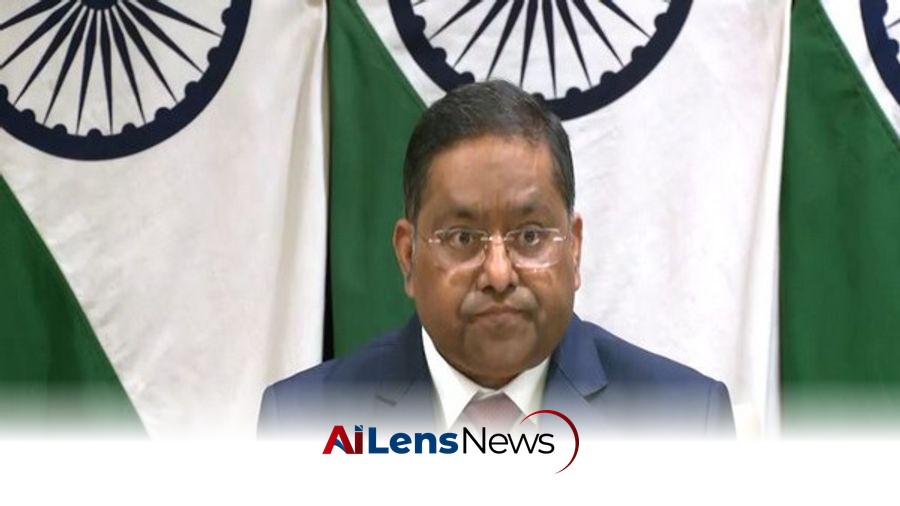
In a statement, Ministry of External Affairs (MEA) spokesperson Randhir Jaiswal said India "categorically rejects the baseless and unwarranted comments" made by the Pakistani leader. This incident is not an isolated one; it reflects a long-standing pattern of diplomatic exchanges between the two nations, particularly concerning the sensitive issue of Jammu and Kashmir.
Jaiswal emphasized that it is "no surprise that a multilateral forum has once again been cynically exploited by Pakistan to amplify falsehoods, peddle state-sponsored disinformation, and divert attention from its own well-documented record of sponsoring cross-border terrorism." This statement underscores India's frustration over Pakistan's tendency to raise the Kashmir issue on international platforms, which India views as an attempt to internationalize a bilateral dispute that it believes should be resolved solely between the two nations.
Reiterating India's position on Jammu and Kashmir, Jaiswal stated that the Union Territories of Jammu and Kashmir have been, are, and will always remain integral and inalienable parts of India, adding that "Pakistan has no locus standi to comment on the same." This assertion is significant as it reaffirms India's long-held stance that Jammu and Kashmir is an integral part of its territory, a point that has been a central theme in India's foreign policy and diplomatic discussions.
The historical context of the Kashmir dispute is crucial for understanding the current tensions. The region has been a flashpoint between India and Pakistan since both nations gained independence in 1947. The two countries have fought multiple wars over Kashmir, and the issue remains unresolved, with both nations claiming the region in full but controlling only parts of it. India's assertion of Kashmir's integral status is meant to counter Pakistan's claims and to reinforce its sovereignty over the region.
The MEA also reaffirmed India's stand on the Indus Waters Treaty (IWT), stating that the treaty would remain in abeyance due to Pakistan's continued support for cross-border terrorism. "India's position on the Indus Waters Treaty remains consistent. IWT stands in abeyance in response to Pakistan's continued sponsorship of cross-border terrorism, including the dastardly Pahalgam attack. IWT will continue to be held in abeyance until Pakistan credibly and irrevocably abjures its support for cross-border terrorism," Jaiswal stated.
The Indus Waters Treaty, signed in 1960, is a significant water-sharing agreement between India and Pakistan that governs the allocation of the waters of the Indus River system. The treaty has generally been viewed as a successful example of conflict resolution between the two countries, but recent tensions over water management and accusations of terrorism have strained its implementation. India's decision to hold the treaty in abeyance reflects the broader geopolitical tensions and showcases how water resources can become intertwined with security concerns.
Furthermore, Jaiswal condemned Pakistan for what he described as the continued propagation of "officially sponsored disinformation," including the use of religious terminology such as "Fitna al-Hindustan." This reference points to a broader narrative that Pakistan has employed in its discourse regarding India, often framing the conflict in religious terms, which can exacerbate tensions and complicate diplomatic efforts.
Calling it a futile attempt to divert attention from Pakistan's domestic problems and its "well-proven role as a safe haven for global terrorist networks," Jaiswal said Islamabad should stop misusing international forums and instead dismantle the terrorist infrastructure operating from its soil. This statement reflects India's longstanding criticism of Pakistan's alleged support for terrorist groups that operate in the region, including those that have conducted attacks on Indian soil.
Jaiswal's comments highlight a key aspect of India's diplomatic strategy: to counter Pakistan's narratives by emphasizing its own security concerns and the need for Pakistan to address its internal issues. "Instead of pointing fingers at its neighbours and misusing international platforms, Pakistan would serve itself and its people far better by dismantling the infrastructure of terrorism on its soil and putting its own house in order," he said. This approach aims to shift the focus back to Pakistan's responsibilities and actions, rather than allowing it to frame the narrative around Kashmir and other bilateral issues.
The implications of this diplomatic exchange extend beyond the immediate context of the ASEAN Regional Forum. It reflects the broader dynamics of South Asian geopolitics, where both India and Pakistan seek to assert their positions on the global stage while navigating complex relationships with other countries. The use of multilateral forums like ASEAN allows both nations to engage with a wider audience, but it also raises the stakes in their bilateral relationship, as each seeks to gain support for its own perspective.
As regional tensions continue to simmer, it remains to be seen how both countries will navigate their diplomatic engagements and whether they will be able to find common ground on issues that have historically divided them. The role of international organizations and third-party mediators may become increasingly important as both nations seek to address their grievances and work towards a more stable relationship.
In conclusion, India's rejection of Pakistan's remarks at the ASEAN Forum is emblematic of the ongoing challenges in India-Pakistan relations. The exchange highlights the complexities of addressing historical grievances while managing contemporary security concerns. As both nations continue to engage in diplomatic discourse, the need for constructive dialogue and a focus on mutual interests may become essential for fostering a more peaceful and cooperative regional environment.
To learn more about the latest developments in Political Controversies, stay updated with our exclusive reports and analyses on AiLensNews.

