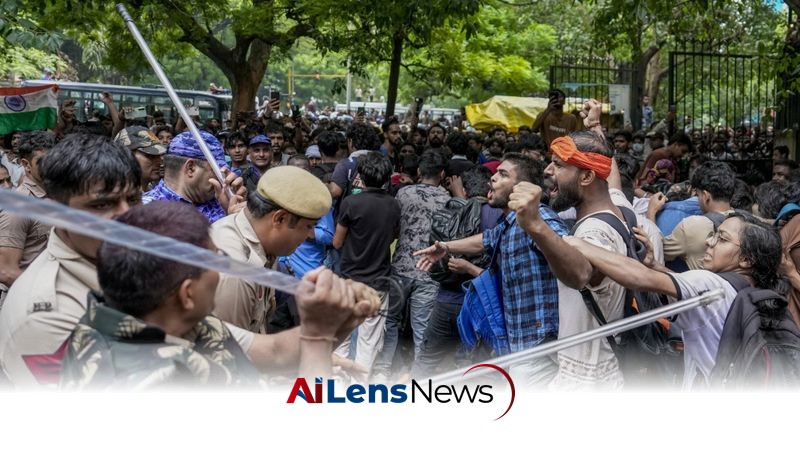


Chief Justice Surya Kant criticized a lawyer for wasting the court's time regarding a plea against police actions during a CJP protest, emphasizing the need for urgent matters.
Leh, India Jul 22, 2026 ALN: In a recent court session that captured significant attention, Chief Justice of India (CJI) Surya Kant expressed notable frustration towards a lawyer who sought an urgent hearing for a plea concerning police actions against supporters of the Citizens for Justice and Peace (CJP) during a protest that took place on July 20. The Chief Justice's remarks highlighted the court's focus on pressing issues and its unwillingness to entertain what it deemed frivolous requests, emphasizing the need for judicial resources to be allocated to more substantial matters.
The incident unfolded as the lawyer brought forth the plea, which aimed to challenge the police's conduct during the protest. This demonstration was organized by the CJP, a prominent non-profit organization dedicated to advocating for justice and accountability, particularly for marginalized communities in India. The protest on July 20 was part of a broader movement aimed at raising awareness about issues of social justice and human rights, reflecting the ongoing struggles faced by various communities in the country. The CJP has been instrumental in addressing issues related to communal harmony, discrimination, and the protection of human rights, often standing in solidarity with those who have been victims of state excesses.
CJI Surya Kant's response, which included the pointed remark, "Don't waste our time," underscored the judiciary's commitment to prioritizing significant legal matters over those perceived as less critical. This interaction has sparked discussions on the judiciary's role in overseeing police conduct during protests and the broader implications for civil rights in India. The judiciary's reluctance to engage with what it views as trivial cases raises important questions about access to justice, particularly for marginalized groups who may rely on legal mechanisms to challenge state actions. The balance between judicial efficiency and the right to seek redress is a critical aspect of the legal landscape.
The CJP, known for its advocacy work, has often found itself at the forefront of various social justice movements, which include campaigns against communal violence, discrimination, and other forms of injustice. Their efforts have frequently been met with resistance from authorities, who may view such activism as a challenge to the status quo. This tension between civil society organizations and law enforcement is not new in India, where the right to protest is constitutionally protected but often contested in practice. The Indian Constitution guarantees the right to assemble peacefully and to express dissent, yet the reality on the ground often involves clashes between protesters and police, leading to questions about the effectiveness of these constitutional protections.
The right to protest is an essential component of democratic governance, allowing citizens to express dissent and advocate for change. However, the manner in which law enforcement responds to such protests can significantly impact the exercise of this right. Instances of excessive force, arbitrary arrests, and other forms of repression during protests have raised concerns among human rights advocates and legal experts alike. The judiciary's role in addressing these issues is critical, as it serves as a check on state power and upholds the rule of law. The effectiveness of this check is often tested in high-profile cases where the actions of police during protests come under scrutiny.
This particular incident also reflects a broader trend within the Indian judiciary, where there is a growing emphasis on managing court resources effectively. As the legal landscape evolves, the judiciary's stance on issues related to civil rights and police accountability will likely continue to shape public discourse. The balance between maintaining order and respecting individual rights is a delicate one, and the judiciary must navigate these complexities while ensuring that justice is served. The increasing backlog of cases in Indian courts further complicates this issue, as judges are often pressed for time and may prioritize cases based on perceived urgency.
The implications of this exchange extend beyond the immediate context of the plea itself. It raises important considerations about the accessibility of the legal system for those seeking to challenge state actions. For many marginalized communities, legal recourse is often fraught with challenges, including financial barriers, lack of legal representation, and systemic biases within the justice system. The judiciary's willingness to engage with cases that may appear less pressing can have a profound impact on the ability of these communities to seek justice. The disparity in access to justice is a significant concern in India, where socio-economic factors often dictate the outcomes of legal proceedings.
Moreover, the CJP's advocacy for marginalized communities is emblematic of a larger movement within Indian civil society that seeks to hold authorities accountable for their actions. The organization's efforts to document instances of police misconduct and advocate for policy changes are crucial in promoting transparency and accountability within law enforcement agencies. As such, the judiciary's approach to cases involving civil rights and police accountability will play a pivotal role in shaping the future of activism in India. The growing awareness of human rights issues among the public has led to increased scrutiny of police practices, and civil society organizations like the CJP are at the forefront of this movement.
In conclusion, the remarks made by CJI Surya Kant serve as a reminder of the court's priorities and the need for legal representatives to present cases that warrant the judiciary's attention. While the judiciary must focus on pressing legal matters, it is equally important to ensure that the voices of marginalized communities are heard and that their grievances are addressed. The ongoing dialogue between civil society and the judiciary will be vital in navigating the complexities of justice and accountability in India, particularly in an era where social movements are increasingly challenging entrenched power dynamics. The relationship between the judiciary, law enforcement, and civil society will continue to evolve as India grapples with its democratic ideals and the realities of governance.
To learn more about the latest developments in Political Controversies, stay updated with our exclusive reports and analyses on AiLensNews.

