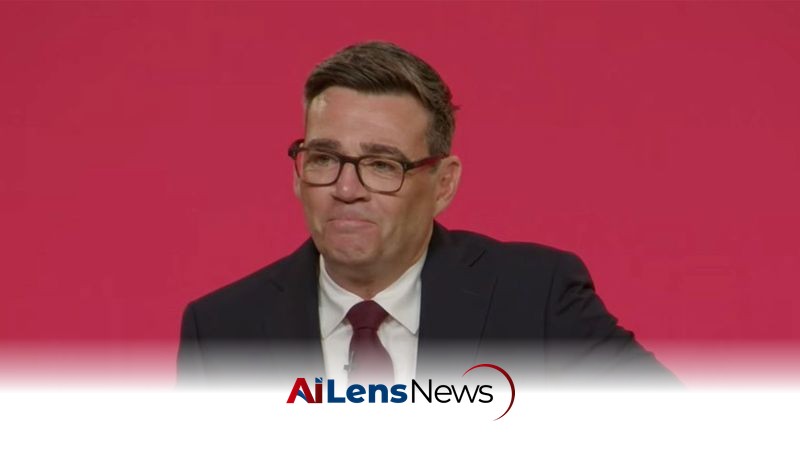


Andy Burnham has been elected as the new leader of the Labour Party, succeeding Keir Starmer as the UK's Prime Minister.
Leh, India Jul 18, 2026 ALN: In a significant political shift, the UK Labour Party has announced the election of Andy Burnham as its new leader. This decision comes in the wake of Keir Starmer's resignation, marking a pivotal moment for the party as it prepares for the upcoming general elections. The Labour Party, historically one of the two major political parties in the UK, has faced various challenges in recent years, including internal divisions, electoral defeats, and a shifting political landscape that has seen the rise of other parties, notably the Scottish National Party (SNP) and the Liberal Democrats. Burnham's election is seen as a strategic move to reinvigorate the party and re-establish its position as a formidable opponent to the Conservative government.
The Labour Party has a storied history, founded in 1900 to represent the interests of the working class. Over the decades, it has evolved and adapted to the changing political climate in the UK. However, the party has faced significant challenges in recent years, including a loss of traditional voter bases and struggles with internal factions that have often hindered its unity and effectiveness. The resignation of Keir Starmer, who led the party through a tumultuous period marked by the fallout from the 2019 general election, has opened the door for new leadership and a potential reorientation of the party's policies and strategies.
Andy Burnham, who has served as the Mayor of Greater Manchester since 2017, has been a prominent figure in UK politics for many years. Born in 1979 in the town of Burnley, Lancashire, Burnham began his political career as a Member of Parliament (MP) for Leigh in 2001. His early career was heavily influenced by his working-class roots and a commitment to public service, which has shaped his political ideology. Over the years, he has held several key positions in government, including Secretary of State for Health from 2006 to 2009 under then-Prime Minister Gordon Brown. His tenure in this role was marked by his efforts to reform the National Health Service (NHS) and improve public health outcomes.
Burnham's leadership style and policies have garnered attention, particularly his focus on public health and social issues. His experience as Mayor of Greater Manchester has allowed him to champion various initiatives aimed at improving local governance, transportation, and housing. Notably, during the COVID-19 pandemic, Burnham became a vocal advocate for local authorities, pushing for greater financial support for regions affected by lockdown measures. His rise to leadership is seen as a response to the changing political landscape and the need for a strong opposition to the current government.
As the new leader, Burnham has outlined his vision for the Labour Party, emphasizing the importance of social justice and economic reform. He aims to unite the party and attract a broader base of support, particularly among younger voters who are increasingly disillusioned with traditional politics. Burnham's policies are expected to focus on addressing income inequality, improving access to education, and enhancing public services—issues that resonate with many voters who feel left behind by the current economic model.
In his initial statements, Burnham has also highlighted the need for a green economic recovery, advocating for investments in renewable energy and sustainable jobs as part of a broader strategy to combat climate change. This aligns with the growing public concern over environmental issues and the demand for government action to address them. Additionally, he has expressed a commitment to rebuilding trust in politics, aiming to create a more transparent and accountable Labour Party.
The announcement of Burnham's leadership has sparked varied reactions across the political spectrum. Supporters of Burnham have expressed optimism about his leadership, citing his track record in local governance and his ability to connect with the public. Many view him as a candidate who can revitalize the party and reinstate its relevance in contemporary politics. His experience in managing a major metropolitan area and his focus on local issues are seen as assets that could translate well to a national leadership role.
Conversely, some critics question whether he can effectively challenge the current government and deliver on his promises. Detractors argue that while Burnham has been successful at the local level, the national political arena presents a different set of challenges. The Labour Party's recent history of electoral defeats, particularly in the 2019 general election, raises concerns about its ability to regain the trust of voters. Some analysts suggest that Burnham will need to navigate the complex dynamics within the party itself, which has seen factions emerge with differing visions for its future.
As Burnham prepares to take on the role of Prime Minister, the Labour Party faces significant challenges ahead. The upcoming elections will test his leadership and the party's ability to present a cohesive and compelling alternative to the ruling government. The Conservative Party, led by the current Prime Minister, has maintained a strong grip on power, and Burnham will need to articulate a clear vision that resonates with a diverse electorate.
Moreover, the political landscape in the UK is increasingly fragmented, with smaller parties gaining traction in various regions. The rise of the Scottish National Party (SNP) in Scotland and the Liberal Democrats in certain constituencies poses additional challenges for Labour's traditional strongholds. Burnham's ability to appeal to voters across the UK, including those in Scotland and Wales, will be crucial for the party's electoral strategy.
In conclusion, Andy Burnham's election as the Labour Party leader marks a new chapter in UK politics. His approach to leadership and policy will be closely watched as the nation moves towards the next general elections. The success of Burnham and the Labour Party will largely depend on their capacity to unify their base, engage with disenchanted voters, and provide a credible alternative to the current government. As the political landscape continues to evolve, Burnham's leadership will be pivotal in shaping the future direction of the Labour Party and its role in UK politics.
Burnham's leadership comes at a time when the UK is grappling with numerous pressing issues, including the ongoing economic recovery from the COVID-19 pandemic, the implications of Brexit, and the growing urgency of climate change. Each of these challenges presents both opportunities and risks for the Labour Party as it seeks to re-establish itself as a credible alternative to the Conservatives. Furthermore, the party's internal dynamics, including the need to reconcile differing ideologies within its ranks, will play a significant role in shaping its future direction under Burnham's leadership.
As Burnham embarks on this journey, he will need to engage with grassroots activists, party members, and the broader electorate to build a cohesive narrative that resonates with a wide array of voters. His ability to effectively communicate his vision and policies will be critical in garnering support and building momentum as the Labour Party heads towards the next general elections. The coming months will be crucial for Burnham as he seeks to solidify his leadership and lay the groundwork for a successful electoral campaign.
Ultimately, the challenges facing Andy Burnham and the Labour Party are significant, but so too are the opportunities for renewal and reinvigoration. The future of the party will depend on its ability to adapt to the changing political landscape, respond to the needs and concerns of the electorate, and present a compelling vision for a fairer and more equitable society in the UK.
To learn more about the latest developments in Elections, stay updated with our exclusive reports and analyses on AiLensNews.

