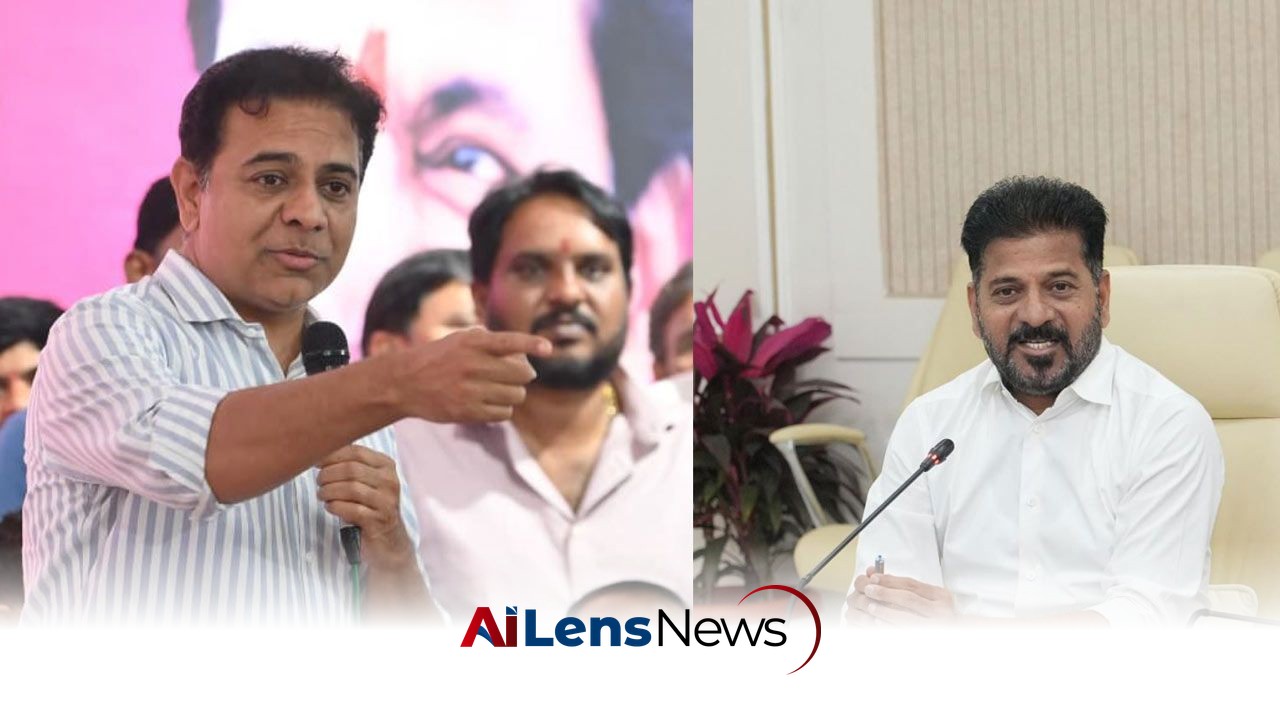


KT Rama Rao, BRS working president, intends to issue a legal notice to Telangana CM Revanth Reddy, demanding an apology over allegations linking him to the Globarena controversy.
New Delhi, India Jul 23, 2026 ALN: Hyderabad: BRS working president KT Rama Rao has announced plans to serve a legal notice to Telangana Chief Minister A Revanth Reddy over allegations linking him and his family to the private firm Globarena in connection with the 2019 Intermediate examination results controversy. He demanded that the Chief Minister either tender a public apology for spreading false information or face legal action.
This development comes against the backdrop of a politically charged atmosphere in Telangana, where allegations and counter-allegations among political leaders have become increasingly common. The controversy surrounding the 2019 Intermediate examination results, which led to the tragic suicides of 27 students, has been a sensitive issue that has drawn public outrage and scrutiny. The examination results were marred by reports of discrepancies, prompting protests and demands for accountability from various quarters, including student organizations and opposition parties.
The 2019 Intermediate examination results controversy is not just a local issue; it resonates with broader discussions about the education system in India. The Intermediate exams, which are crucial for students transitioning from high school to higher education, are often viewed as a high-stakes test that can significantly impact a student's future. The pressure associated with these exams has been linked to mental health issues among students, making the tragic outcomes of the 2019 results particularly poignant in the public consciousness.
Rama Rao's decision follows Revanth Reddy's remarks during a Congress protest in Kodangal against the detention of Rahul Gandhi and Priyanka Gandhi in New Delhi. Reddy alleged that irregularities in the 2019 Intermediate examination results in Telangana led to the tragic suicides of 27 students. The emotional weight of this issue resonates deeply with many families and communities who have been impacted by these events. The suicides of students have sparked widespread discussions about the pressures faced by young individuals in the education system, as well as the responsibilities of educational authorities and government officials in ensuring fair and transparent examination processes.
In his statements, Reddy claimed that the contract for the examination was awarded to Globarena, which he described as a proxy company linked to Rama Rao, despite it allegedly lacking the necessary experience and qualifications. This assertion raises critical questions about the procurement processes and the accountability of government officials in awarding contracts to private firms. The implications of such allegations extend beyond individual reputations; they touch on broader issues of governance, transparency, and the ethical considerations involved in public-private partnerships in the education sector.
Rejecting these allegations, the BRS working president accused the Chief Minister of spreading “fake news” for political gain. “The Telangana Chief Minister should start acting like a Chief Minister at least once in his term. Resorting to peddling fake news on a very unfortunate incident like paper leaks is abhorrent and demeans your position,” he stated. This statement reflects the intense political rivalry between the BRS and the Congress party, with both sides seeking to leverage public sentiment and media attention to their advantage.
Rama Rao firmly denied any connection between himself, his family, and Globarena. “Let me reiterate once again — BRS, my family, and I have no links to Globarena whatsoever. My legal team is shortly sending you a notice to either apologise or face legal action,” he asserted. This declaration is significant not only in the context of the current political skirmish but also in setting a precedent for how political figures respond to allegations that threaten their integrity and public image. Legal action could potentially escalate the conflict, drawing in the judiciary and further complicating the political landscape in Telangana.
He also mentioned that he largely ignored Revanth Reddy’s previous allegations as they were absurd. “My silence doesn’t mean I agree with you. It’s just that I don’t like wrestling in the dirt,” he added. This comment underscores the challenges faced by politicians in navigating public discourse, particularly when it involves sensitive issues that resonate deeply with constituents. The metaphor of “wrestling in the dirt” suggests a desire to maintain a level of dignity and decorum in political engagements, even amidst provocative statements from opponents.
The controversy surrounding the 2019 Intermediate examination results has broader implications for the education system in Telangana. It raises critical questions about the efficacy of examination boards, the selection process for examination conducting agencies, and the accountability mechanisms in place to address grievances related to academic assessments. As the political discourse continues to unfold, it is likely that stakeholders, including students, parents, educators, and policymakers, will be closely watching how this situation develops.
Moreover, the education sector in Telangana has faced scrutiny in recent years, with various stakeholders calling for reforms to ensure that examination processes are transparent and fair. The public outcry following the suicides of students in 2019 highlighted systemic issues within the educational framework, prompting demands for accountability from both government officials and educational institutions.
Furthermore, the legal actions that may arise from this dispute could set important precedents regarding defamation, political speech, and the responsibilities of public figures in addressing allegations made against them. In an era where misinformation can spread rapidly through social media and other channels, the need for clarity and accountability in public discourse has never been more pressing. The legal framework surrounding defamation in India is complex, often balancing the right to free speech with the need to protect individuals from false accusations. The outcome of this legal battle could provide insights into how these issues are navigated in the political arena.
As the situation evolves, it will be essential for both parties to navigate the complexities of this issue with sensitivity, given the tragic backdrop of student suicides and the ongoing public concern regarding educational integrity. The outcome of this political confrontation could have lasting effects not only on the careers of the individuals involved but also on the broader political landscape in Telangana as the state approaches future elections.
In addition to the immediate implications for Rama Rao and Reddy, this incident may also influence the strategies employed by political parties in Telangana. As the state gears up for future elections, parties may become more cautious in their public statements, considering the potential legal repercussions of making unsubstantiated allegations. This could lead to a shift in how political discourse is conducted, particularly in a digital age where information spreads rapidly, and public opinion can be swayed by social media narratives.
In conclusion, the legal confrontation between KT Rama Rao and A Revanth Reddy underscores the volatile nature of political dynamics in Telangana, particularly in relation to sensitive issues like education and student welfare. As both sides prepare for a potentially protracted legal battle, the implications of their actions will extend beyond the courtroom, shaping the political landscape and influencing public perceptions in the state for years to come.
To learn more about the latest developments in Political Controversies, stay updated with our exclusive reports and analyses on AiLensNews.

