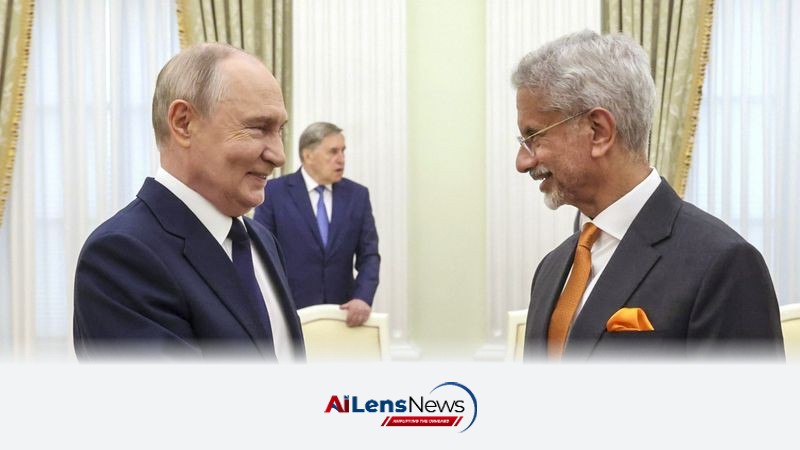



During a meeting at the Kremlin, Indian External Affairs Minister S. Jaishankar highlighted a significant trade deficit with Russia, while President Putin noted growing economic ties.
New Delhi, India Aug 25, 2026 ALN: In a significant diplomatic engagement, Indian External Affairs Minister S. Jaishankar met with Russian President Vladimir Putin at the Kremlin on Monday. The meeting underscored the evolving economic relationship between India and Russia, amid discussions of a notable trade deficit. This encounter is particularly relevant as it occurs against the backdrop of shifting global economic dynamics and the increasing importance of bilateral ties between the two nations.
During their discussions, President Putin remarked that India-Russia trade is "rising again," attributing this positive trend to the personal attention of Indian Prime Minister Narendra Modi. He conveyed his "warmest regards" to Modi, reflecting the importance of bilateral relations. This exchange is emblematic of the long-standing partnership that has historically characterized India-Russia relations, which have evolved significantly since the Cold War era.
Jaishankar raised concerns regarding the $50 billion trade deficit that India currently faces with Russia. This figure has become a focal point in discussions about balancing trade relations between the two nations. The trade deficit highlights the need for India to enhance its exports to Russia while continuing to import essential goods. Currently, India imports a range of products from Russia, including crude oil, fertilizers, and defense equipment. Conversely, India's exports to Russia primarily consist of pharmaceuticals, textiles, and agricultural products. The imbalance has raised questions about the sustainability of this trade relationship and the potential for India to diversify its export portfolio.
The trade deficit issue is not just a bilateral concern; it is part of a larger narrative about India's trade relationships globally. India has been actively seeking to reduce trade deficits with several countries, and addressing the deficit with Russia is a critical component of this strategy. The discussions between Jaishankar and Putin may also reflect India's broader economic strategy of strengthening ties with traditional partners while simultaneously engaging with new markets.
The meeting also served as a platform to explore avenues for strengthening economic ties. Both leaders acknowledged the potential for collaboration in various sectors, including energy, defense, and technology. As India seeks to diversify its trade partnerships, the relationship with Russia remains crucial. The two countries have a history of cooperation in defense, with India being one of the largest importers of Russian military equipment. This ongoing collaboration is vital for India's defense strategy, especially in the context of regional security challenges.
In the energy sector, Russia has emerged as a key supplier of crude oil to India, particularly in the wake of changing geopolitical circumstances that have affected global oil markets. The two nations have been exploring ways to enhance cooperation in energy production, including nuclear energy and renewable sources, which could further solidify their economic ties.
Technology transfer is another area ripe for collaboration. With India's growing emphasis on technology and innovation, there are opportunities for joint ventures and partnerships in sectors such as information technology, space research, and artificial intelligence. By leveraging each other's strengths, both countries could foster an environment of mutual benefit and innovation.
Looking ahead, Jaishankar emphasized the importance of addressing the trade imbalance. He expressed optimism about future negotiations that could lead to more equitable trade terms. The discussions at the Kremlin are expected to pave the way for further dialogue on enhancing bilateral trade. As both nations navigate their economic relationship, the focus will remain on fostering mutual growth and addressing existing challenges.
Moreover, the geopolitical landscape is changing, with countries like China asserting their influence in various regions. This shift necessitates that India and Russia not only strengthen their bilateral ties but also collaborate on multilateral platforms to address global challenges. The potential for joint initiatives in forums such as BRICS and the Shanghai Cooperation Organization (SCO) could provide additional avenues for economic cooperation and political alignment.
In conclusion, the meeting between Jaishankar and Putin not only highlighted the current trade deficit but also set the stage for future cooperation between India and Russia. As both nations work towards enhancing their economic relationship, they must remain cognizant of the broader geopolitical implications of their partnership. The focus will be on fostering mutual growth, addressing existing challenges, and exploring new opportunities that can benefit both countries in the long run. The outcome of these discussions may very well shape the trajectory of India-Russia relations in the coming years, as both nations strive to adapt to an evolving global landscape.
To learn more about the latest developments in Elections, stay updated with our exclusive reports and analyses on AILensNews.

