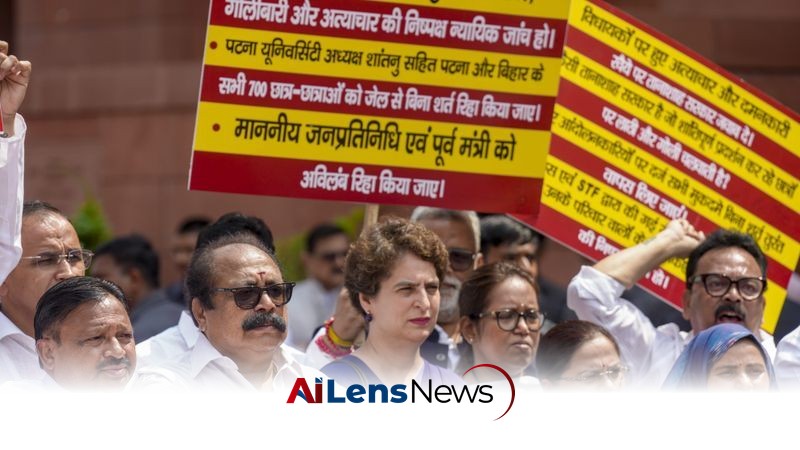


As the government prepares to introduce an anti-paper leak Bill, Congress raises concerns over student treatment during protests, seeking parliamentary discussions.
New Delhi, India Jul 27, 2026 ALN: The Indian government is preparing to introduce an anti-paper leak Bill in Parliament, a legislative measure aimed at addressing the escalating concerns regarding the integrity of examinations across the nation. This initiative comes in the wake of persistent allegations of paper leaks that have undermined the credibility of various competitive examinations. However, the proposed legislation is anticipated to encounter substantial opposition from the Congress party, which has raised serious concerns about the alleged use of force against students during the recent "Chalo Sansad" protest held on July 20.
During the "Chalo Sansad" protest, a significant number of students gathered to voice their frustrations over the ongoing issue of paper leaks that have plagued multiple examinations in recent years. The students are demanding greater accountability and transparency from the government, emphasizing that their futures hinge on the integrity of these examinations. The Congress party has responded to these protests by moving notices for adjournment and suspension of business in both Houses of Parliament, seeking to initiate discussions regarding the treatment of students and the broader implications of the proposed anti-paper leak legislation.
The protests were ignited by a series of allegations claiming widespread paper leaks affecting various competitive exams, including those for government jobs, professional courses, and entrance tests for higher education. These leaks have raised serious questions about the fairness of the examination process, with students arguing that their hard work and aspirations are being jeopardized by systemic corruption. The students contend that the integrity of their future careers is at stake and that the government must take immediate and effective action to restore public confidence in the examination system.
The issue of examination integrity is particularly critical in India, where millions of students compete for limited opportunities in prestigious institutions and government positions. The pressure to succeed in these examinations is immense, and the fear of unfair advantages gained through leaks can lead to disillusionment among the student population. As a result, the protests reflect a broader demand for reforms within the examination system, including the implementation of more stringent security measures and greater oversight.
In response to the mounting pressure from students and the opposition, the Indian government has reiterated its commitment to combatting the issue of paper leaks through the introduction of the proposed anti-paper leak Bill. Government officials have stated that the legislation aims to establish stricter penalties for individuals and entities involved in leaking examination papers, as well as to implement comprehensive measures designed to enhance the security and integrity of the examination process.
The proposed Bill is expected to include provisions for harsher punishments for those found guilty of facilitating or participating in paper leaks, potentially including imprisonment and significant fines. Additionally, the government has indicated plans to introduce technological solutions that would safeguard examination materials and ensure that the examination environment is secure. These measures are seen as essential steps toward restoring the credibility of the examination system and addressing the legitimate concerns raised by students.
Despite the government's assurances, Congress leaders have been vocal in their criticism of the proposed Bill, arguing that it does not adequately address the grievances of students who have been affected by the paper leaks. They contend that the government's focus on legislative measures is misplaced, as it fails to consider the immediate needs and concerns of the students who feel marginalized in this process.
Congress has pointed out that while legislation is important, it should not be a substitute for dialogue and engagement with the student community. They argue that the government must prioritize listening to the voices of the students and addressing their concerns in a meaningful way. The party has called for a comprehensive review of the examination system, advocating for reforms that go beyond punitive measures and focus on creating a more equitable and transparent process for all candidates.
In light of the ongoing tensions between the government and student groups, Congress is advocating for a constructive dialogue between government representatives and student leaders. They believe that such discussions are essential for addressing the root causes of the protests and for finding collaborative solutions that can restore trust in the examination system. Congress has emphasized that it is crucial for the government to engage with students to better understand their concerns and to work together towards effective reforms.
This call for dialogue reflects a broader recognition of the need for inclusive governance, where the voices of all stakeholders, particularly students, are considered in the policymaking process. Engaging with students not only helps to alleviate tensions but also fosters a sense of ownership among young people regarding the policies that affect their lives and futures.
The introduction of the anti-paper leak Bill is poised to become a contentious issue in Parliament, with Congress determined to challenge the government's narrative and advocate for the rights of students. As the situation unfolds, the focus remains on the implications for students and the future of examination integrity in India. The outcome of this legislative proposal and the responses from both the government and the opposition will likely shape the landscape of competitive examinations in the country for years to come.
Moreover, the ongoing discourse surrounding the anti-paper leak Bill highlights the importance of transparency and accountability in governance, especially in sectors that significantly impact the youth. The government’s ability to effectively address the concerns raised by students and to implement meaningful reforms will be crucial in restoring faith in the examination process and ensuring that the aspirations of millions of students are protected.
To learn more about the latest developments in Political Controversies, stay updated with our exclusive reports and analyses on AiLensNews.

