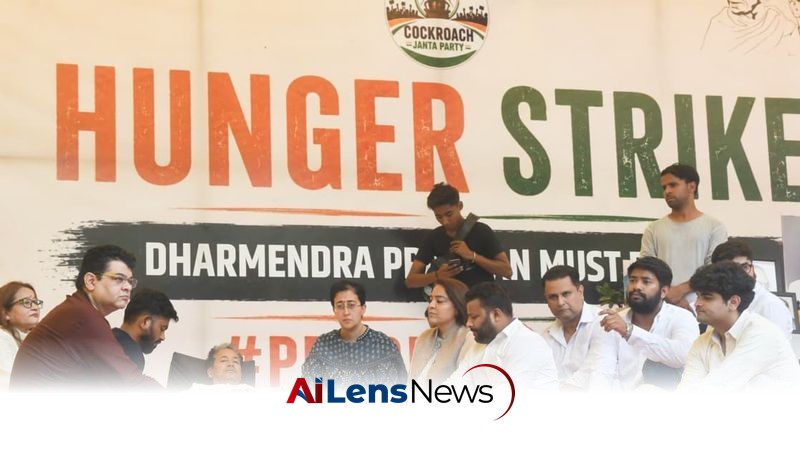


As the hunger strike continues, Wangchuk loses significant weight, raising concerns for his health. AAP leaders show support at the protest site.
New Delhi, India Jul 13, 2026 ALN: The ongoing protest by the Cockroach Janata Party (CJP) has reached its 24th day, with significant developments concerning the health of key protester Wangchuk. As he enters the 16th day of his hunger strike, reports indicate that he has lost 8.2 kg, raising alarms about his well-being. This hunger strike is a form of non-violent protest that aims to draw attention to various political issues, including demands for greater governmental transparency, accountability, and reforms in local governance.
Wangchuk's deteriorating health has become a focal point of concern, with fellow protester Dipke emphasizing that 'lives are at stake.' The emotional and physical toll of such a prolonged hunger strike cannot be understated, as it poses serious risks to Wangchuk's health and raises ethical questions about the lengths to which individuals will go to advocate for their beliefs. The CJP has positioned itself as a grassroots movement, aiming to challenge the status quo and represent the voices of marginalized communities. Their approach, while controversial, seeks to highlight systemic issues that they believe have been ignored by mainstream political parties.
On this critical day, a delegation from the Aam Aadmi Party (AAP), led by former Delhi Chief Minister Atishi, visited the protest site to express solidarity with the demonstrators. Their presence underscores the political ramifications of the ongoing protest and the growing support from various political factions. AAP's involvement is particularly significant given its history of advocating for anti-corruption measures and citizen rights. By aligning themselves with the CJP, AAP may be seeking to bolster its own political capital and reinforce its commitment to social justice issues, appealing to a voter base that increasingly values activism and civic engagement.
This visit by AAP representatives also serves to amplify the visibility of the protest, potentially drawing in more supporters and media attention. The intersection of grassroots movements and established political parties raises questions about the authenticity of the protest's motives. Critics may argue that political parties are leveraging the situation for electoral gain rather than genuinely supporting the cause. However, supporters contend that such alliances are necessary to effect real change in governance.
The protest has not only raised political awareness but has also brought health concerns to the forefront. Medical professionals have been monitoring Wangchuk's condition closely, urging him to consider ending his hunger strike for the sake of his health. The emotional toll on participants is evident, as many express their fears for Wangchuk's life. The psychological impact of hunger strikes is profound, often leading to heightened anxiety and stress among fellow protesters who feel a sense of responsibility for their comrade's well-being.
Moreover, the implications of Wangchuk's condition extend beyond individual health; they reflect the broader struggles that activists face when challenging entrenched political systems. Hunger strikes have historically been used as a tool for political change, with notable figures like Mahatma Gandhi employing this method to draw attention to social injustices. However, the potential for irreversible health consequences raises ethical dilemmas regarding the use of self-harm as a means of protest.
The public response to the protest has been mixed, with some supporting the cause while others express concern over the extreme measures being taken. Social media platforms have become a battleground for opinions, with hashtags related to the CJP protest trending as supporters rally online. The diverse reactions illustrate a society grappling with the complexities of activism and the moral implications of hunger strikes. Some individuals laud Wangchuk's bravery and commitment, while others question the effectiveness of such actions in achieving tangible results.
Media coverage has intensified, with various outlets reporting on the developments and the implications for local politics. Coverage ranges from sympathetic portrayals of the protesters' plight to critical analyses of the potential political motivations behind the hunger strike. This media attention is crucial, as it can influence public perception and mobilize further support or opposition. The role of journalism in shaping narratives around protests is significant, as it can either amplify voices that are often marginalized or perpetuate misunderstandings about the issues at hand.
Hunger strikes have a rich history in political activism, often serving as a last resort for individuals seeking to draw attention to their causes. The practice has been employed across various movements and eras, from the suffragettes in the early 20th century to modern-day protests against government policies. The strategy is rooted in the belief that the personal sacrifice of an individual can galvanize public support and shine a spotlight on systemic injustices.
In many cases, hunger strikes have successfully led to political negotiations and reforms. However, they also carry significant risks, not just for the individuals involved but also for the movements they represent. As activists like Wangchuk take such drastic measures, they often face the dilemma of whether their actions will lead to meaningful change or simply serve as a tragic footnote in the ongoing struggle for justice.
The implications of the CJP protest extend beyond its immediate goals, potentially influencing the landscape of political activism in the region. As citizens become increasingly engaged in political discourse, movements like the CJP may pave the way for new forms of activism that challenge established norms. The growing visibility of such protests indicates a shift in public sentiment towards more participatory governance and accountability from political leaders.
Moreover, the involvement of established political parties like AAP in grassroots movements raises questions about the future of political engagement in the country. As traditional political structures face scrutiny, the blending of grassroots activism with mainstream politics may lead to a redefinition of how citizens interact with their governments. This could foster an environment where civic engagement is not only encouraged but also expected, leading to a more informed and active electorate.
As the CJP protest continues, the health of Wangchuk remains a pressing issue. The involvement of political figures like Atishi may influence the direction of the protest and the demands being made. The situation is evolving, and the coming days will be crucial in determining the outcome of this significant political agitation. The CJP's ability to maintain momentum will depend not only on the health of its leaders but also on the public's response to their plight and the political landscape surrounding them.
In the broader context, the protest reflects a growing discontent with traditional political structures and the desire for more participatory governance. As citizens become increasingly engaged in political discourse, movements like the CJP may pave the way for new forms of activism that challenge established norms. The implications of this protest could resonate far beyond its immediate goals, potentially inspiring future generations to advocate for change through both peaceful protest and political engagement.
To learn more about the latest developments in Political Controversies, stay updated with our exclusive reports and analyses on AiLensNews.

